
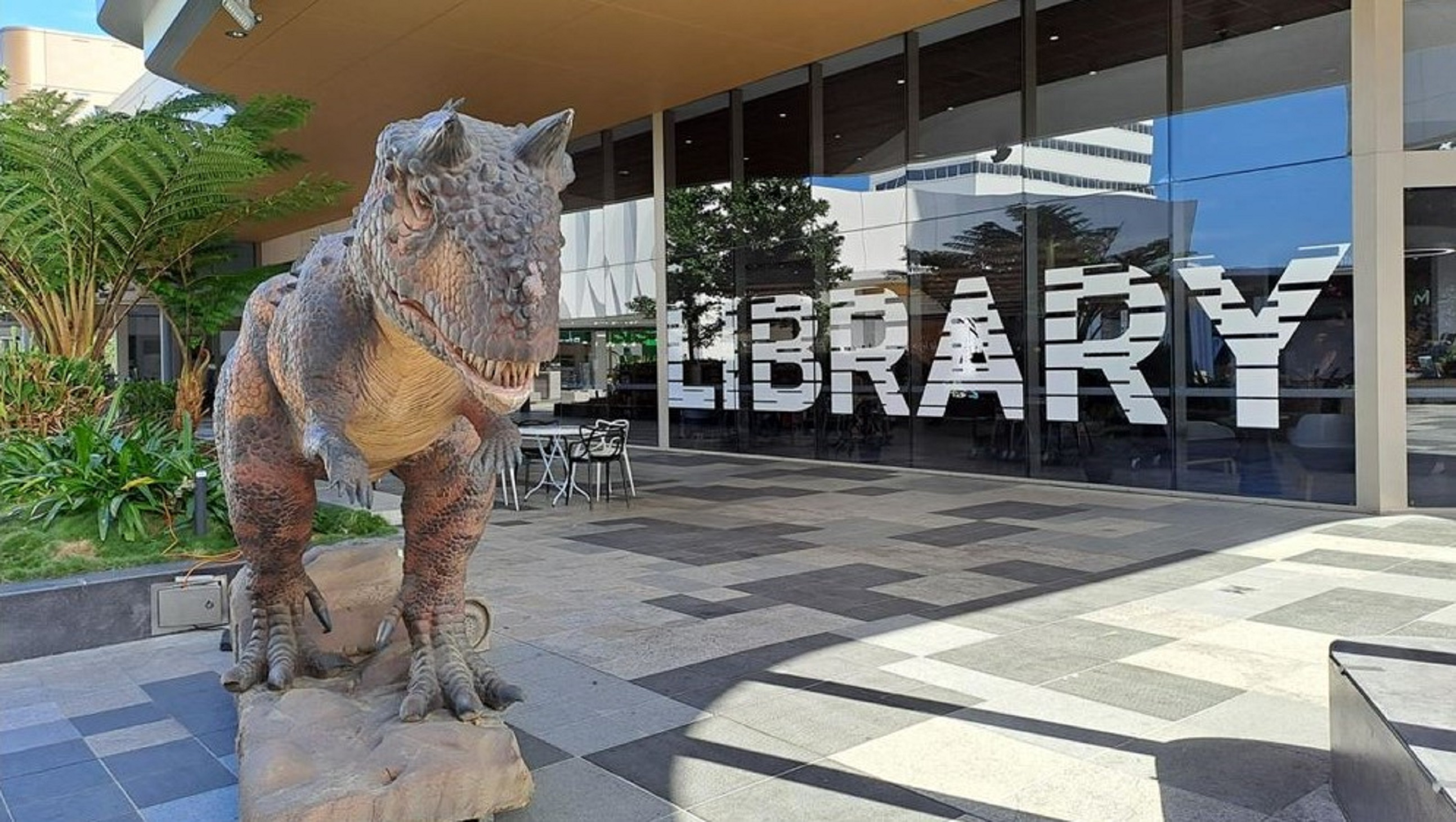
It’s a little-known fact that dinosaurs always return to their home space. Or so it seems in one historic city where Jurassic fame has passed it by. I told a version of this amazing tale on West Bremer Radio.
Animatronic dinosaurs take over town centres during school holidays across Australia, and this year they’re back in Ipswich, Queensland, where their modern story began.
The dinosaur trackways at the famous Dinosaur Stampede National Monument at Lark Quarry, which is about 110km southwest of Winton in outback Queensland, were formed ninety-five million years ago. The original interpretation was that it was a stampede triggered by something like a Tyrannosaurus. That sparked the imagination of Stephen Spielberg and it became the inspiration for the best scene in the Academy Award-winning film Jurassic Park. When the film was released in 1993 it went on to gross around one billion dollars worldwide to be the highest-grossing film ever at the time,
Those inspirational Lark Quarry trackways were found when half a hillside was removed in the late 1970s. But Ipswich’s own dinosaur stampede was discovered around forty years earlier than Lark Quarry.
In 1933, the state government’s chief geologist Lionel Ball went to the Lanefield Colliery which was four kilometres west of the Rosewood railway station. And he was shown remarkable things.

Miners at the Lanefield mine had discovered on the ceiling of the space where they were mining the coal the footprints of dinosaurs. Mr Ball was the first to describe them in anything like a scientific manner.
The prints were around fifty centimetres long and said to resemble what would have been made in mud by giant domestic chickens.
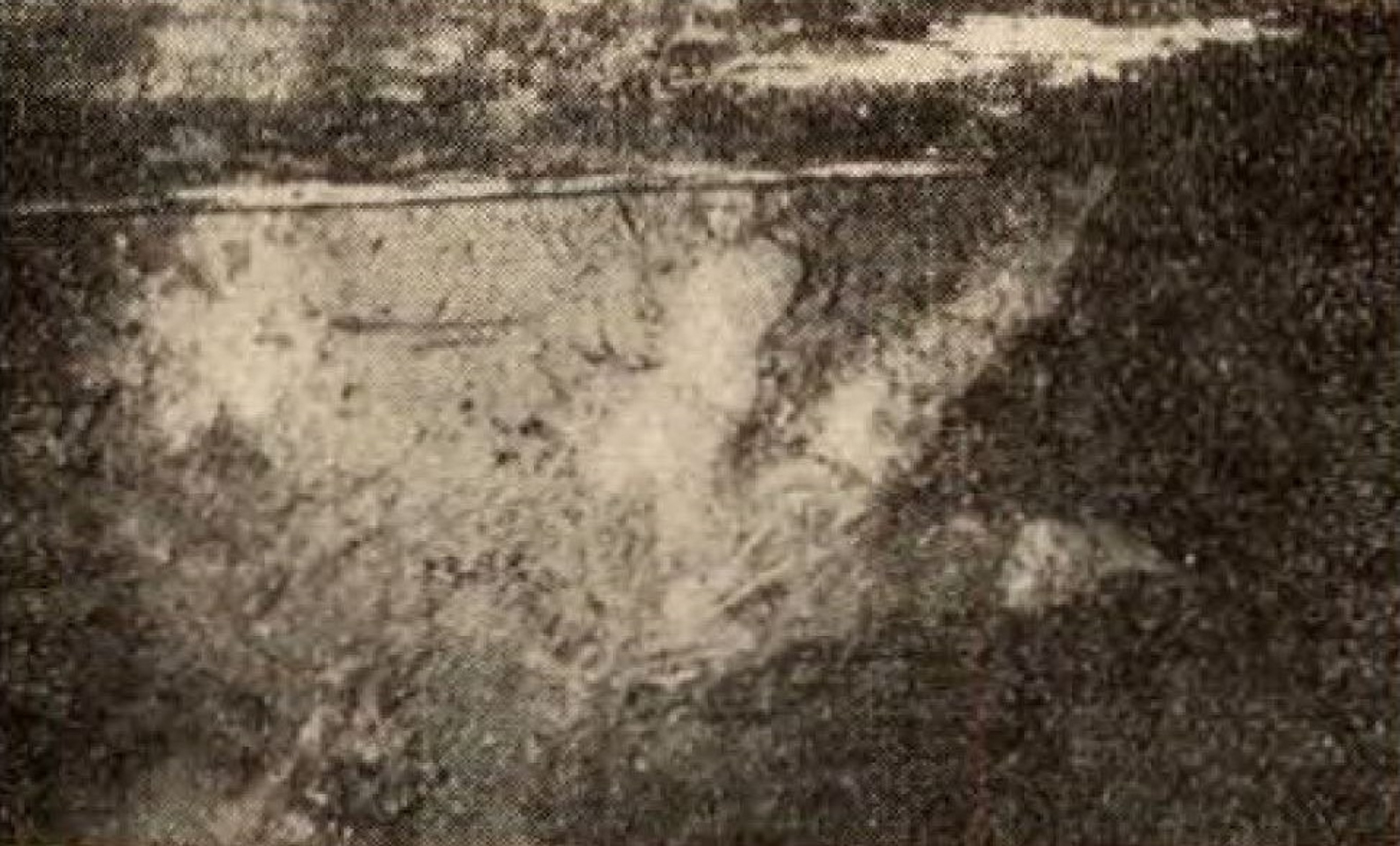
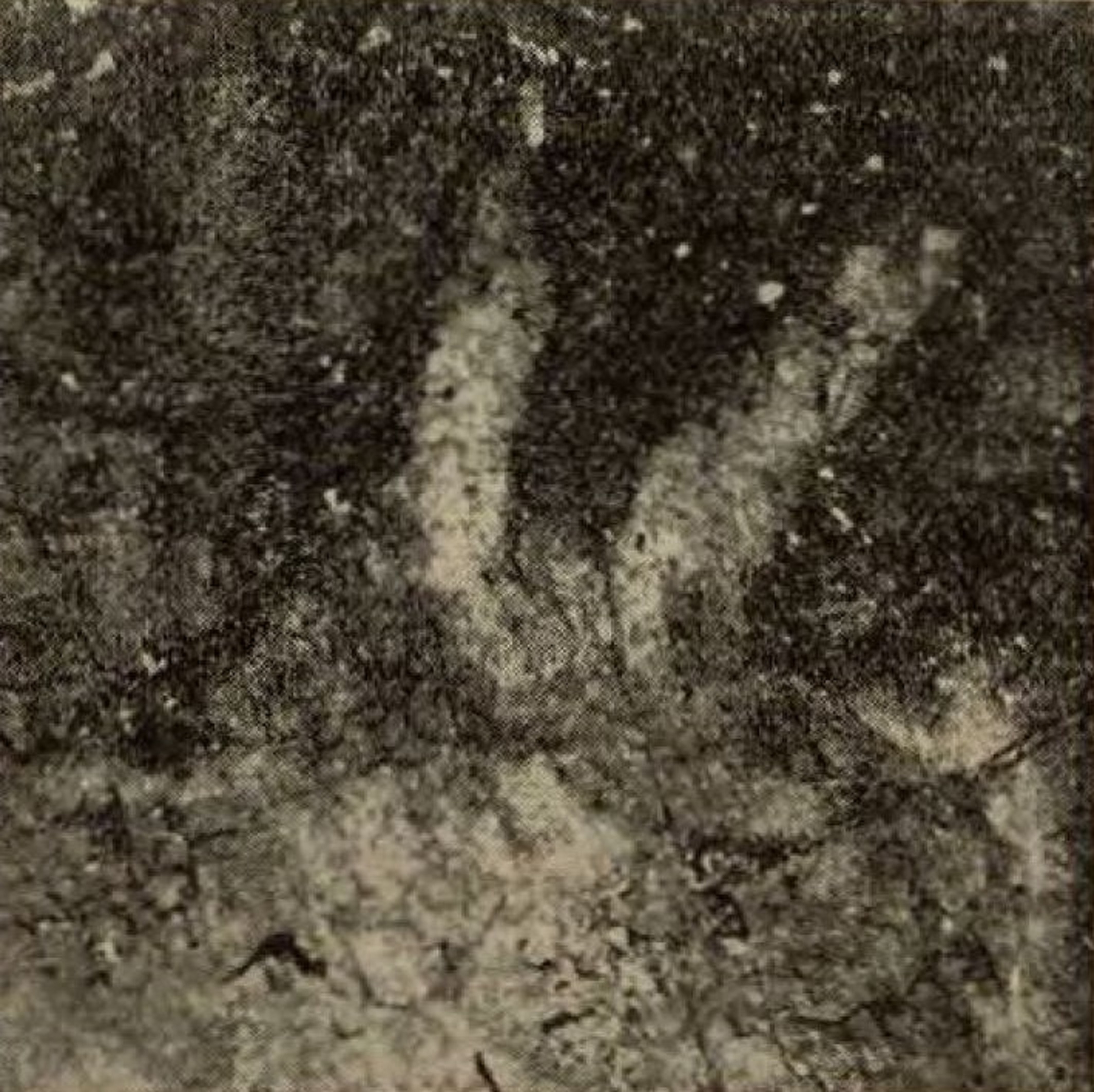
The footprints had in fact been made by theropod dinosaurs around one hundred million years earlier. They had walked directly on swampy coal-forming vegetable matter, leaving impressions that were later filled by muddy sediment that turned into shale. That meant millions of years later when the Ipswich underground miners removed the coal, a relief of the giant footprints were exposed overhead.
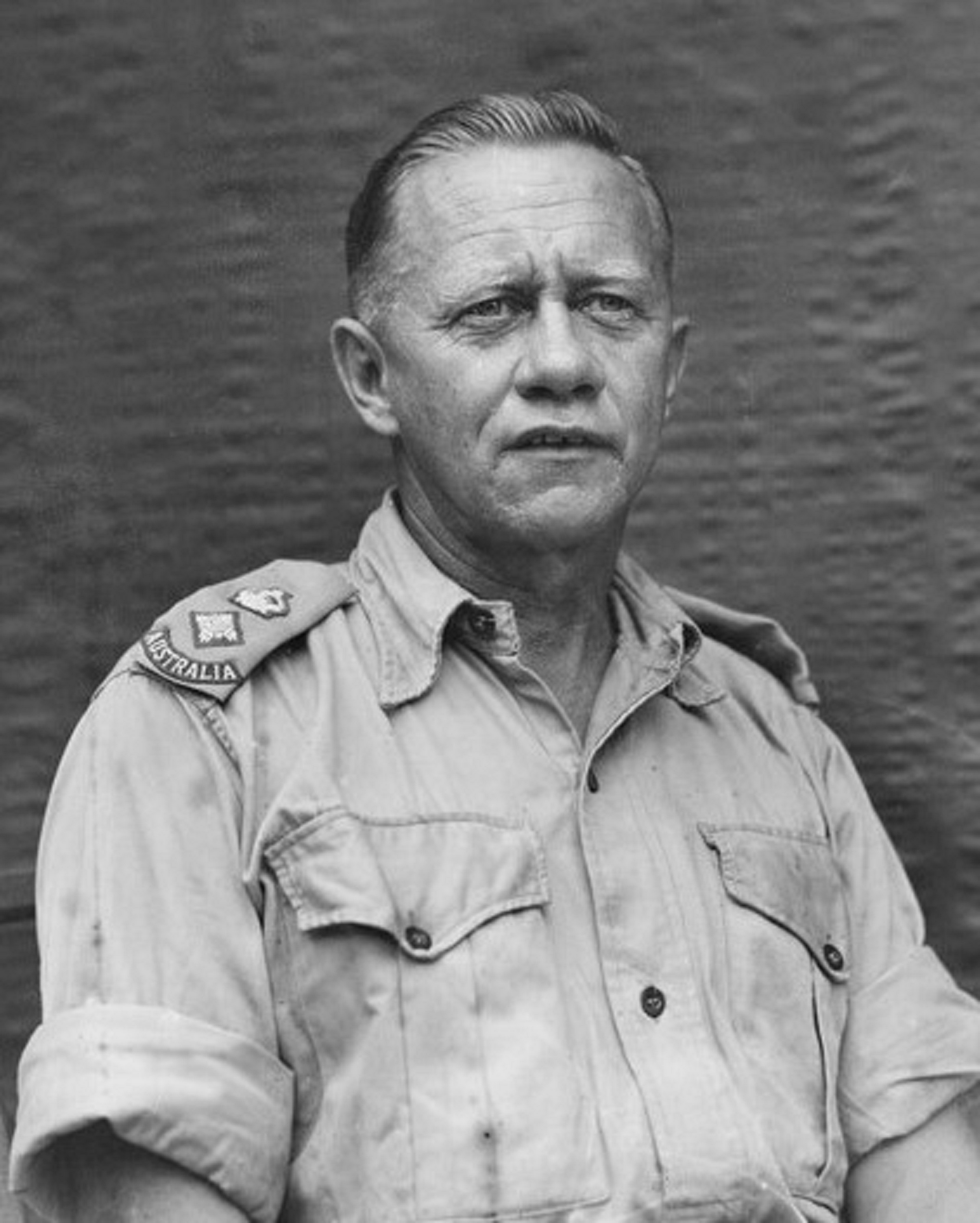
Plaster casts were taken of the prints by university geologists. One of them was a local boy Dr Fred Whitehouse who was born in Ipswich and attended Ipswich Grammar School. Dr Whitehouse later became notable for leading eight hundred boy scouts on a hike across Fraser Island in 1951. An infectious disease broke out, and they all had to be quarantined. Rations were running low and Dr Whitehouse saved them by ensuring the boys used their scouting skills to live off the land.
Back to the prehistoric footprints, they were the very first evidence of dinosaurs ever found anywhere in coal deposits, and so aroused huge scientific interest.
More dinosaur tracks were found in the district in the decades that followed, including in the 1940s and 1950s at the Walloon coal measures and the Balgowan mine on the Darling Downs. Those footprints were even larger than Lanefield and included Australia’s biggest carnivorous dinosaur footprint ever found at seventy-nine centimetres long.

The Lanefield tracks, however, were made by a medium-sized predatory dinosaur that would have been around two metres high at the hip, and up to eight metres long.
All the tracks were found in sediments directly above coal seams on the ceilings of the underground mines. That style of mining stopped more than a quarter of a century ago, and the mines were back-filled and closed.
That means Ipswich’s incredible dinosaur discoveries can never be seen again or put on show like those at Lark Quarry. And they can only be studied by the plaster casts and photographs taken at the time.
But this is where the problem lies.
Your see, the Queensland Museum has plaster casts of the dinosaur footprints from Walloon – but none from the first discoveries at Lanefield. They can’t be found.
That means for those very first dinosaur tracks found in Ipswich, they were made one hundred million years ago, but took just ninety years to be lost again. They have returned to their underground space to be lost forever, and not even Stephen Spielberg can see them now.
CLICK HERE TO LISTEN TO A VERSION OF THIS STORY TOLD LIVE ON RADIO.
Photo credits:
Dinosaur at Tulmur Place – Ipswich City Council.
L.C. Ball, chief government geologist, Queensland department of mines – Queensland Government Mining Journal, 20th June 1946, page 168.
The first photos Dinosaur tracks in shale roof of Lanefield Colliery – Queensland Government Mining Journal, 16th July 1934, page 224.
Dinosaur tracks in shale roof of Lanefield Colliery – Queensland Government Mining Journal, 15th September 1934, page 297.
Lieuntenant Colonel F.W. Whitehouse – Australian War Memorial 122589.
W. Godfrey under the Balgowan Colliery footprints – Queensland Government Mining Journal, 20th November 1952, page 950.
 History Out There