

Thursday Island is in the Torres Strait, a beautiful archipelago of at least two hundred and seventy-four small islands. On the island is a ship’s bell that has been ringing for one hundred and forty-two years and shows no sign of abating. I told a version of this story on West Bremer Radio while I am in the Torres Strait to raise money for the charity Drug ARM.
The Island is about thirty-nine kilometres north of Cape York Peninsula in far north Queensland. To the east is Tuesday Island and Wednesday Island. To the west is Friday Island. There’s a story that God blessed the islanders with an eternal long weekend because there’s no Saturday, Sunday or Monday.
Steaming towards Thursday Island in the late nineteenth century was the Quetta which was a steamship of almost 3,500 tons launched in 1881. She departed Brisbane on the 18th of February 1890, bound for London via Torres Strait. Disaster was afoot.
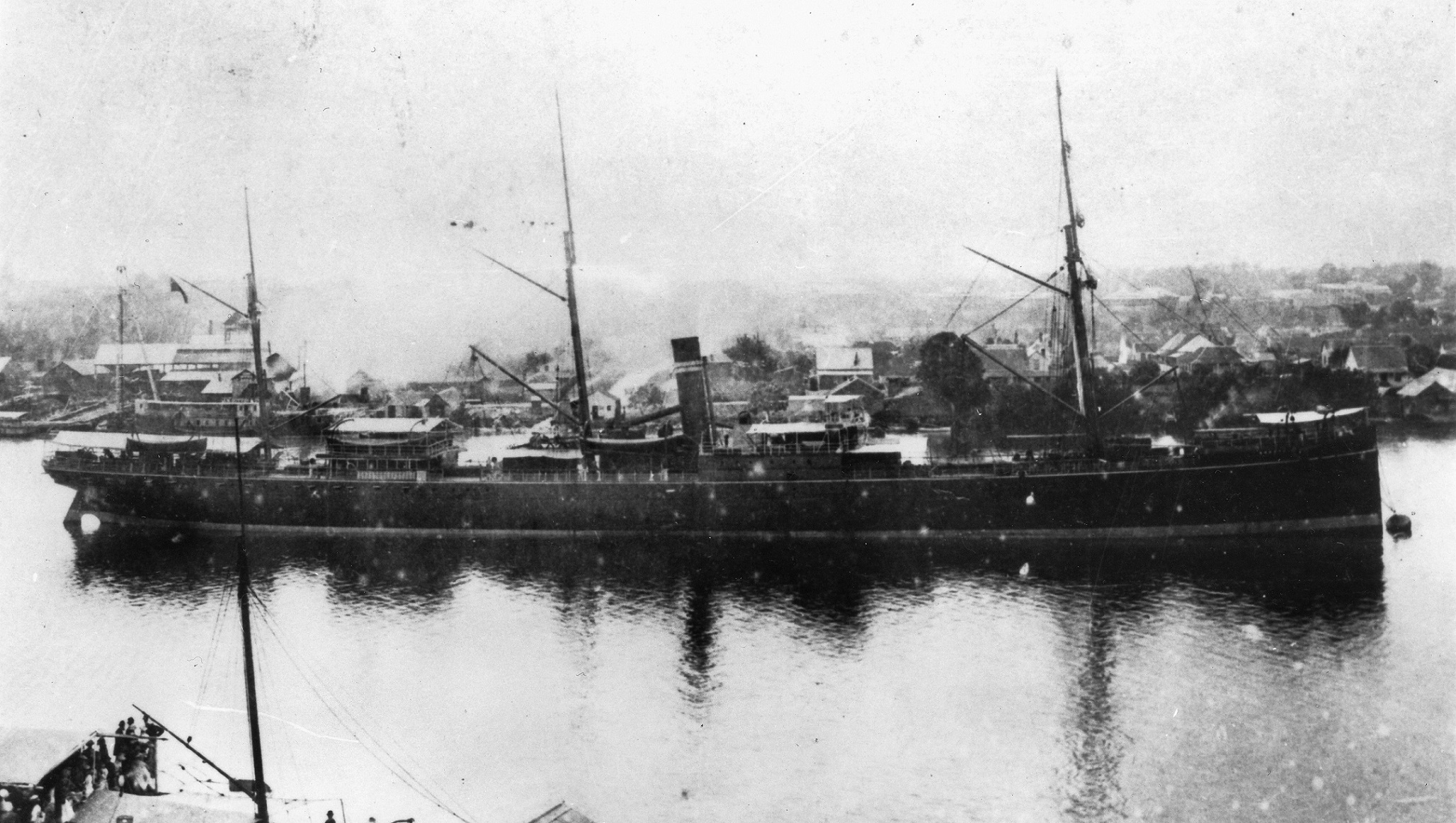
The ship called in at every port in Queensland, picking up passengers along the way. The voyage was routine until the night of the 28th of February 1890 when the Quetta struck an uncharted reef at low tide not far from Thursday Island.
The gash in the hull proved devastatingy fatal and the Quetta sunk in less than five minutes, leaving little or no time for passengers to save themselves. In the night time chaos, of two hundred and ninety-one people aboard, one hundred and thirty-three were drowned. It remains the worst peacetime maritime disaster in Queensland history.
The public was outraged because so many crew survived while so many passengers did not. But the captain and crew were exonerated because the passengers were asleep below decks when the reef was struck, and the ship went down so fast.
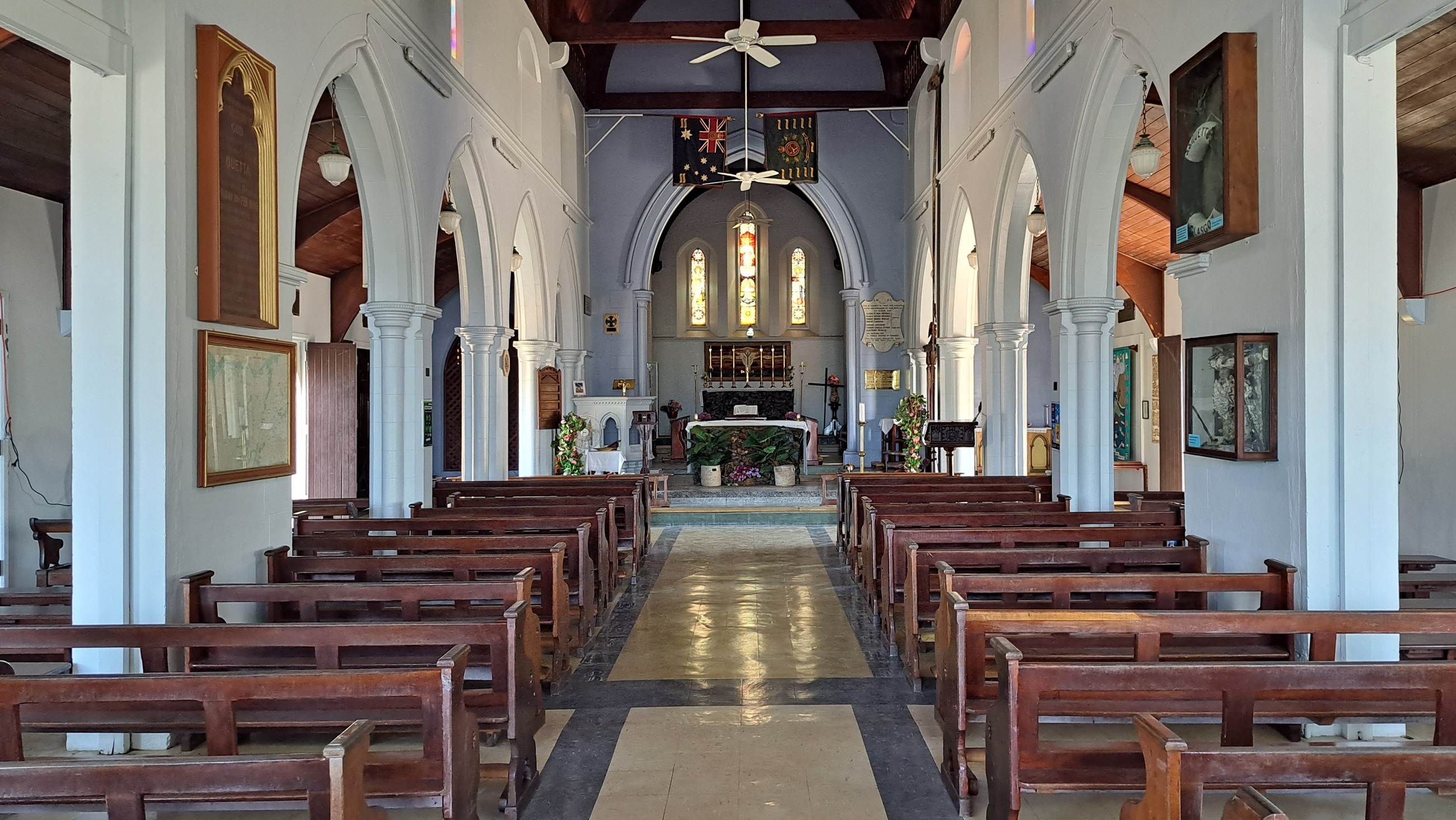
I’m visiting the Torres Strait and northern cape region to raise awareness and money to support the work of the charity Drug ARM. My first port of call was Thursday Island and the Quetta memorial church, otherwise known as the Anglican All Souls and St Bartholomew’s Cathedral Church. The church was opened on the 12th of November 1893 and dedicated to the memory or those lost and who survived the sinking of the Quetta. The memorialisation ensured that the tragedy would not be forgotten.
When I arrived, Willie from the church council was mowing the grass outside, and he honoured me with a tour of the beautiful church. The congregation enjoy magnificent church services with traditional islander music and singing.

Inside the church is a compass bowl from the Quetta, a riding lamp, coral encrusted porthole, lifebuoy and flag. Timber from the ship was used to make a plaque for the church’s crest, and marble from the ship is now the high alter. The Quetta Memorial Precinct is listed on the Queensland Heritage Register.
Amongst the awful death toll of the sinking are many remarkable stories which include that of two young girls.
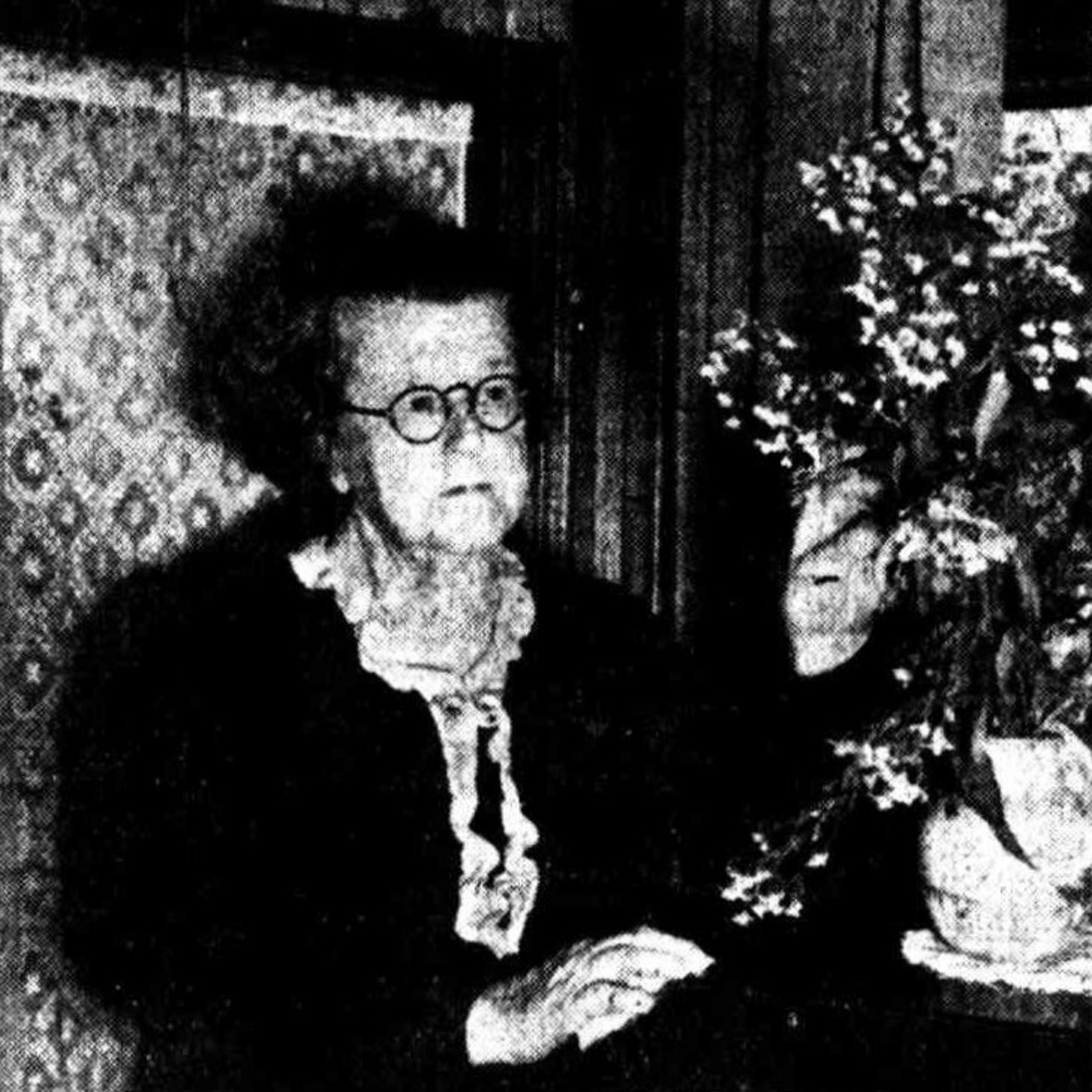
Out of all the female passengers on the Quetta, only three survived. One was a little girl who was never identified and so was adopted by Captain Brown of Thursday Island. She became known by the name of Quetta Brown. Another of the girls was Alice Nicklin.
The then nineteen-year-old Alice was the daughter of Mr and Mrs Reuben Nicklin of Coorparoo in Brisbane. Alice was travelling with her parents on the way to England for a holiday. Their two-storied house on Old Cleveland Road is still there today as the heritage-listed Queen Alexandra Home for Children.
Both of Alice’s parents drowned in the tragedy. However, Alice survived by clinging to a floating sheep and other items for nearly twenty-four hours.
Alice returned to the colony’s south-east and just three years later in 1894 married William Horsley. For the next thirty years the couple made their home in Harlin Road in Ipswich. When Alice was interviewed in 1940 for the fiftieth anniversary of the sinking, she was grandmother of nineteen grandchildren, thereby creating an enormous on-going legacy for the the Quetta and its memorial church. Alice’s nephew was Frank Nicklin who later became premier of Queensland.
I crossed live from the church on Thursday Island to tell this story on radio. As I do so, I stood beside a big brass ship’s bell. The bell is rung every Sunday morning calling the island people to worship. But on board the Quetta this same bell had been rung every half hour – for many of those souls lost in 1890 it was the last safe sound they heard.
Willie gave me permission to ring the bell just once. If I rang it eight times, people from across the island would think they were being called to church. Once was the same number of times the bell had sounded on the half hour before the Quetta went down all that time ago.
In November this year it’s the one hundred and thirtieth anniversary of the Quetta memorial church itself, and Willie has invited me back to Thursday Island to attend.
“If you guys come up, that’s great, big celebration, big spread, everyone comes from everywhere to celebrate the birthday of the church,” Willie said. “We’ve got everything – dugong, turtle, crustations, shells, you name it, what’s in the sea will be here.”
I was invited along with any descendants of the Quetta disaster.
The ship may have been lost one hundred and thirty-three years ago, but God rings its bell for eternity.
Please help me raise money to support others by donating to the charity Drug ARM today.
CLICK HERE TO LISTEN TO A VERSION OF THIS STORY TOLD LIVE ON RADIO – AND TO HEAR THE BELL.
Photo credits:
Quetta bell – Harold Peacock 2023.
Quetta c1884 – State Library of Queensland.
Willie at the Quetta memorial church – Harold Peacock 2023.
Alice Horsley nee Nicklin on the 50th anniversary of the sinking – Telegraph, Brisbane, 24th February 1940, page 9.
Inside the Quetta memorial church – Harold Peacock 2023.
 History Out There
[…] son of General Sir William Whish of the Royal Artillery. Captain Whish and his wife were among the one hundred and thirty-four people who tragically died in the sinking of the “Quetta” …. It remains the worst peacetime maritime disaster in Queensland […]
LikeLike