
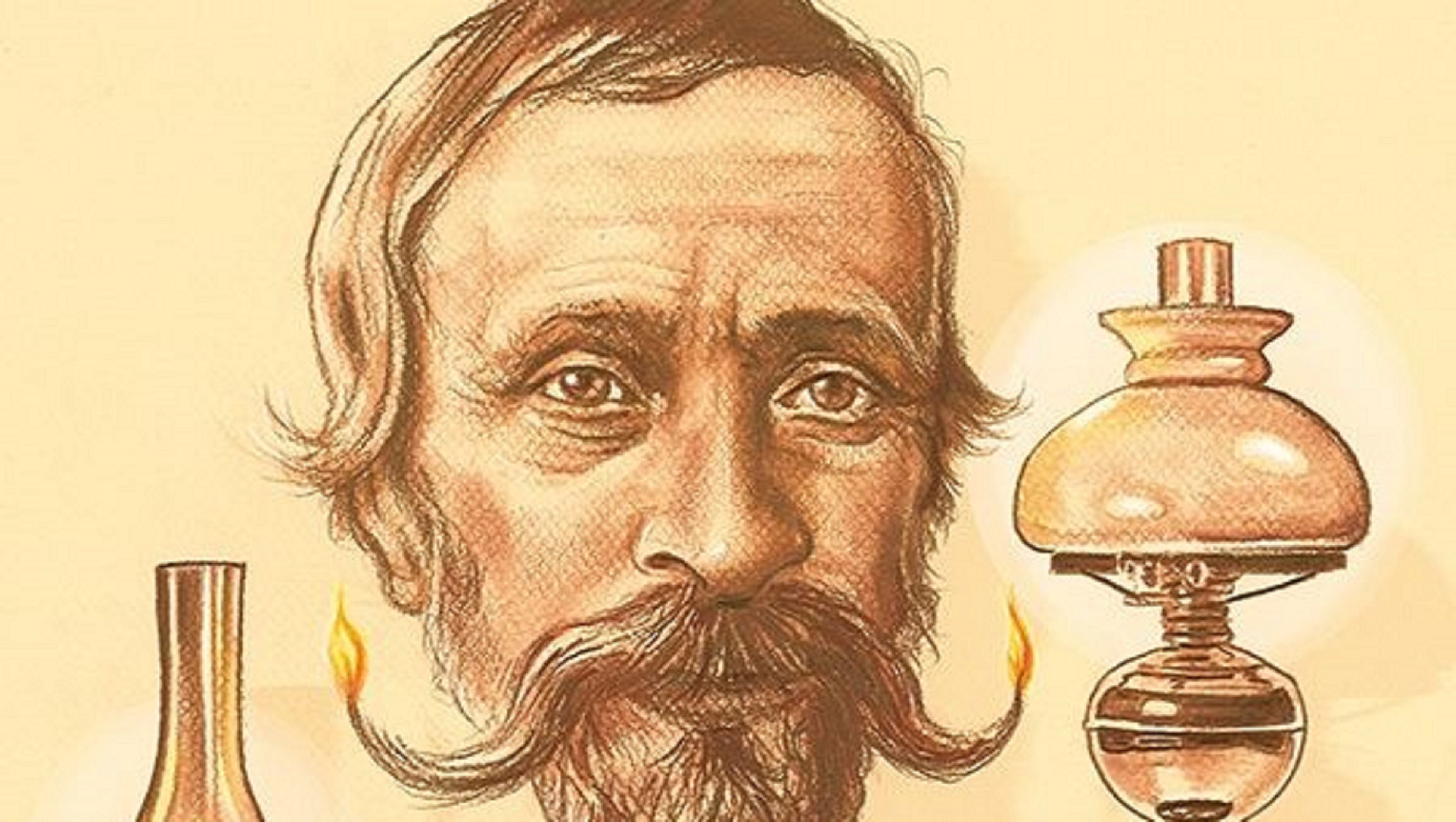
Ignacy Łukasiewicz (pictured above) was a Polish pharmacist and engineer responsible for the world’s first modern oil well. However, it was his inventions of kerosene and the modern kerosene lamp of 1853 that came into family homes with deadly effect. I told a version of this story on West Bremer Radio.
[The following story may contain images of an Indigenous Australian who has died.]
His kerosene lamp design was so successful that in the 1860s they began being imported into Australia by the thousands. Almost immediately the explosions began, and the Queensland city of Ipswich had its share of casualties.
In 1867 the caretaker of the Queen’s Park William Aylott narrowly escaped death and his house almost burnt down following the explosion of his kerosene lamp on the kitchen table.
His life had already been threatened when he and his family were harassed and chased by a large number of Aboriginals who were camped in the park. Aylott went on to be in charge of the gardens at the Goodna Asylum and the Ipswich Girls Grammar School. But it wasn’t a kerosene lamp nor the Aboriginals that got him, it was a bad case of diarrhoea because that’s what’s killed him in the end.

The first person killed in Ipswich by an exploding lamp was Catherine Joy in 1872. Catherine’s husband was a fruiterer on Brisbane Street. Late one Saturday night, she was helping her husband put up the shutters, when the kerosene lamp over her heard exploded with the sound of a gunshot. A blaze of burning kerosene poured on her head and covered her body, and within seconds she didn’t stand a chance.
The second death in Ipswich from kerosene lamps came in 1875. That’s when John O’Doherty was the proprietor of the Carriers’ Arms Hotel in Brisbane Street. He was turning down the lamp over the bar when it was knocked and exploded. The burning kerosene covered his head, neck, shoulders, and down to his stomach. The poor man was quickly a mass of flames, and he too never stood a chance.
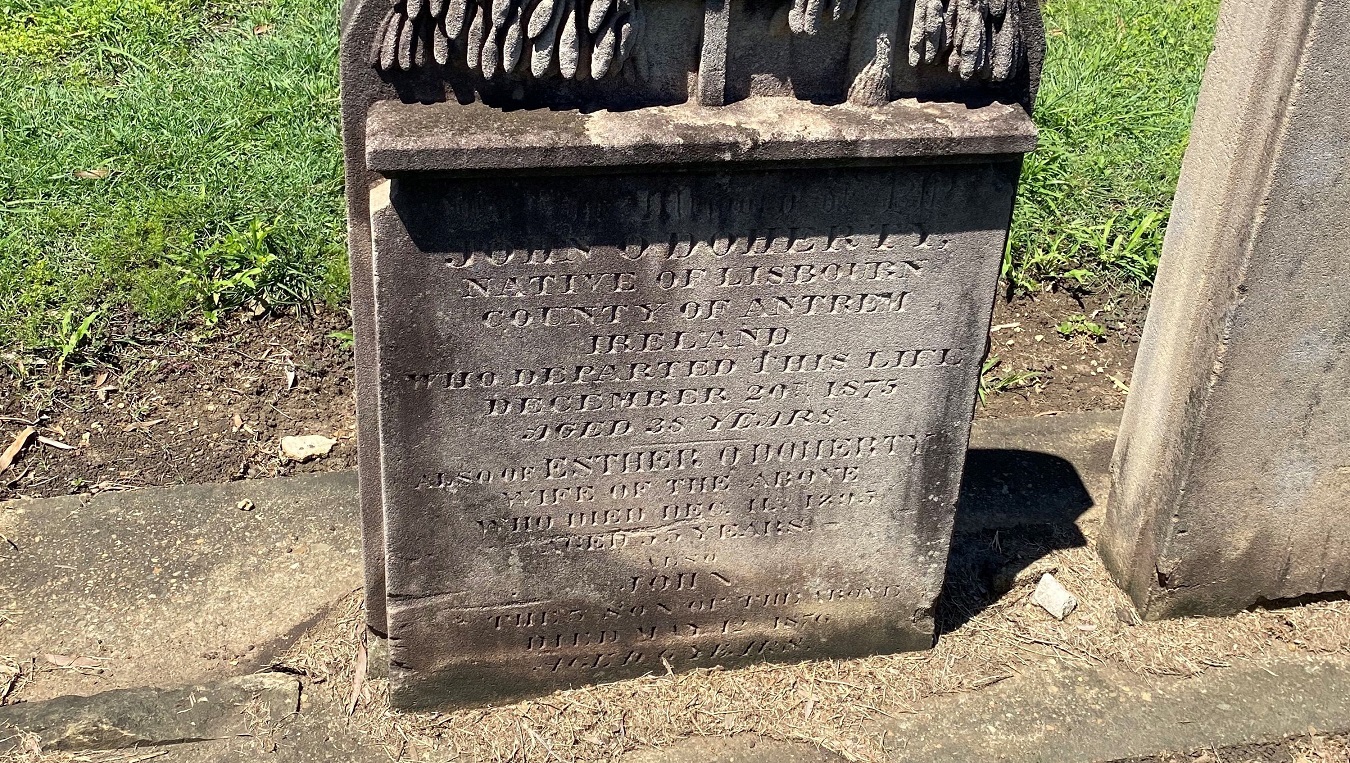
Within weeks of the tragedy, John’s wife Esther lost her only means of support when she had to give up the license to the hotel. She also endured the death of their five-year-old son who had been named after her late husband.
The worst lamp disaster that ever happened in the district was on Christmas day 1876. That’s when there was yet another explosion, this time at Walloon. A mother Katherine Schwartz was filling her family’s kerosene lamp.
She unscrewed the burner and held the blazing wick to one side while she poured in the kerosene from a half pint tin on the other. A slight draught ignited the kerosene and there was an almighty explosion. The tin was blown to bits, and the burning kerosene covered Katherine and her children who were standing around her. Two of them, aged seven and nine, died under awful circumstances. A third child was at first not expected to live, and Katherine herself was also gravely ill for some time.
Katherine and her child survived. Apart from a few strange things happening in her life – like her youngest son dying of typhoid, her husband’s horse being skewered through the chest and killed by the shaft of an oncoming cart near the Walloon Hotel, and her husband himself dropping dead in their garden at Walloon while talking to her brother – Katherine actually enjoyed a long and satisfactory life. She lived a further forty-three years after the exploding lamp disaster and she passed away in 1919.
The designs of kerosene lamps improved and the explosions eventually stopped – but it was a faulty design scenario that was not officially addressed by authorities, and the people just got on with it, despite some awful deaths in Ipswich and elsewhere.
CLICK HERE TO LISTEN TO A VERSION OF THIS STORY TOLD LIVE ON RADIO.
Photo credits:
Ignacy Łukasiewicz – sketch 2009 posted on Pinterst by Anna Kulawiak.
Aboriginal camp in Queen’s Park Ipswich 1890s – Sue Bostock Elms family photo album 20210725_133258.
John O’Doherty, Ipswich Cemetery – photo by Catherine Calling added to Find A Grave 2021.
 History Out There