
A family of five was dramatically saved from certain death in this shocking history of snake bites in Ipswich, Queensland. I told a version of this story live on West Bremer Radio.
In 1888, Patrick Sullivan was a shearer living in Basin Pocket at Ipswich. One night after midnight he was feeling thirsty and so, barefooted, went to the tank out the back for a drink.
That’s when he was bitten on the foot by a snake. The wound was sucked by his friends. Dr. Albert Dunlop, who one of the original trustees of the Ipswich Girls’ Grammar, scarified the wound, in other words he cut flesh out from around the bite which is what they did back then. Sullivan survived.
Back then, the treatment was often worse that the snakebite itself.
In 1891, a woman named Mrs. Shubel lived on a farm at Kirchheim, which was the original name of Haigslea in Ipswich. She was bitten by a whip snake just above her ankle and rushed to Dr. William Von Lossberg in Ipswich. Dr Von Lossberg cut the wound in two places, the blood flowed, and strangely it was black in colour. Strychnine was injected, ammonia and spirits administered, and despite this treatment, Mrs Shubel survived.
In 1894, at Blantyre just outside of Ipswich, four-year-old Francis Macfarlane was playing outside after dark when he stepped on a snake and was bitten, but he didn’t tell anyone.
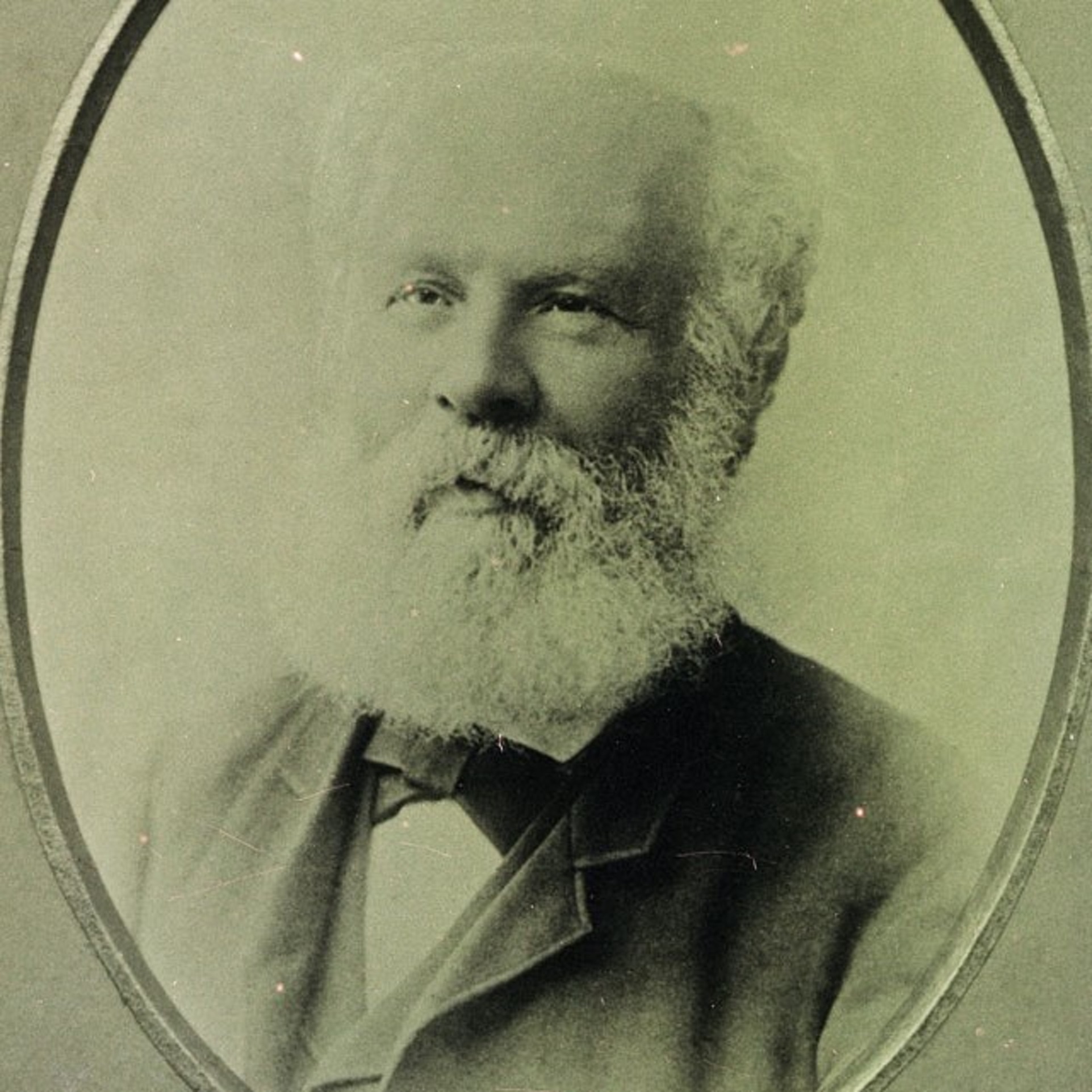
Francis was put to bed, and the household was awoken by the noise of gurgling in the boy’s throat. He died just moments later. Francis’s uncle was Albion Hayne the accountant who invented the first ever car laps in Ipswich history, and his grandfather was John Macfarlane the Ipswich mayor.
In 1896 there was a run of snake bites in Ipswich. One was fourteen-year-old Clara Wilks. Her father was a miner at Tivoli. Clara was walking barefooted across a paddock when a black snake bit her just above the ankle. She survived that, only for months later to be allegedly raped, although no charges ever laid.
Also in 1896, there was another fourteen-year-old, John Hoffmann from Ebenezer in Ipswich. John was bitten on the foot and began vomiting. The usual treatment of sucking and scarifying was applied and he survived, but across the district his Hoffman family were dropping like flies.
Some years earlier, a fifteen-year-old Hoffman girl was walking home in North Ipswich when a brown snake bit her on the ankle. The wound was scarified by Dr. Von Lossberg. She recovered, but then there was James Hoffman. He was driving a spring cart when he was thrown out, the cart landed on top of him, killing him instantly. And there was a second John Hoffman who worked at the Ipswich railway workshops. He was killed when his head was crushed between two carriages.
But back to the third snake bite in 1896. Ephraim and Elizabeth Hughes of Bundamba had nine children and at least two of them were bitten by snakes. First was eleven-year-old Frederick Hughes. He was playing in a paddock when a black or a brown snake bit him on the toe. His father scarified the wound and sucked it. The youngster survived.
Nine years later, his brother fourteen-year-old Edwin Hughes was bitten on his big toe by a brown snake. The wound was cauterised (or burned with a heated knife or similar) and sucked by his brother. Edwin also survived.
But of all the snakebites in the history of Ipswich, the most dramatic was in 1909 when a family of five was saved from certain death.
A brown snake entered the house where the five offspring of Glendon Duke were sleeping. Their mother Nettle furiously attacked the snake and quickly dispatched it, but not before the snake had bitten her on the foot and cheek.
The osteologist Mr. Denis Buckley was called and applied the “Brunton” snake bite remedy of permanganate of potash, with injections of strychnine. Poor Nettle became comatose, but she survived.
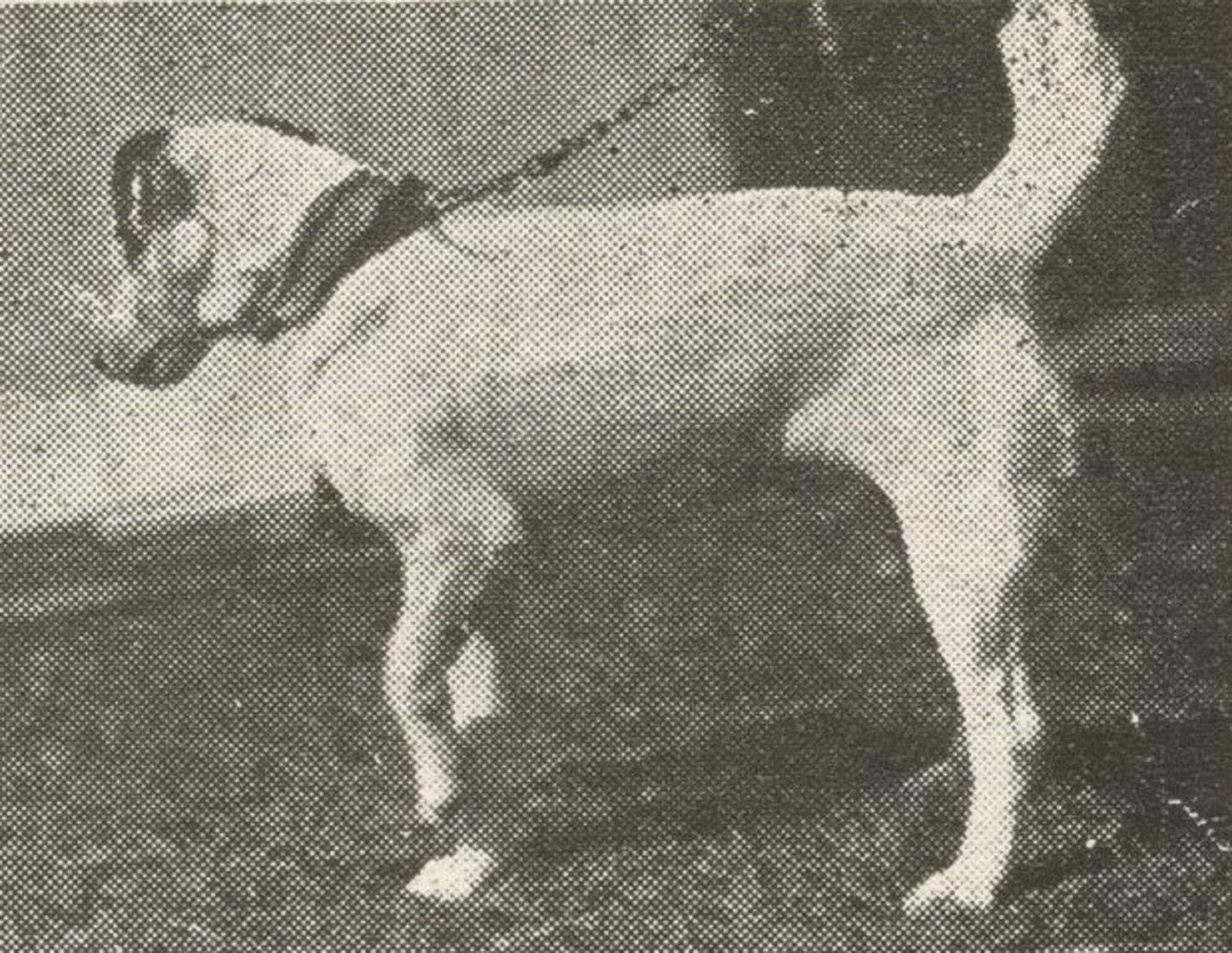
It was only a few months earlier that the Ipswich auctioneer Henry Bostock had mated Nettle with Glendon Duke who was his champion fox terrier. Nettle was also a dog.
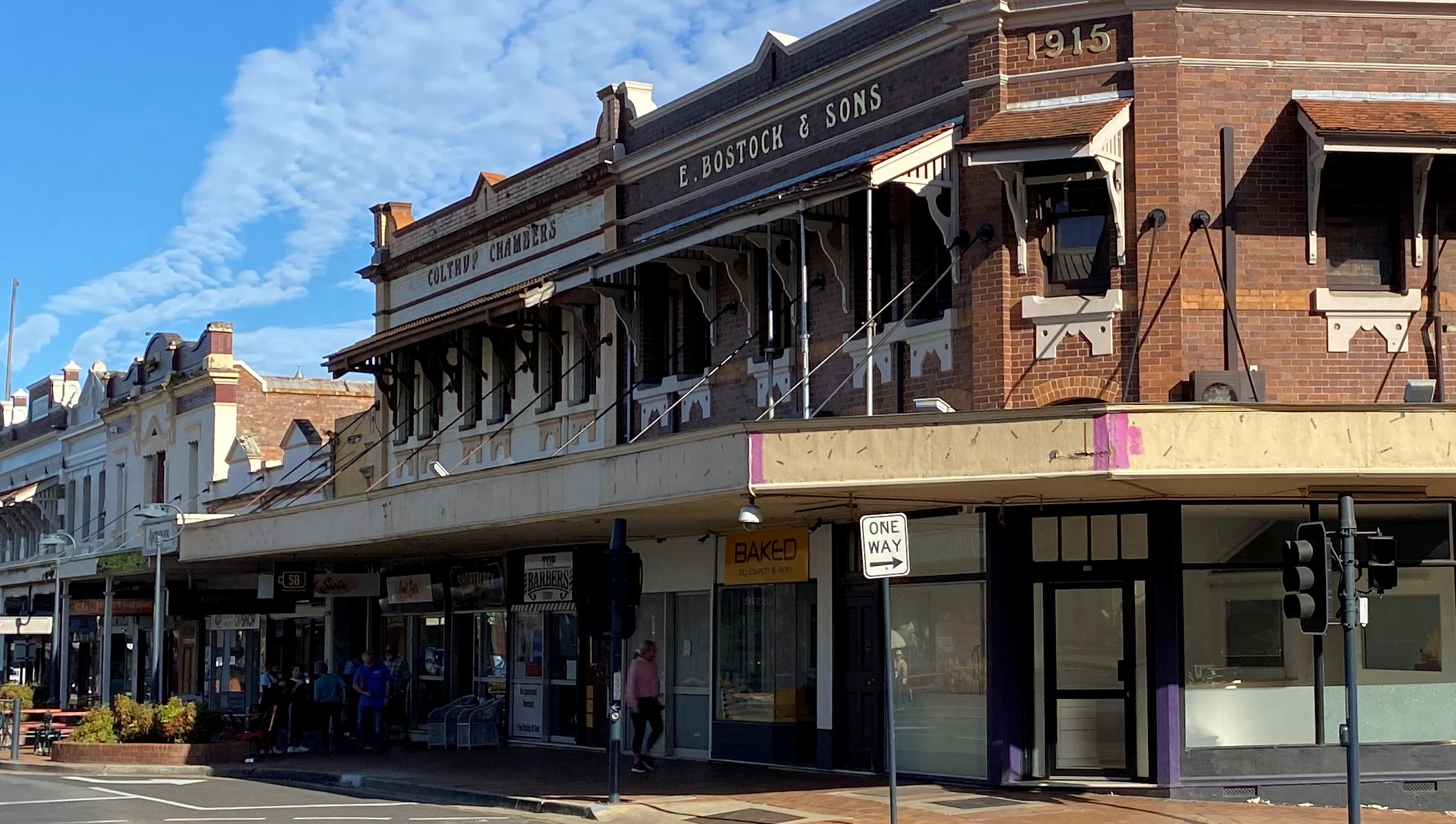
That’s the same Bostock family of the Bostock Chambers building on the corner of Brisbane and Ellenborough Streets in the heart of Ipswich, and it’s still there today (pictured top of the page).
There’s snake bite history out there everywhere you go, including incredible stories of what mothers like Nettle will do for their children.
CLICK HERE TO LISTEN TO A VERSION OF THIS STORY TOLD ON WEST BREMER RADIO.
Photo credits:
Bostock Chambers Brisbane Street Ipswich 2022 – Harold Peacock.
John Macfarlane Ipswich mayor 1876 – Picture Ipswich.
Champion fox terrier Glendon Duke, Queensland Exhibition, The Queenslander Pictorial – The Queenslander, 21st August 1915, page 32.
 History Out There