

In colonial Queensland in the 1870s and 80s there was a recidivist petty criminal by the name of Thomas Skiffins with a very peculiar tale. I told a version of this story live on Darling Downs radio 4AK.
Skiffins would be imprisoned for theft or false pretences, and as soon as he got out, he’d do it again. Along the way he accumulated two wives, five children, and dozens of convictions.
That was until 1887 when he was discharged after having served a three years’ sentence on St Helena Island. That’s when he was liberated a reformed man. He launched a speaking career delivering a lecture called, “Life amongst Crime and Criminals.” In it he alleged misgovernment at the penal establishment in Moreton Bay. Attendance was small however, and so Thomas Skiffins needed to reinvent himself for a second time.
That he did with a complete change in persona. By 1901, Thomas Skiffins was known as Thomas Wanza, and described himself as a “professor of palmistry”.
While pursuing his new-found career in the mystic art of palm reading, Wanza wound up in the Brisbane court defending himself against a charge of vagrancy. Wanza further described himself as a “scientific palmist”, and because he had this professional income, he argued that there was no way he could be convicted of vagrancy. He went to great lengths to explain that the profession of “palmistry” was in no way similar to that of “fortune teller” which was a criminal offence back then because it was considered fraud.
What’s more, he said there were numerous ladies and gentlemen who could confirm that he had been making a legitimate living out of his calling for quite some time. But Wanza said that he would “sooner go to gaol than commit a breach of professional etiquette by calling any of his past clients who had honoured him with their confidence.” The magistrates heard his argument, then sentenced him to three months’ hard labour.
Wanza took his profession on the road and in 1907 he arrived in Stanthorpe. That’s when his mystical powers reached their zenith.
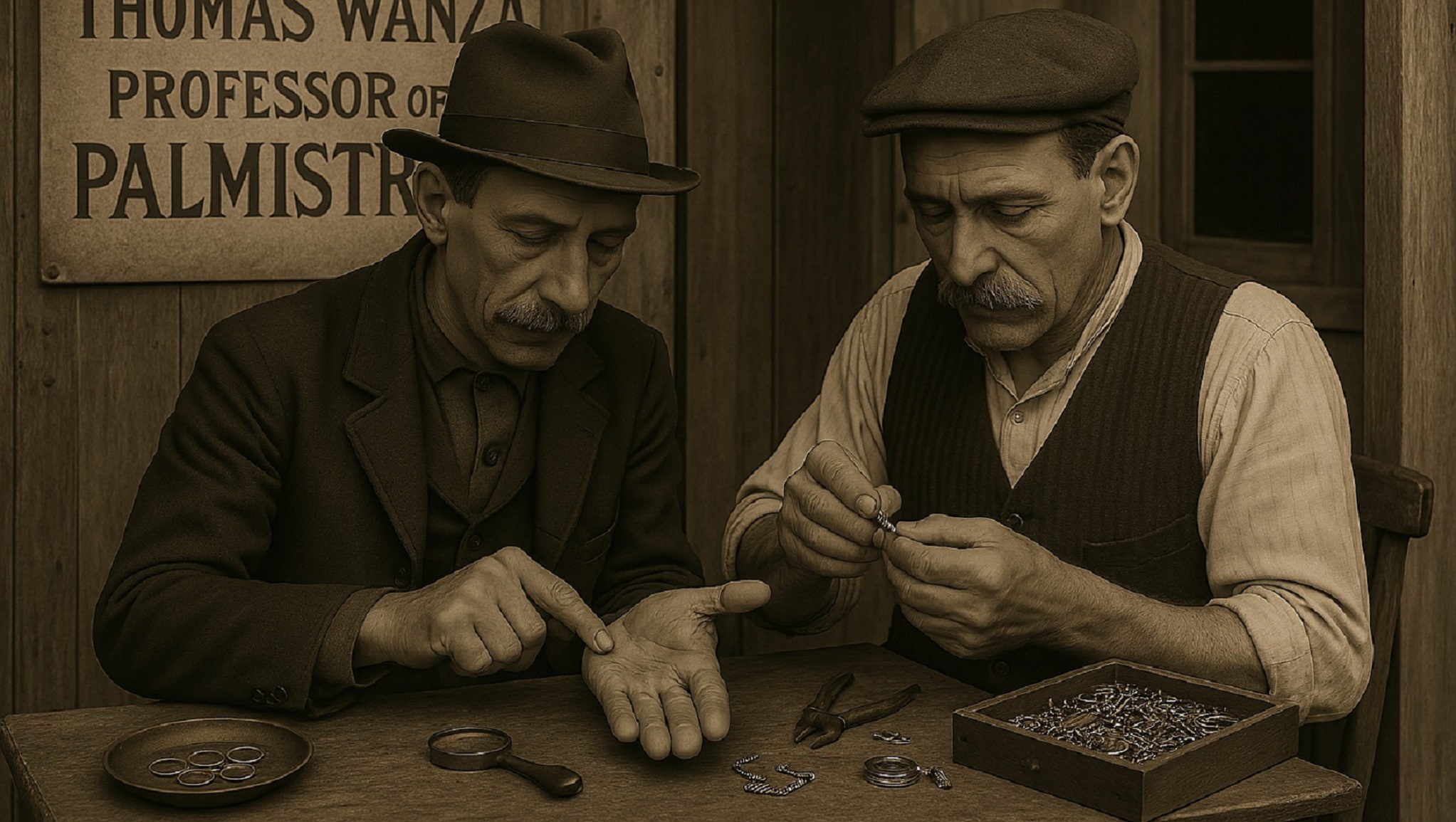
Wanza and a Max Henschal travelled on a horse and dray together and conducted a joint business of palmistry and jewellery repair work. One day when they were in Stanthorpe, the box of jewellery and tools owned by Henschal disappeared. They had all vanished into thin air.
The Stanthorpe police were called but they were perplexed by the mystery and confessed they could do nothing.
Wanza then offered to help his friend. He volunteered to locate the missing box for a consideration of £5. The method of recovery was ingenious. He retired to rest and dreamed a dream, wherein it was disclosed to him where the box was hidden. He went with Henschal to a place on the roadside, and there, strange to say, the missing box was unearthed. But the box was found to be empty.
Wanza was not easily defeated and offered to find the missing contents by means of another dream, for a further consideration of £3. The offer was accepted, and Wanza in the dead of night again communed with his spirits. The hiding place of the contents of the box was revealed to him, and successfully recovered.
The Stanthorpe police viewed these bizarre proceedings with complete astonishment, however a dark suspicion slowly descended, and Wanza was committed to appear at the Stanthorpe District Court on the charge of stealing.
Leading the argument was Mr Fred Dickson the crown prosecutor and son of the former Queensland premier.
Presiding in the case was His Honour Arthur Noel of the district court and sometimes supreme court. Judge Noel was regarded as one of the most brilliant legal authorities in Queensland.
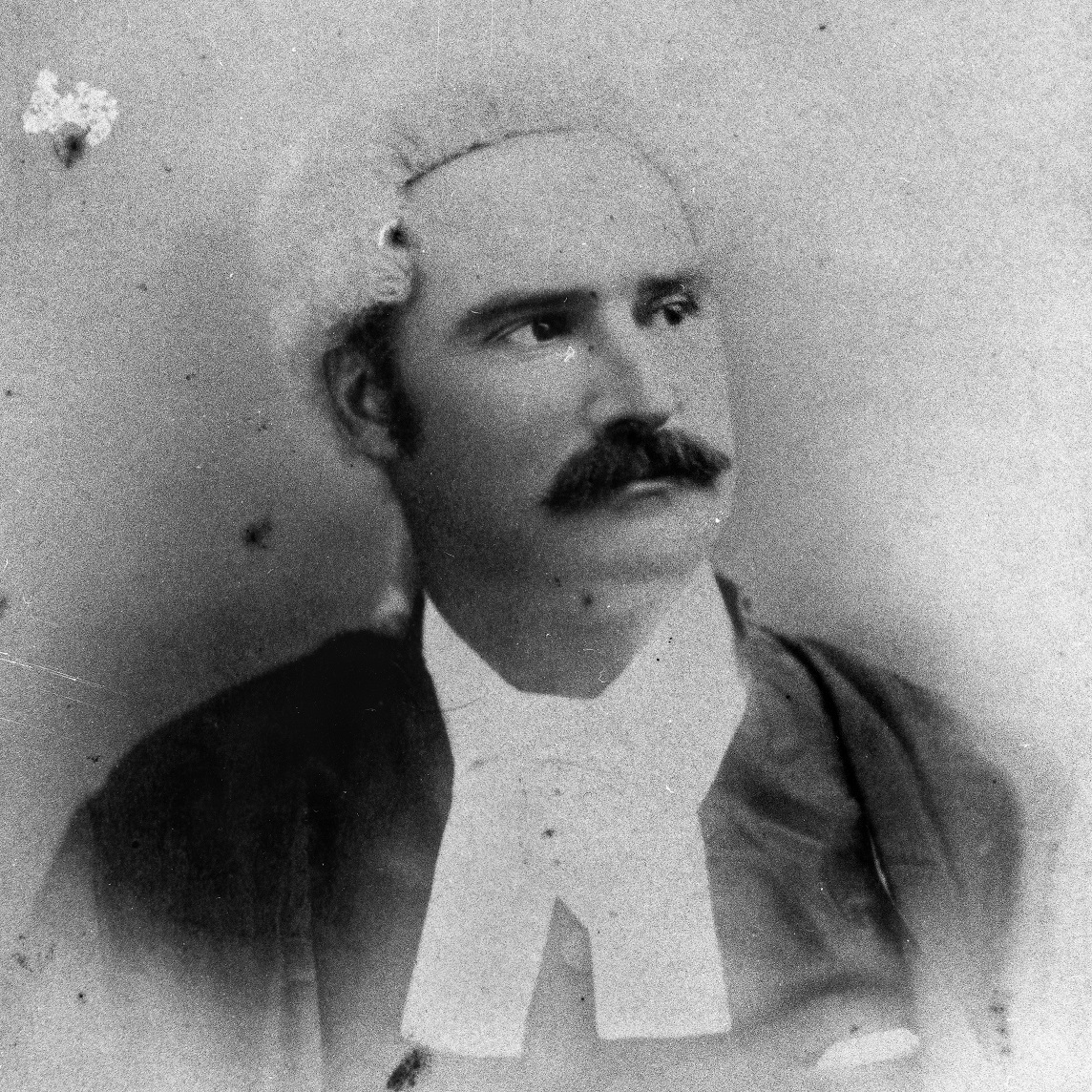
Judge Noel, after listening to Mr. Dickson’s address, determined that there was no criminal intent because the goods were returned to their rightful owner.
That meant that incredibly, Thomas Skiffins alias Thomas Wanza, the self-described professor of palmistry who dreamed the recovery of the lost items, was fully vindicated by the district court and was free to go.
Thomas Wanza was effectively legally acknowledged as the Professor of Palmistry in Stanthorpe 118 years ago.
CLICK HERE TO LISTEN TO A VERSION OF THIS STORY TOLD ON RADIO 4AK.
Photo credits:
Palm Reading – Sweet and Masala website.
Depiction of Thomas Wanza and Max Henschal 1901 – Copilot_20250627_060028.
Judge Arthur Baptist Noel – State Library of Queensland.
 History Out There
Palmistry, or chiromancy, has fascinated people for centuries as a window into one’s character, destiny, and potential. Among the many symbols found in the palm, the triangle sign holds particular significance. These small geometric shapes, formed by the intersection of lines, are believed to reveal hidden talents, divine protection, or special abilities—depending on their size, location, and clarity.
https://www.indianetzone.com/triangle_signs_hand
LikeLike
In palmistry, every line, mount, and marking on the palm is said to tell a unique story about a person’s character, fate, and life experiences. Among the many features studied by palm readers, spots hold a special place. Though often small and seemingly insignificant, these marks can indicate important changes or warnings in an individual’s life, depending on where they appear.
https://www.indianetzone.com/spot_signs_hand
LikeLike