
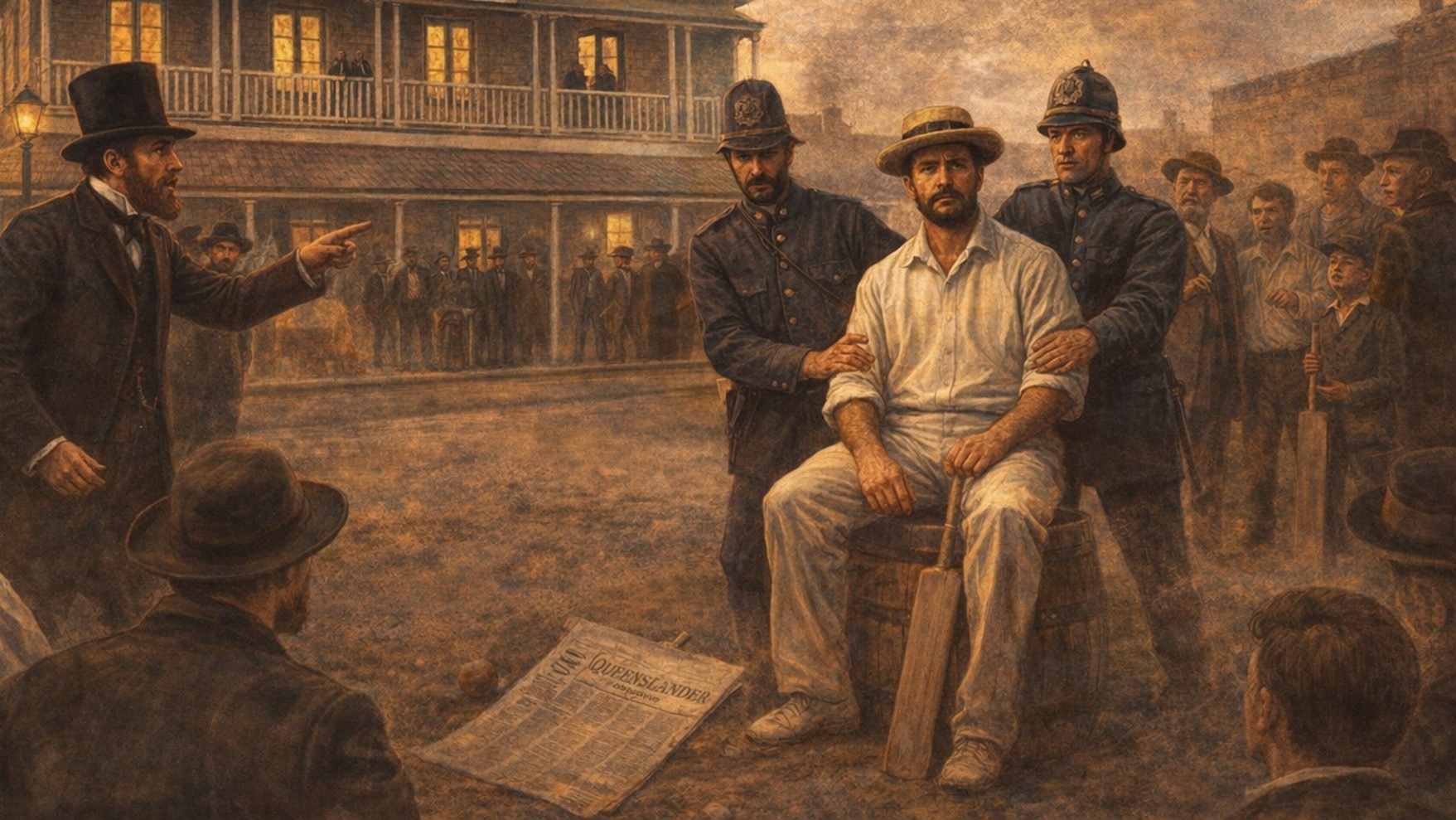
The first major sporting travesty in Queensland happened in 1865 and it changed the course of the colony’s sports history. I told a version of this story live on Ipswich’s West Bremer Radio.
The life of Thomas Blythe Foden was extremely varied and he may have been a little outspoken. It was in Ipswich, Queensland, that he created history with a controversy that rocked the colony.
Foden was born in England in 1833. He arrived in Queensland and became a gold miner, music hall entertainer, and the colony’s best all-round cricketer.
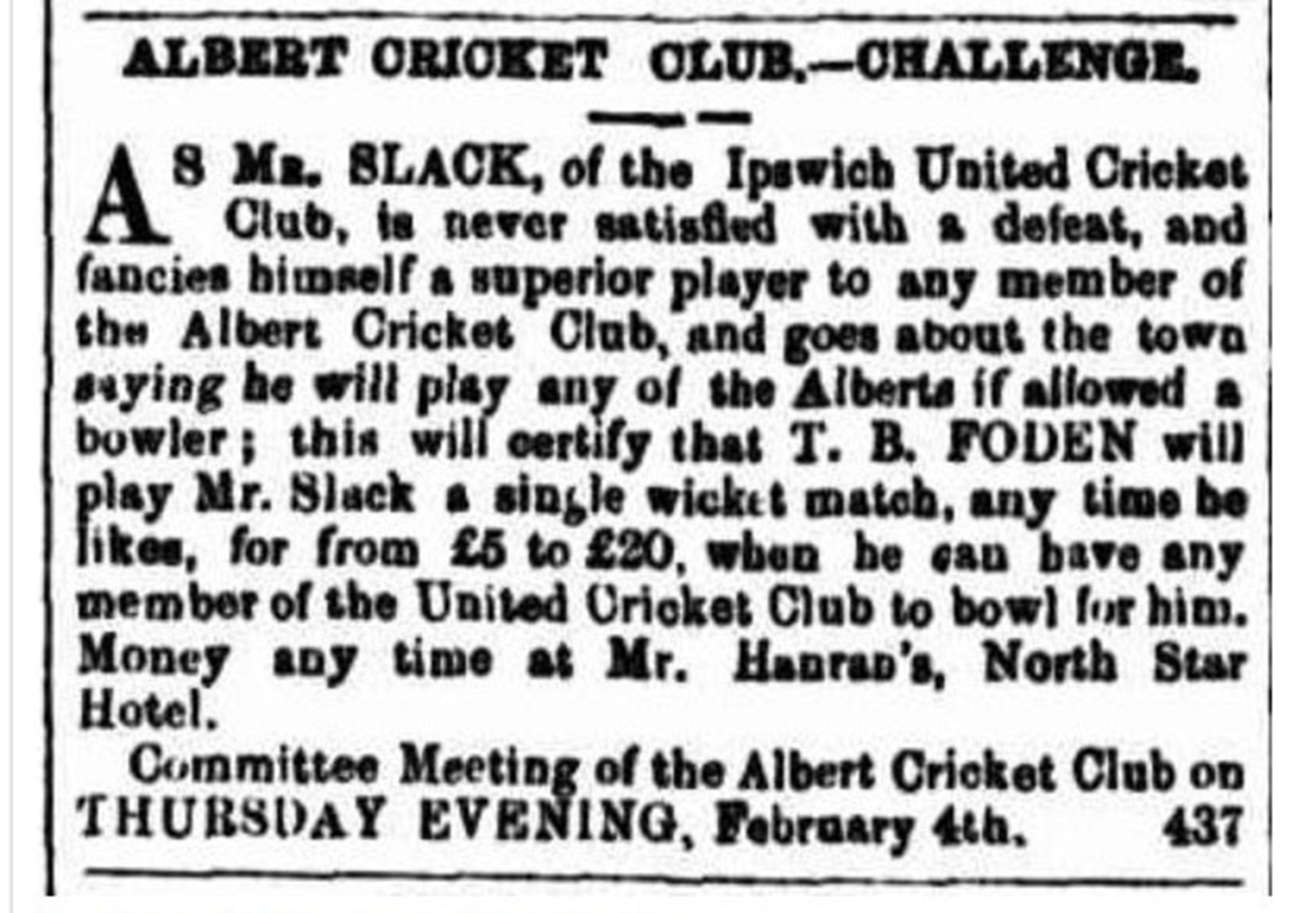
In 1864, Foden publicly challenged Jack Slack who considered himself the best cricketer in Ipswich. Foden offered for a single wicket match a wager for around thirty thousand dollars in today’s money. The challenge was never accepted.
Foden was in fact so good that he captained Ipswich, and was the best player, in its most famous victory. In 1864 Ipswich played Brisbane. These were selection matches for the inaugural Queensland cricket team to play an intercolonial match against New South Wales.
Even in those days there was a good deal of “Queen Street” control and Brisbane was inclined to treat any country players with contempt.
The Brisbane team came to Ipswich, Foden top-scored with 11 runs in Ipswich’s total of 56. Brisbane was then dismissed for the embarrassing total of 4 runs. The pick of the Ipswich bowlers was the underarm trundler Joe Meads who took four wickets for none in just 18 balls. Foden also took 4 wickets.
It was an extraordinary performance that resulted in Foden being a cornerstone for Queensland for that first intercolonial contest. The four-day match was won by New South Wales, but Foden was a standout. He scored a run in each innings as a batsman, and he bowled unchanged for the whole of the first innings, taking 6 wickets for 16 runs, and 2 more wickets in the second innings. Foden was then again chosen for Queensland to play New South Wales in a single wicket match, the equivalent of a limited overs matches today.
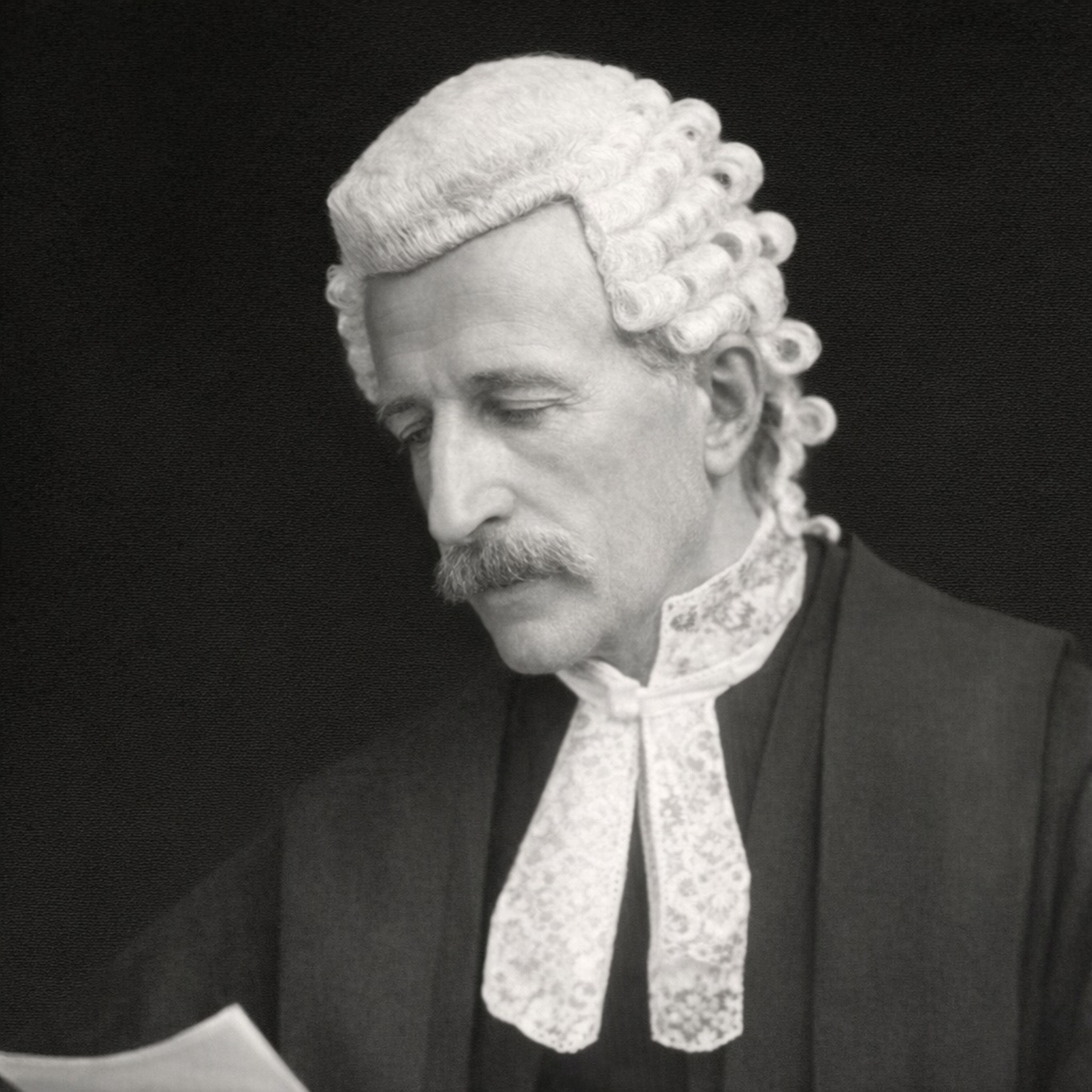
Foden was the star of the colony, and in early 1865 he got married. But then ten weeks later his stardom was tarnished when he came up against Mr Thomas Annaziah Costin. Costin’s father started the first Methodist church in Queensland, his brother was in charge of the government printing office, his nephew was clerk of the Queensland Parliaments, and Costin himself was a leading Queen Street saddler in Brisbane, and chairman of the Queensland cricket selectors.
Foden was not selected for Queensland’s first cricket tour to New South Wales. Controversy erupted. Costin stated that Foden was left out for reasons other than his cricket abilities, but wouldn’t elaborate, and he rejected appeals for the non-selection to be overturned.
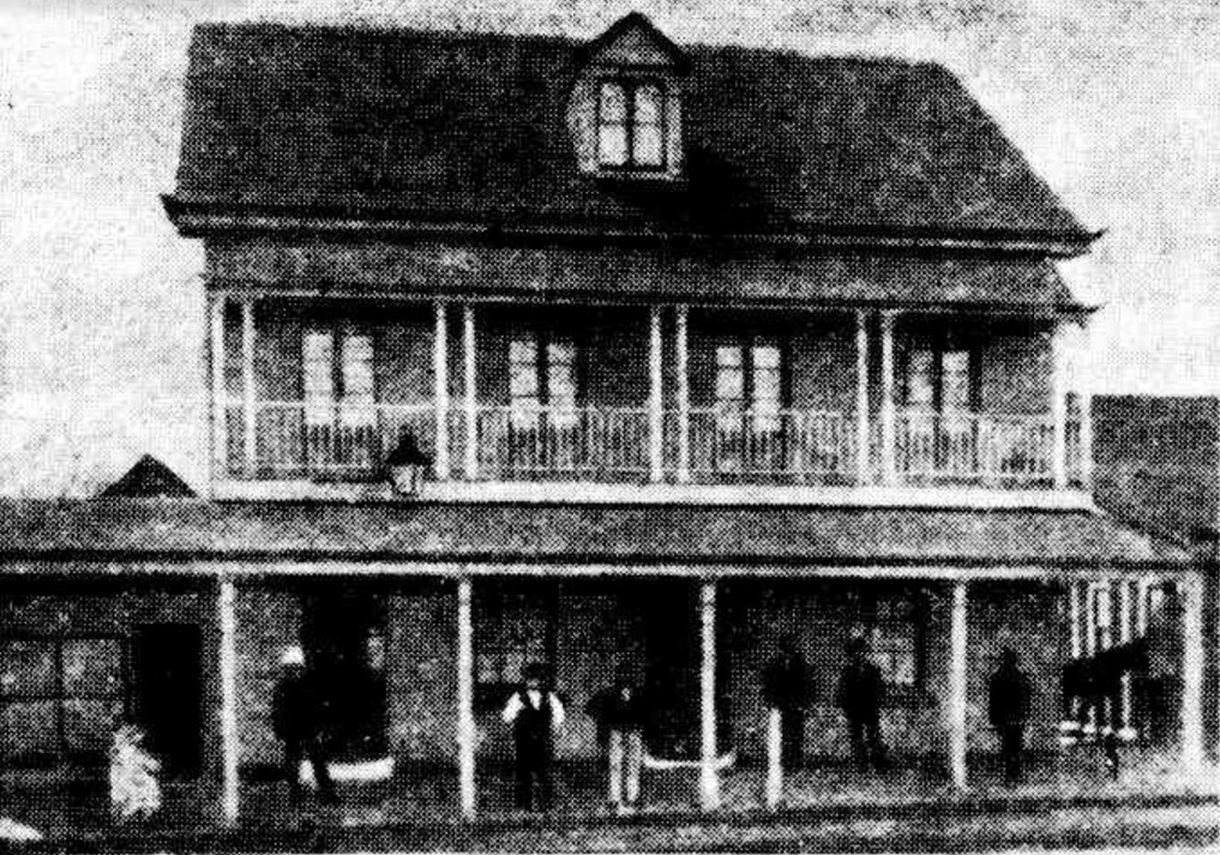
Foden went to stay in the City Hotel, Fortitude Valley. The City Hotel, which was on the corner of Ann and Brunswick streets opposite today’s Royal George Hotel, was popular amongst the bullock drivers. Foden worked there as conductor of the concert room. Three weeks after arriving he was arrested for robbery.
The charges were dropped as soon as Foden appeared in court, the judge said that no stain should be on his character, but the damage was done. Gold had just been discovered at Crocodile Creek west of Rockhampton, and so that’s where Foden went to escape the continuing public dishonour.
Foden was there in 1867, when tensions at the Crocodile Creek goldfield escalated into riots, infamously resulting in the destruction of property belonging to Chinese miners.
Foden became a favourite at the Cornstalk music theatre which was the first theatre in Rockhampton. But tragedy refused to be far behind.
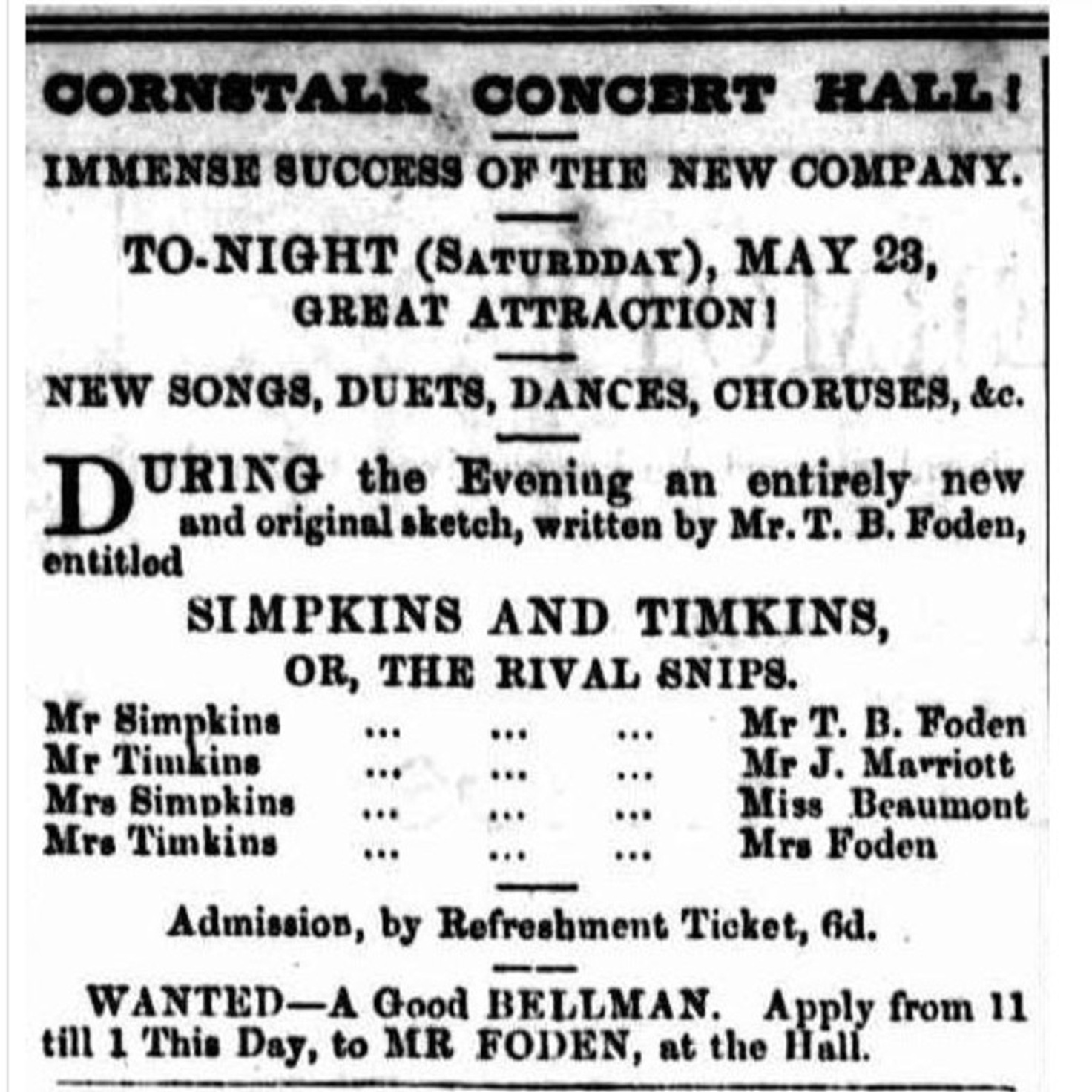
Among Foden’s children, one died at three years old, two of them at seven months, others at one year, three months, seven weeks, and two days. Of the four who lived to adulthood, one was crushed by a bolder and another died from a heart attack in his gold mine, and the daughters both married at sixteen, one died shortly thereafter, and the other her husband was the first fatality at the Blair Athol colliery.
In 1908, Foden passed away at The Springs outside Clermont in central Queensland. He was seventy-five.
The humiliation of missing colonial selection and trumped-up criminal charges meant that Ipswich lost its greatest cricket captain, which influenced its sporting history forever.
CLICK HERE TO LISTEN TO A VERSION OF THIS STORY TOLD ON WEST BREMER RADIO.
Photo credits:
The Foden Affair – Copilot.
Alberts Cricket Club Challenge – Queensland Times Ipswich Herald and General Advertiser, 2nd February 1864, page 2.
CW Costin Clerk of Parliaments Queensland – The Queenslander Pictorial, The Queenslander, 18th September 1915, page 28 – restored.
City Hotel, Fortitude Valley – Brisbane Telegraph, 24th March 1949, page 16.
Cornstalk Concert Hall advertisement – Northern Argus, Rockhampton, 23rd May 1868, page 3.
 History Out There