
Australia’s referendums have been showcased by stretched wires, thrown eggs, and communist pencils, but the greatest of all was the road grader referendum of 1938. I told a version of this story on West Bremer Radio.
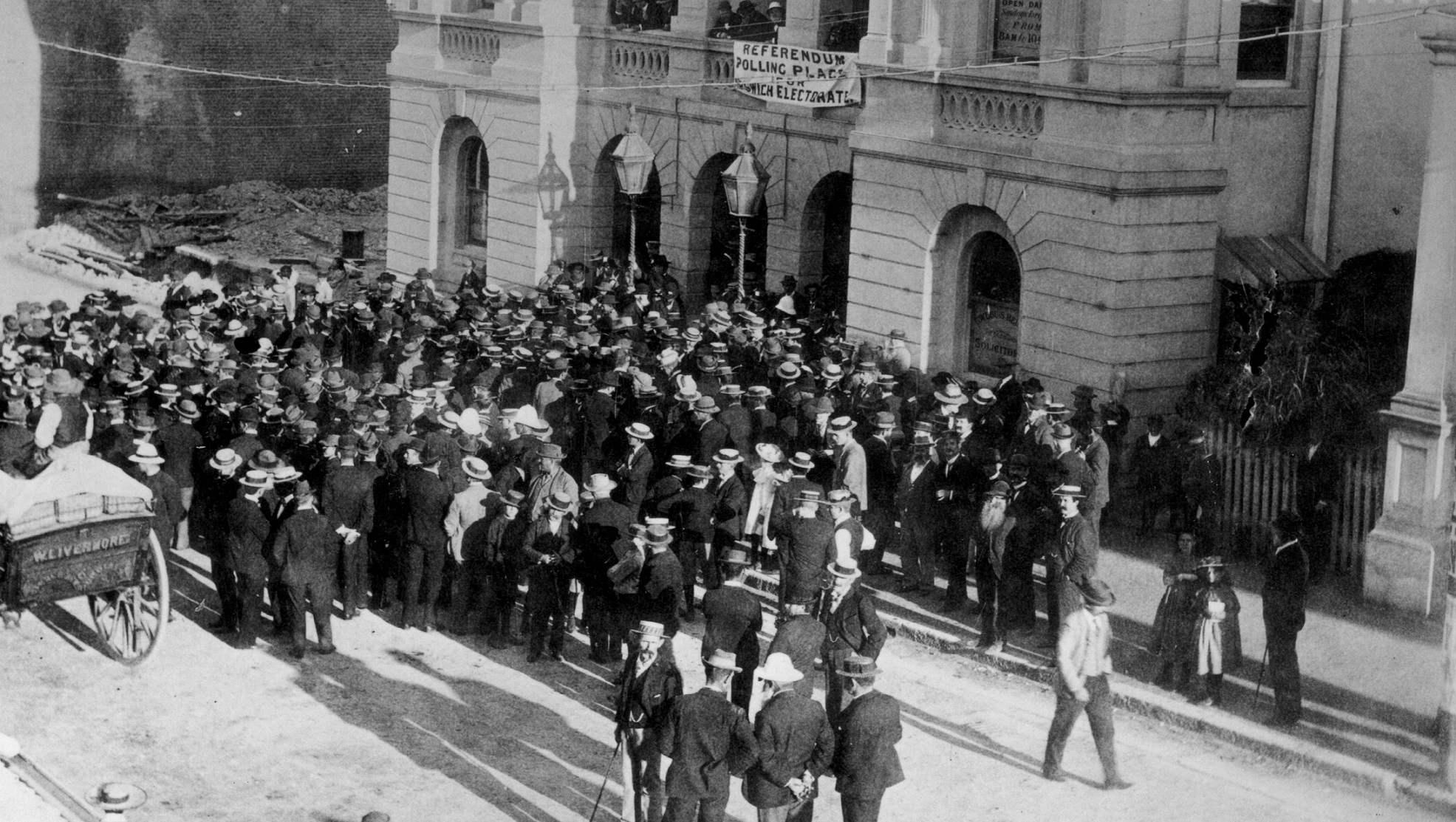
In 1899 the Federation referendum was to decide if the colonies came together to form the Federation of Australia. It did happen of course, but there was some other history made in the city of Ipswich in Queensland.
What was termed as “a telephone instrument” was temporarily set up at the Queensland Times newspaper office, and the results of the referendum were called directly through to there from Brisbane. This the first time that a telephone was used to phone in the results, and crowds massed outside the office to hear the outcome. It should be noted that a gang of men were still working hard stretching the wires for the telephone right up to the announcement.
The events surrounding the 1917 referendum are probably the best known of all. It was the failed second referendum for conscription during the First World War, and it happened not far away from Ipswich at Warwick.

That’s where the Australian prime minister Billy Hughes stepped onto the platform of the Warwick railway station and into the middle of a howling mob. An egg was thrown which knocked off his hat and pandemonium broke out. It was rumoured that a Queensland policeman refused to arrest the perpetrator, and that’s what led to the founding of the Australian Federal Police.
The 1951 referendum was to give the government powers to ban the Australian Communist Party. The Cold War was just getting warmed up and the Petrov Affair spy incident was still three years away.

A furore emerged in Ipswich on the day of the voting. Indelible pencils were issued to polling clerks at the town hall and a number of the pencils were marked “Made in U.S.S.R.” which was course was the Union of Soviet Socialist Republics led by communist Russia. These pencils were mixed up with the standard issue that were branded with “Commonwealth of Australia.” It caused a huge amount of consternation. The chief electoral officer had no idea how the pencils got there. The only explanation he offered was that they were old stock. The matter was settled when one of the polling clerks declared, “At least they are not red,” and so it was decided the referendum in Ipswich was able to go ahead as planned.
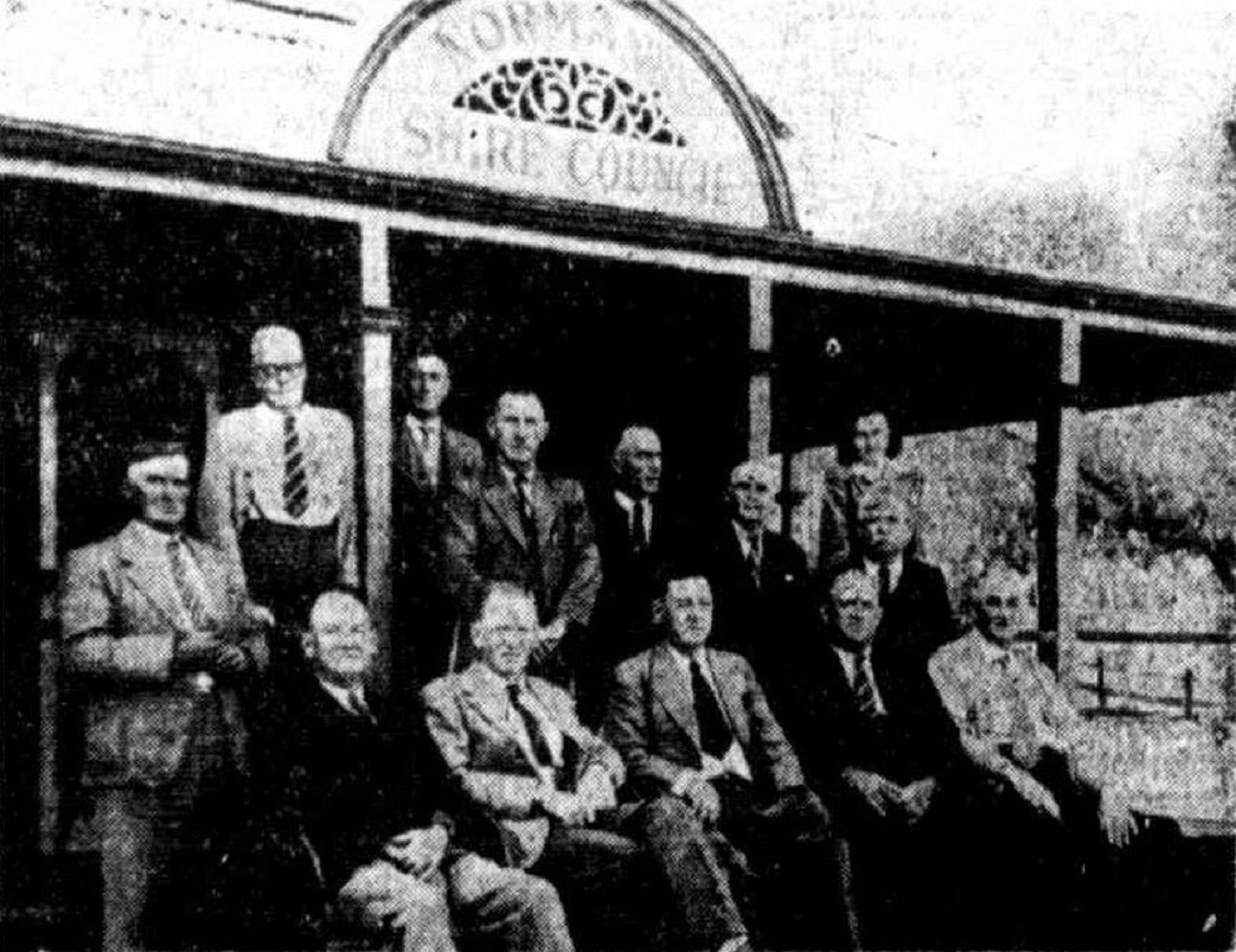
But the most dramatic referendum in the history of the Ipswich district was not a federal one, but rather a local referendum called by the old Normanby Shire Council in 1938. The referendum was to decide whether the shire should buy a grader. The Normanby council was based at Harrisville just south of Ipswich but it was abolished in 1949, and the referendum might have had something to do with it.
Three of the councillors at the time were Hans Jensen, John Hayes and William Sefton.
Hans Jensen had previously been kicked by a horse and sustained severe injuries to his loins. On another occasion, his horse and sulky bolted, he grabbed the reins and was dragged for about fifty metres. Fortunately, Jensen survived those injuries to take his place in council.
John Hayes would be a councillor for twenty years. At the time of the grader referendum, his brother was the shire chairman.
Then there was William Sefton. More on him in a moment.
Not long before the grader debate, two councillors, who were both Justices of the Peace, were the principal players in a Police Court action. It was alleged by Hayes that after discussing council business, he was punched in the face and kicked on the nose by the Sefton in a dispute on the main street of Harrisville. Hayes suffered a compound fracture of the nose, but the available witnesses were not sufficient to convict Sefton, who it should be said did have form with aggressive behaviour.
In any case, the grader referendum got up by a majority of two hundred votes. After a vote of eight to one, it was Norman Bazeley who went down in history as the shire’s first (and possibly only) grader driver. Bazeley was the business partner of a former long-time shire chairman, so maybe Bazeley benefitted from a bit of favouritism.
The councillor Sefton went on to be elected shire chairman, in fact he was the last chairman of the council because the state government then abolished it entirely.
Maybe it was the grader referendum that caused the abolition, or perhaps the councillors themselves. But even with the historic telephone of the 1899 referendum, the thrown egg in 1917, or the communist pencils in 1951, it’s still the grader referendum of 1938 that stands out in my mind.
CLICK HERE TO LISTEN TO A VERSION OF THIS STORY TOLD LIVE ON RADIO.
Photo credits:
Crowd waiting for Federation Referendum results, Brisbane Street, Ipswich, 1899 – Picture Ipswich.
Who threw that egg – Australia’s Pioneer Co-operative Labour Journal 27 December 1917 via Wikipedia Commons.
Soviet vintage set of 12 wooden graphite pencils – uploaded by ASTRA9SIA on Etsy 2023.
Last Normanby Shire Council – Queensland Times, Ipswich, 11th May 1949, page 1.
 History Out There