

Queensland’s second premier had a couple of nicknames, one was the “King of Ipswich”. We’ll discuss the other one later. I told a version of this story on West Bremer Radio.
His name was Arthur Macalister, and he was premier of Queensland a record three times. Macalister was born in Glasgow, Scotland, in 1818 the son of a cabinet maker, and immigrated to Sydney. In the early 1850s he moved north to the Moreton Bay district as one of the first solicitors in Ipswich which back when it was still part of New South Wales. He lived at Woodend in Ipswich.

In 1859 Macalister was the first elected representative for Ipswich in the New South Wales parliament, and again in the first Queensland parliament the following year. He also served on the Ipswich council.
Macalister was a founding trustee of Ipswich Grammar School and his son was later dux of the school. He was also a founding trustee of Ipswich’s St Stephen’s Presbyterian Church. In 1865 he actually laid the church’s foundation stone on the site established by The Reverend Doctor William Nelson who was the become was the Hangman’s Reverend.

One of Macalister’s notable legacies to Queensland was the narrow-gauge railway that remains the Queensland gauge today. In fact, Macalister was regarded as the “King of Ipswich” on account of his stubborn and successful agitation for a railway.
He insisted that “being the head of navigation, Ipswich was clearly the place from which a start should be made. It was at Ipswich that steam power [of ships] ceased, and bullock-power began. It was therefore proper that at Ipswich the iron-horse should be first harnessed in Queensland.”
Queensland’s first railway did indeed depart from Ipswich in 1865 – thanks to Macalister.
Macalister died on a trip back to Scotland in 1883 at the age of sixty-five. That’s 140 years ago this year.
The moderator of the Presbyterian church at the time that Macalister laid that foundation stone was The Reverend Thomas Mowbray. And that’s how I came across Macalister for this story.
That’s because Macalister’s daughter Elizabeth Macalister – who was born in Ipswich – married Mowbray’s son Thomas Mowbray Junior. The family lives on with their name commemorated around the place, including Mowbray Park in East Brisbane. In fact, East Brisbane used to be called Mowbray Town.
I found out about the “King of Ipswich” Macalister when I visited the old Mowbray Town Presbyterian Church on land that was actually donated by his daughter Elizabeth Macalister, or later Mrs Mowbray.
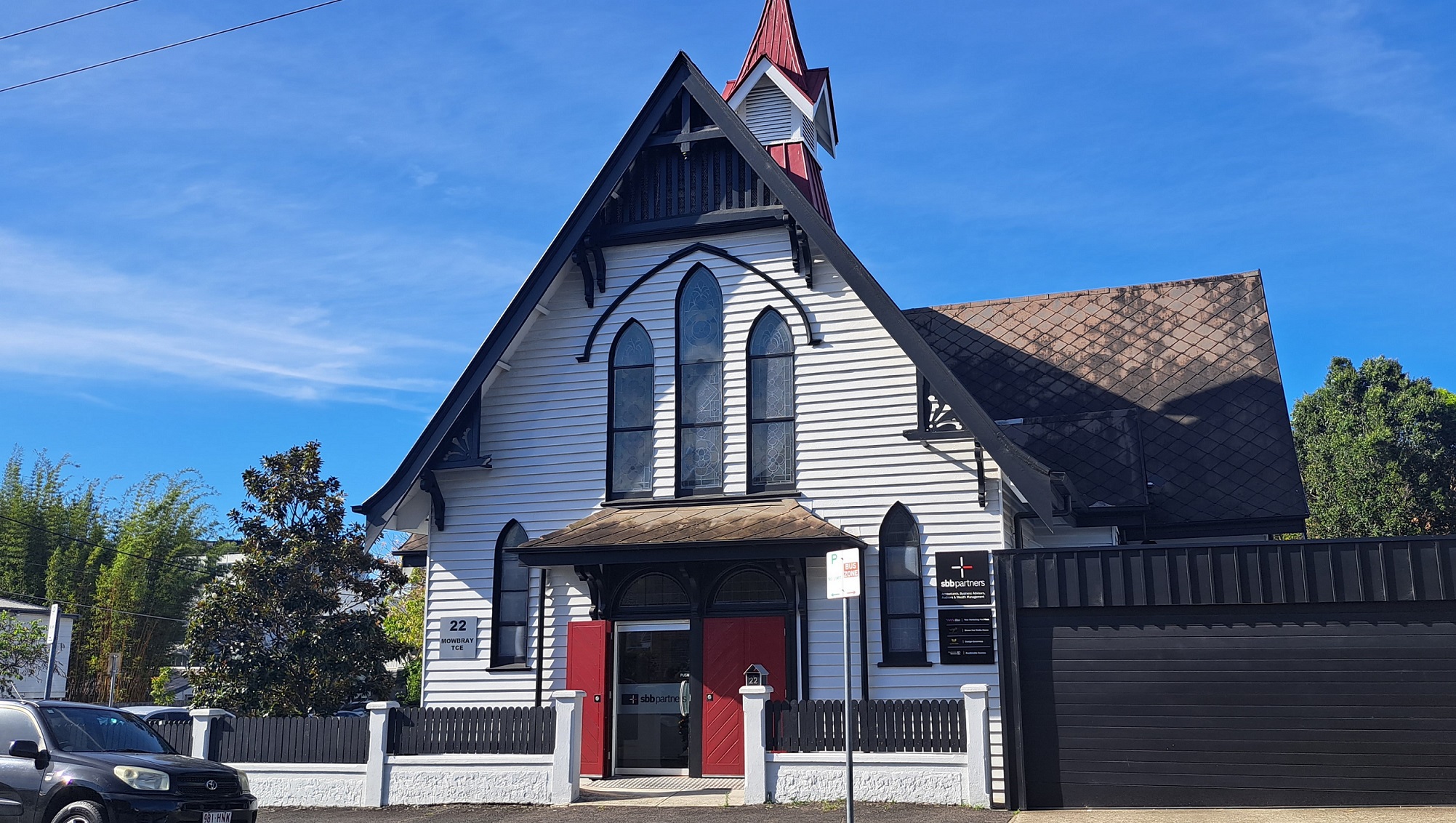
It’s a beautiful church built in 1885. Today’s is an accountant’s office that until recently was part of an Ipswich firm. The original pipe organ is still there and works. The board room is the most incredible I’ve seen with one wall virtually all stained-glass windows. The place is full of the old church’s First World War honour rolls. (See picture top of page.)
One of Macalister’s granddaughters died in Egypt in 1916 while on active service with the Australian Army Nursing Service. She first went down with slight bronchitis but then died of pneumonia. She’s buried in the Cairo War Memorial Cemetery.

Another of his granddaughters lost her husband in 1915. He was a doctor in the Australian Army Medical Corps at Gallipoli when he was shot through the head.
Arthur Macalister has a lot of things named after him. There’s a street at Carina Heights in Brisbane, a state electoral district in Logan, the Macalister Range in Far North Queensland, a township on the Western Darling Downs, and there’s Macalister Street up behind Ipswich Hospital named in his honour.
One nickname for him was the “King of Ipswich” but another name was “Slippery Mac”. That’s because Macalister changed his alliances and loyalties more often than some people change their socks. In fact, in 1861 he resigned from parliament in protest but changed his mind – he was then re-elected at the by-election he had caused. He is quite possibly the only politician in Australia to have achieved that.
Macalister is probably not as well known today as perhaps he should be because he was non-aligned, not belonging to any party. In other words, he was an independent.
So next time you can’t make up your mind, just think of the King of Ipswich, Slippery Mac Macalister, and don’t worry. You can change your mind as much as you want, and everything will still work out.
CLICK HERE TO LISTEN TO A VERSION OF THIS STORY TOLD LIVE ON RADIO.
Photo credits:
Old Mowbray Town Presbyterian Church honour board, 2023 – Harold Peacock.
Hon. Arthur Macalister – State Library of Queensland.
St. Stephens Presbyterian Church Ipswich, 1887 – Ipswich Historical Society.
Old Mowbray Town Presbyterian Church, 2023 – Harold Peacock.
Grave of Sister Norma Violet Mowbray at Old Cairo Cemetery, 1916 – Australian War Memorial C01794.
 History Out There
[…] All three of the Laidlaw brothers who went to war are today commemorated in their mother’s Mowbray Town Presbyterian Church in East Brisbane. The church was built on land donated by Ipswich’s Elizabeth Mowbray formerly Macalister. […]
LikeLike
[…] of electors at the Queen’s Arms Hotel in Ipswich on the corner of Brisbane and East streets. Macalister would go on to become the Queensland premier responsible for the narrow-gauge […]
LikeLike