

At some stage all of us have felt held to ransom by a bank manager. Back in 1870 it really happened. I told a version of this story on West Bremer Radio.
On the 5th of January 1870, that’s one hundred and fifty-four years ago last month, a farmer from Mount Walker went to Ipswich, Queensland, to cash a cheque. His name was Joseph Willett, probably a relation of George Willett who was one of the best-known pioneers of the Darling Downs. At first he popped into the Clarendon Hotel and then crossed over to the Bank of New South Wales (pictured above), which back then was on the corner of Brisbane and East streets in the centre of town.
He correctly introduced himself as Joseph Willett, handed the teller his folded-up cheque that he believed was made out to him for £5. The problem was that the cheque was actually an old one made out to George Willett not for £5 but rather £55, and it had already been cashed five years earlier. The teller gave it to his officious manager James Gibson. Gibson immediately detained the unfortunate farmer and waited for the constable.
The thing is, it was all an honest mistake and a subsequent charge of fraud was quickly dismissed.
But Willett’s rare visit to town, being arrested and detained by the bank manager for almost seven hours, had cost him in both expense and reputational damage. He engaged Ipswich’s top solicitor George Chubb. Chubb was also an Ipswich alderman and later the mayor, and his son would become the Queensland attorney general and a supreme court judge.
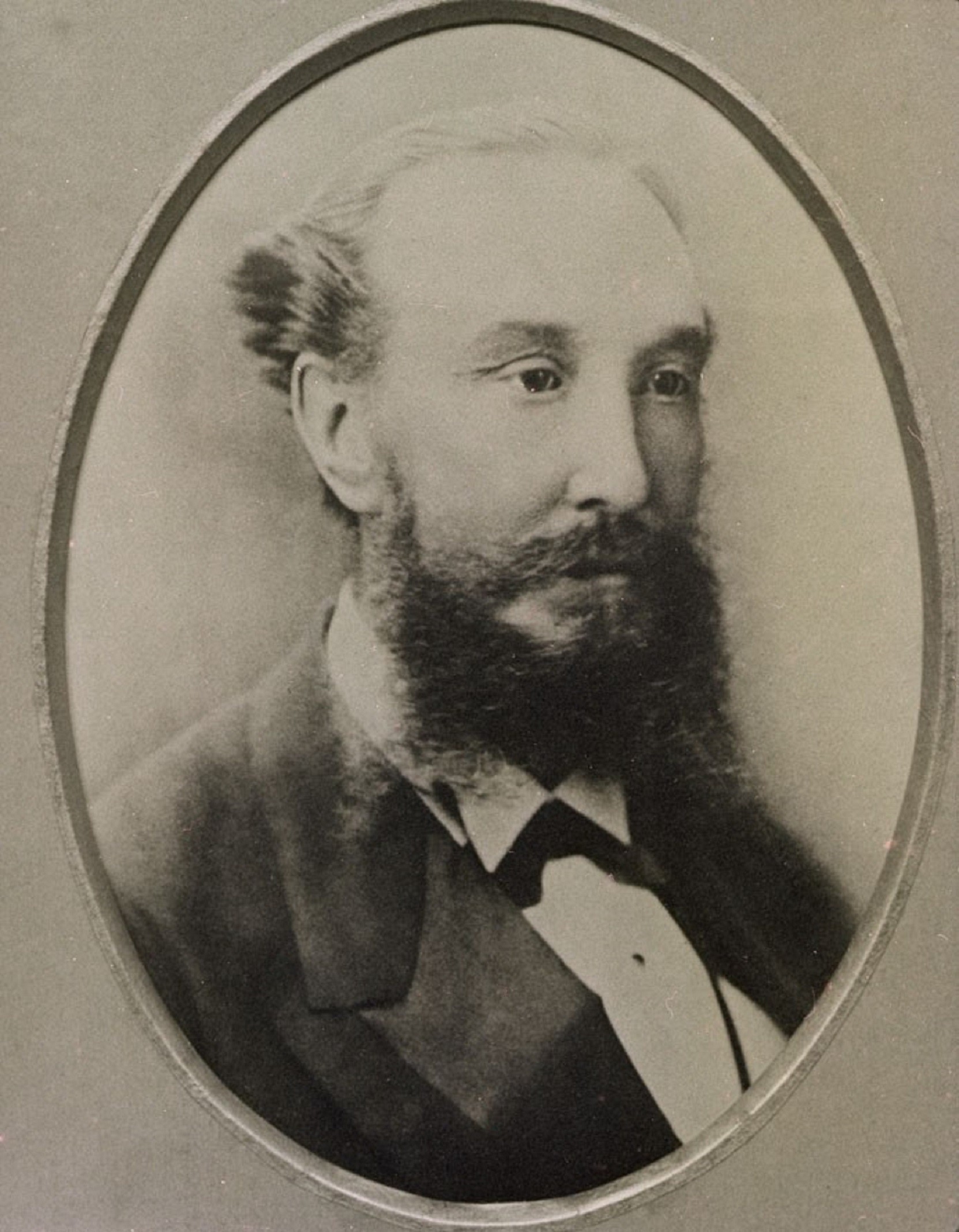
The bank manager Gibson was charged with false imprisonment. Willett was willing to drop the charges on a suitable apology. But the bank manager was steadfast and no apology was forthcoming. The judge agreed that Gibson was guilty of false imprisonment and ruled in favour of the farmer Willett for £5.
Despite the uncommon conviction, Gibson remained resolute. He never transferred with the bank away from Ipswich, which was quite rare. In fact, he remained in the town for almost thirty years.
What’s more, his children – who were born and grew up in Ipswich – went on to make contributions on a global stage, but their Ipswich connection is pretty much unknown today.
The bank manager’s oldest son was John Lockhart Gibson. He was born in Ipswich in 1860, educated at Ipswich Grammar School, and studied medicine at the University of Edinburgh. He returned home in 1892 and made the important discovery that anaemia in children could be caused by hookworm – it took the rest of the world decades to catch up with his ideas.

Dr Gibson also discovered the link between lead paint and Queensland children bring poisoned far in excess of the rest of the world. That’s because paint on the wooden Queensland houses dried and powdered in the sun, and was killing off our nail-biters or thumb-suckers at an alarming rate. He successfully got lead paint banned, and so saved an untold number of lives.
There was also the bank manager’s daughter Bessie Gibson. Bessie was born in Ipswich in 1868, and her family sent her on what was supposed to be a three-year study trip to Paris. She didn’t come home for forty-two years. She studied art in Paris, exhibited at the Royal Academy, and became successful in what was then very fashionable miniature portraits.
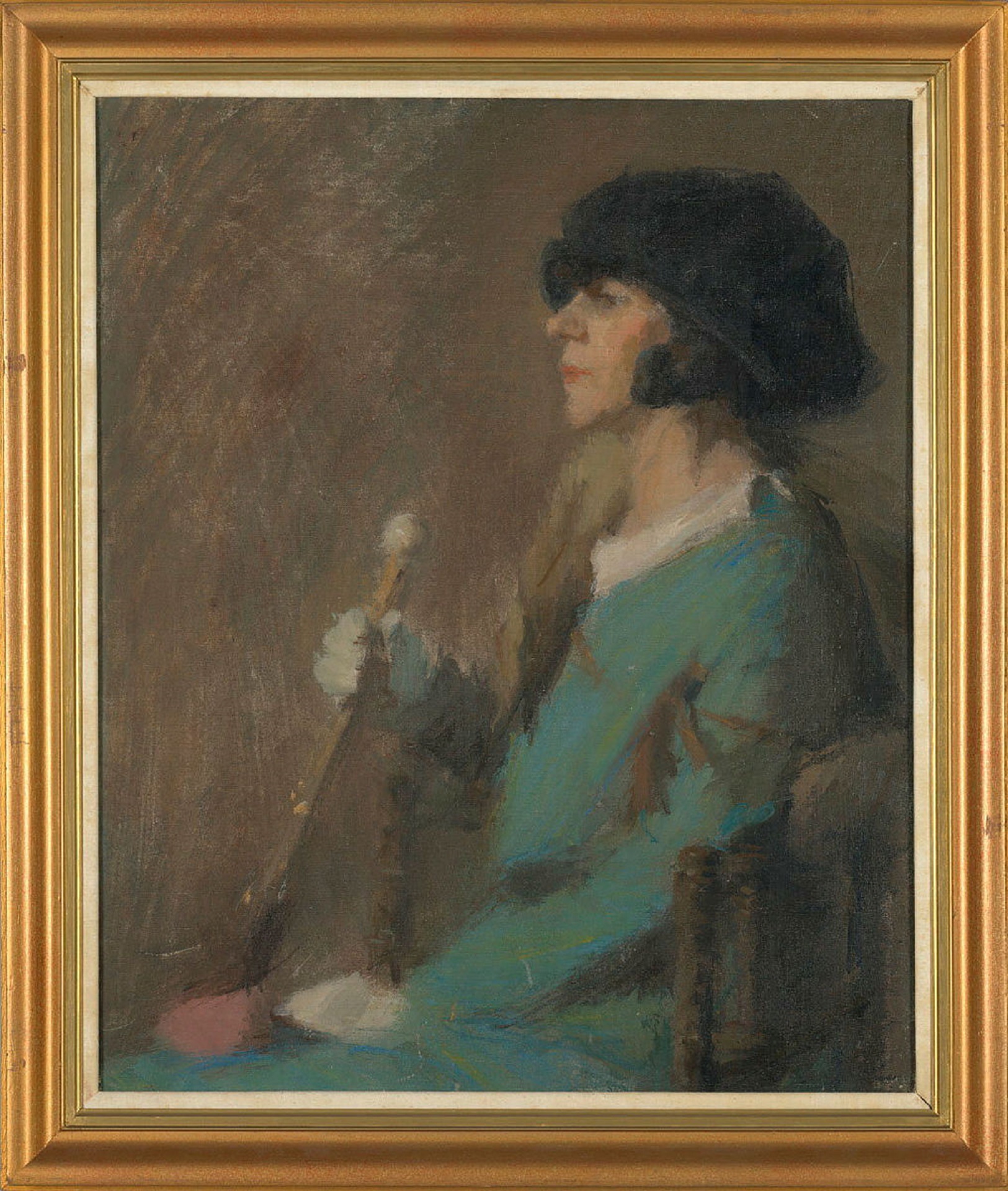
Despite her European recognition, Bessie’s work remained almost unknown in Australia. That was probably because of her shyness and that she was a Queenslander. In 1947 at the age of seventy-nine, Bessie began to exhibit in Sydney and Melbourne. Her work is now in a number of state galleries and the National Gallery of Australia. She was said to be one of the most distinguished artists in the history of Queensland painting.
So the doctor who banned lead paint, and the artist who wowed them in Europe, are all thanks to the Ipswich bank manager who was guilty of false imprisonment. And yet this amazing family story has never been told before.
CLICK HERE TO LISTEN TO A VERSION OF THIS STORY TOLD LIVE ON RADIO.
Photo credits:
Bank of New South Wales, corner Brisbane and East Streets, Ipswich, 1932 – Picture Ipswich,
Mayor Charles Frederick Chubb 1877 – Ipswich Libraries.
Dr John Lockhart Gibson – Saint Andrews Hospital.
Portrait Study by Bessie Gibson, 1938 – Queensland Art Gallery and Gallery of Modern Art Collection.


I can remember the paint on the rails of the Queenslander I lived in during the late ‘forties as being quite tasty. Why else would I have gnawed on it repeatedly?
LikeLike