

There was mass destruction all around when the England men’s cricket team twice visited Toowoomba in Queensland and went possum hunting in the 1890s. I told a version of this story live on radio 4WK.
A century ago, possums were plentiful across the Darling Downs. In the 1926 possum season, from the Warwick district there were 3,624 possum skins dispatched to Brisbane. From Toowoomba city nearly 300 were sent, from places within a thirty-mile radius of Toowoomba over 1,800 skins were dispatched, and at least 10,654 came from further west.
Good money was being made. One trapper from Crow’s Nest said he made £120, another said he only went out occasionally after work to make some pocket money, and he made £20 which back then was the equivalent of around six weeks wages.
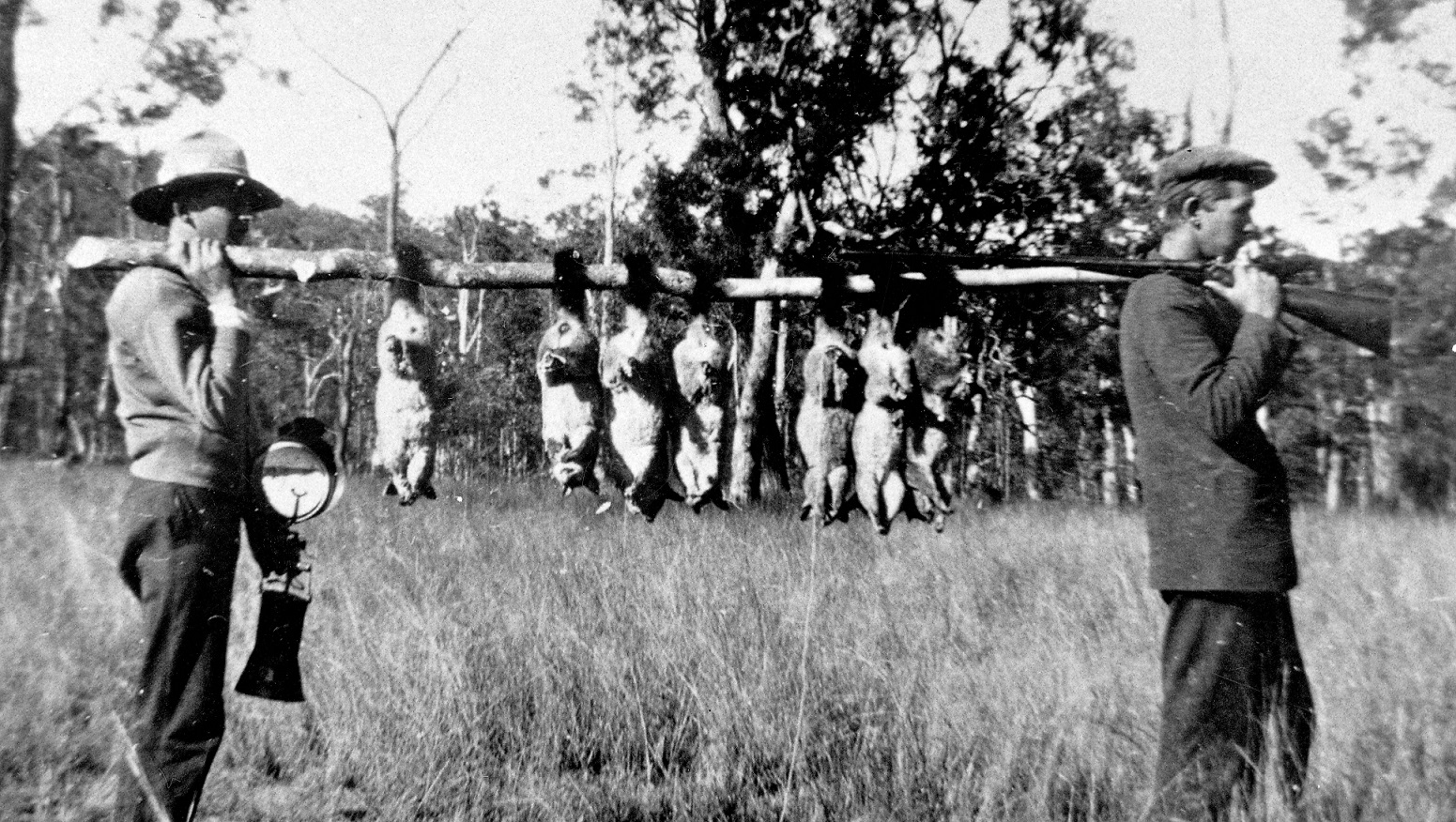
It could, however, be dangerous occupation. In 1920, the Toowoomba newspapers reported that a possum hunter Edward Bowden vanished. Bowden was a First World War veteran, he’d been wounded during the war three times and survived, but went possum hunting, and tragically was never seen alive again.
But the real carnage happened when the England men’s cricket team came to town.
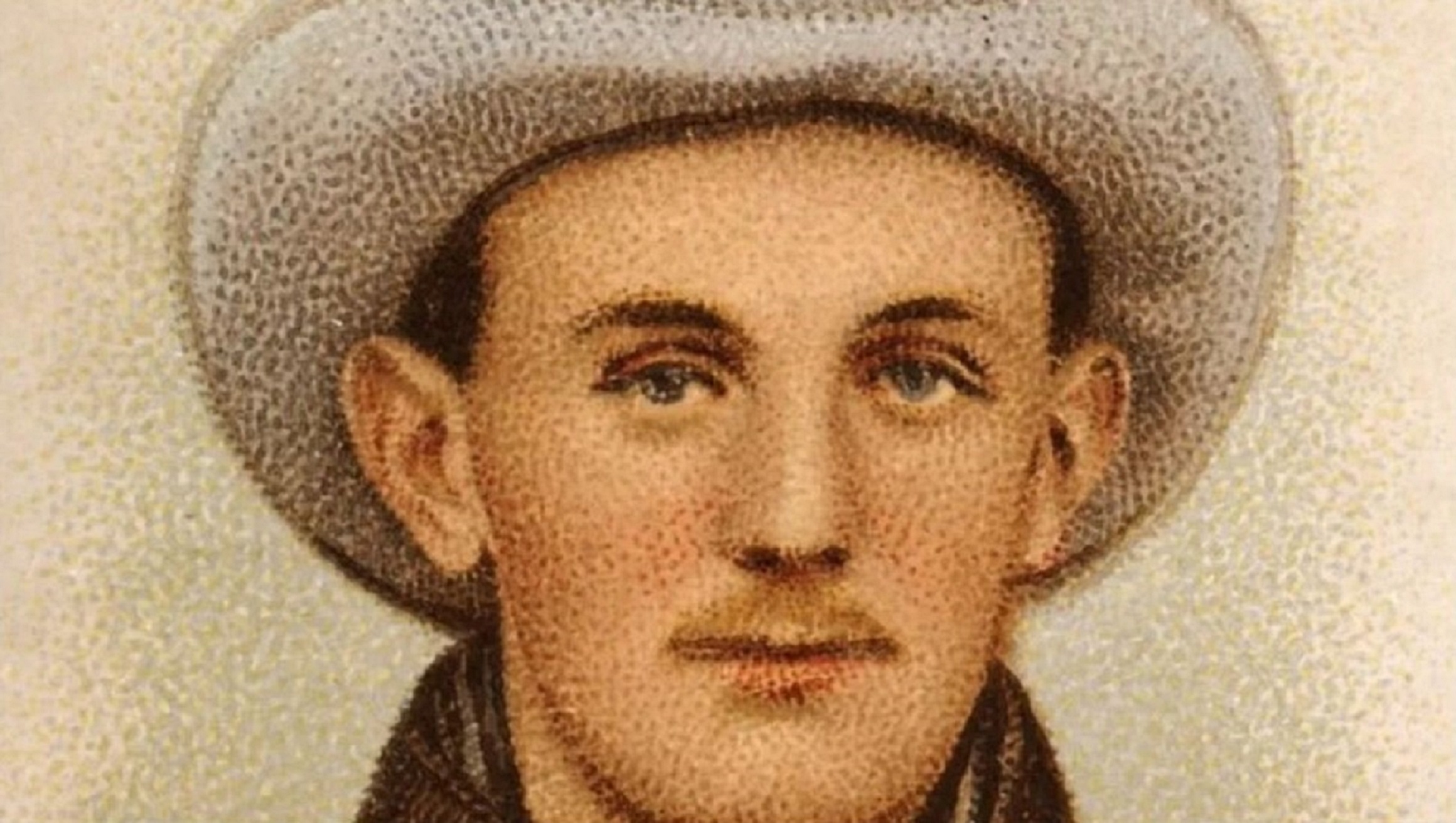
In 1897, Mr Edward Dann, who was a Toowoomba cricketer, took a number of the England players possum hunting. Dann later became one of the world’s preeminent amateur photographers. On the possum hunt they searched by moonlight, and it was a little before ten o’clock that a possum was sighted and was shot by the English cricketer Frank Druce. A regular stampede was made for the carcass because a number of the English cricketers had never seen a possum before. Druce made his test cricket debut just weeks later, and played some good shots there too, averaging 28 in his five tests.
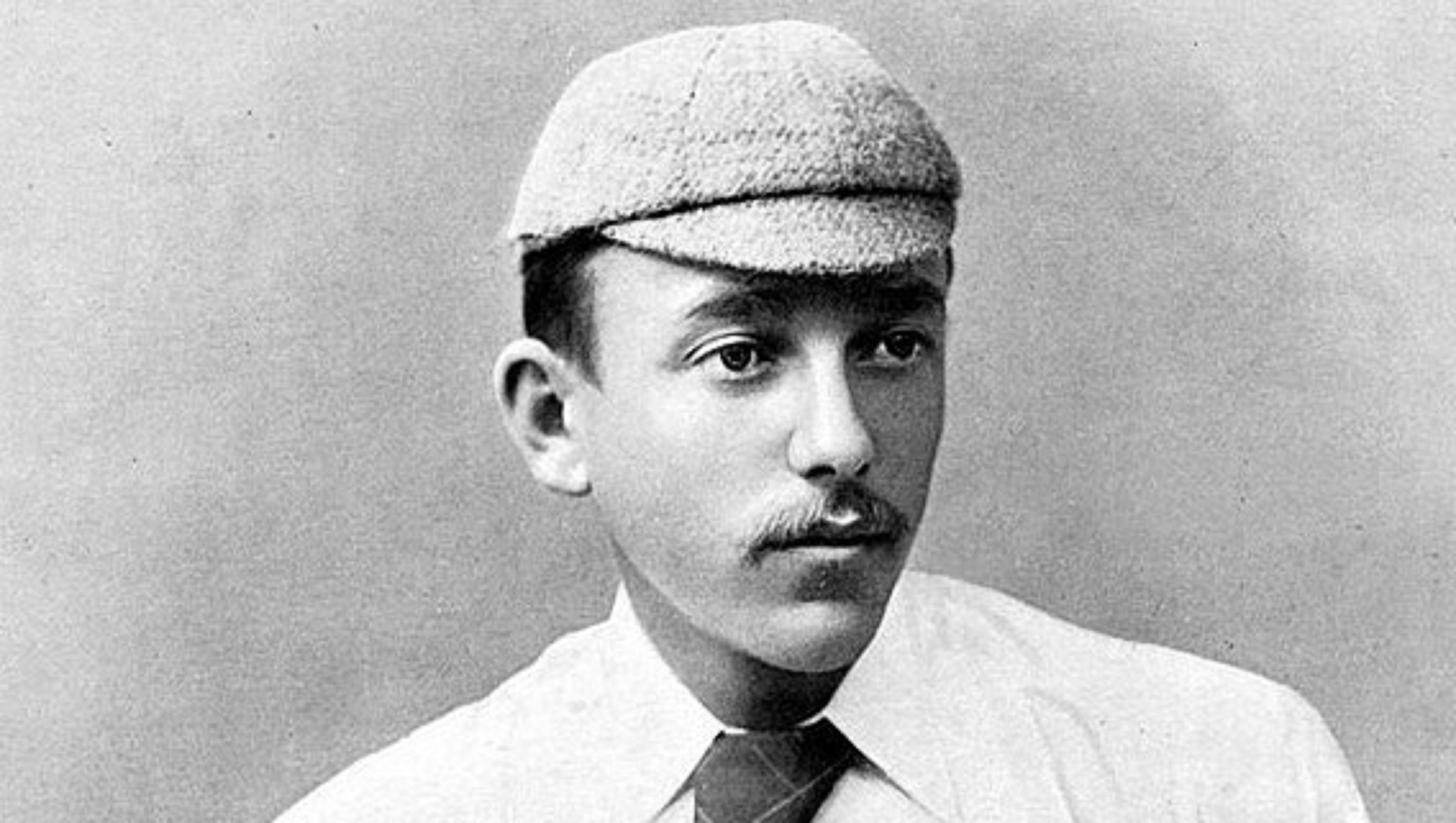
Meanwhile, the England medium pace bowler Jack Hearne didn’t see a possum, so shot a Tawny Frogmouth Owl on the wing instead. Hearne was one of the all-time great cricketers, his 3,061 first-class wickets is still the most for any bowler of medium pace or above.
But it was again in Toowoomba, this time earlier in 1894, that the English really punished the Australian wildlife.
The Englishman Bill Lockwood was known as unpredictable and occasionally devastating fast bowler, and so he was with his gun that night too. He took two shots to bring down a possum. The team didn’t stop there because they shot at everything. The tally for the whole England team included two possums, two koalas, and three kookaburras. The kookaburras, which were actually protected by law, were bagged by another fast bowler Johnny Briggs. Briggs had become the first man to claim 100 test wickets just a month earlier. On this possum hunting event, his teammates were glad that the unfortunate birds were the only thing he killed that night.
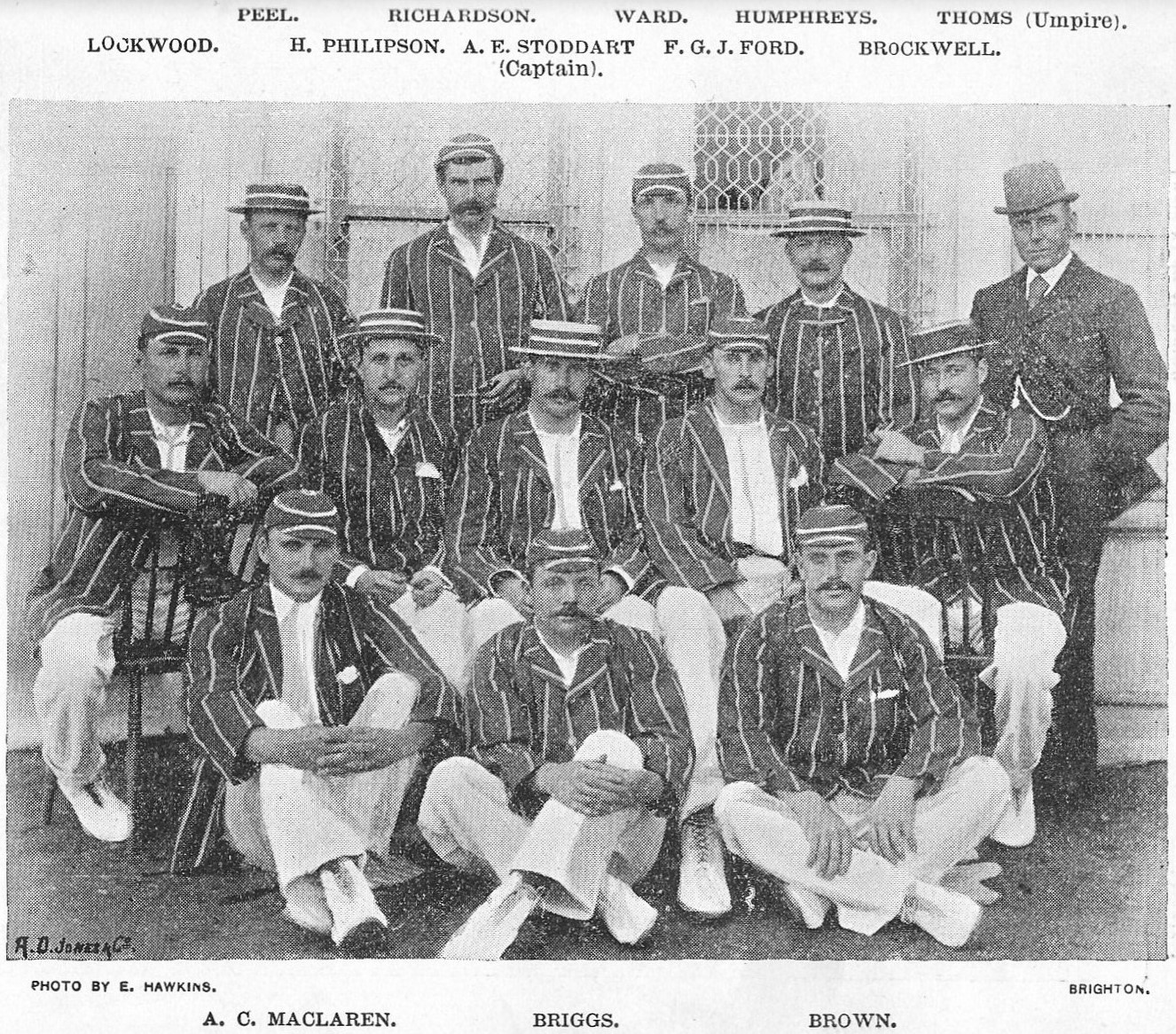
Albert Ward explained. Ward was another of the England cricketers. He was an opening batsman, Wisden Cricketer of the Year, and was known as the ‘Rothwell Colt’ early in his career. He complained that Briggs, as well as shooting the kookaburras, claimed someone else’s kill, shot the ground, and that his gun was pointing all other the place. Ward said that when walking behind Briggs, he would regularly notice the barrel of Briggs’s gun pointing at his head. Briggs was quite unconcerned saying, “It’s all right, old chap, it’s only half-cocked.”
The England men’s team won the 1894-95 Ashes series 3-2. So let’s hope that the Australian women’s team fares better this year to avenge the death of those possums, koalas, kookaburras, and owls in Toowoomba all those years ago.
CLICK HERE TO LISTEN TO A VERSION OF THIS STORY TOLD ON RADIO 4WK.
Photo credits:
Andrew Stoddart’s XI in Australia, 1895-96 – Wikipedia from a book Famous Cricketers, photo by E. Hawkins.
Hunting possums, Clumber, 1923 – State Library of Queensland.
Frank Druce – Wisden Cricket Almanac.
John Thomas Hearne, c1895 – Wikimedia Commons.
 History Out There
[…] were again merciless. England won by an innings and 126 runs led by Jack Hearne with 174 not out. Hearne, who had previously led the team on a possum hunt in Toowoomba, scored a century at the MCG when he was just 20-years-old to make him the youngest England player […]
LikeLike