
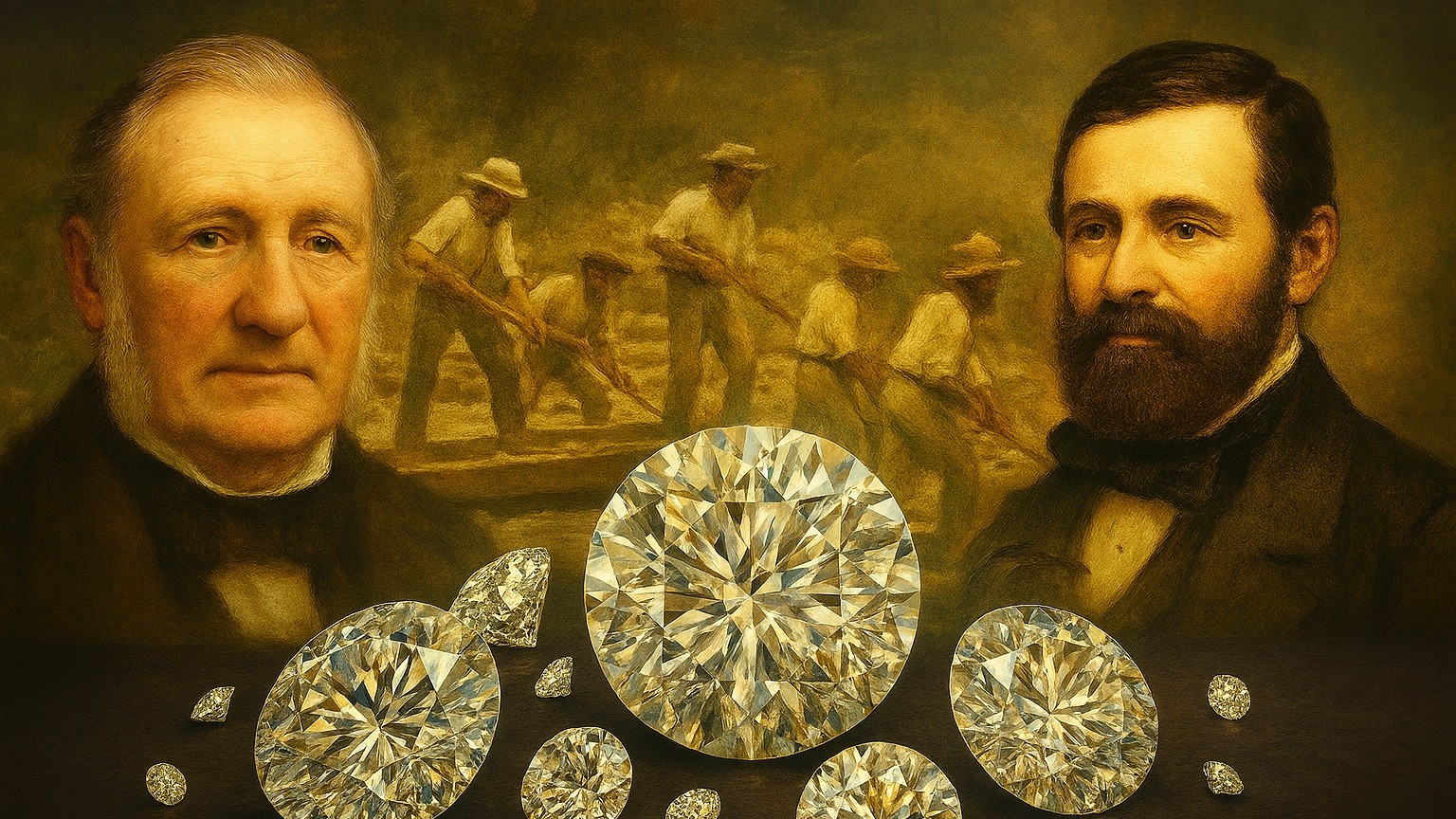
Queensland’s biggest diamond was mined in Stanthorpe in 1872 and there’s no record of what happened to it. I told a version of this story live on Darling Downs radio 4AK.
Australia’s diamond history began with the gold rush in 1851 when explorers discovered diamonds around Bathurst in New South Wales. However, serious diamonds were found in the Kimberley region of Western Australia in 1976 and then came the Argyle mine in 1979. At one stage Argyle was generating 40% of the world’s diamond production, and more than 90% of the world’s pink diamonds.
Diamonds have also been mined in Queensland. The Central Queensland Gemfields is known as the largest sapphire fields in the Southern Hemisphere, but diamonds are also found there.
Queensland’s biggest diamond was found in Stanthorpe in southern Queensland’s Granite Belt. In September 1872, news of diamond discoveries attracted Mr John Ruxton. Ruxton was born in County Longford in Ireland and was one of Brisbane’s most canny jewellers with a shop on Ann Street in Fortitude Valley. As a measure of his worth, a robbery from his shop once netted almost half-a-million dollars of jewellery in today’s money.
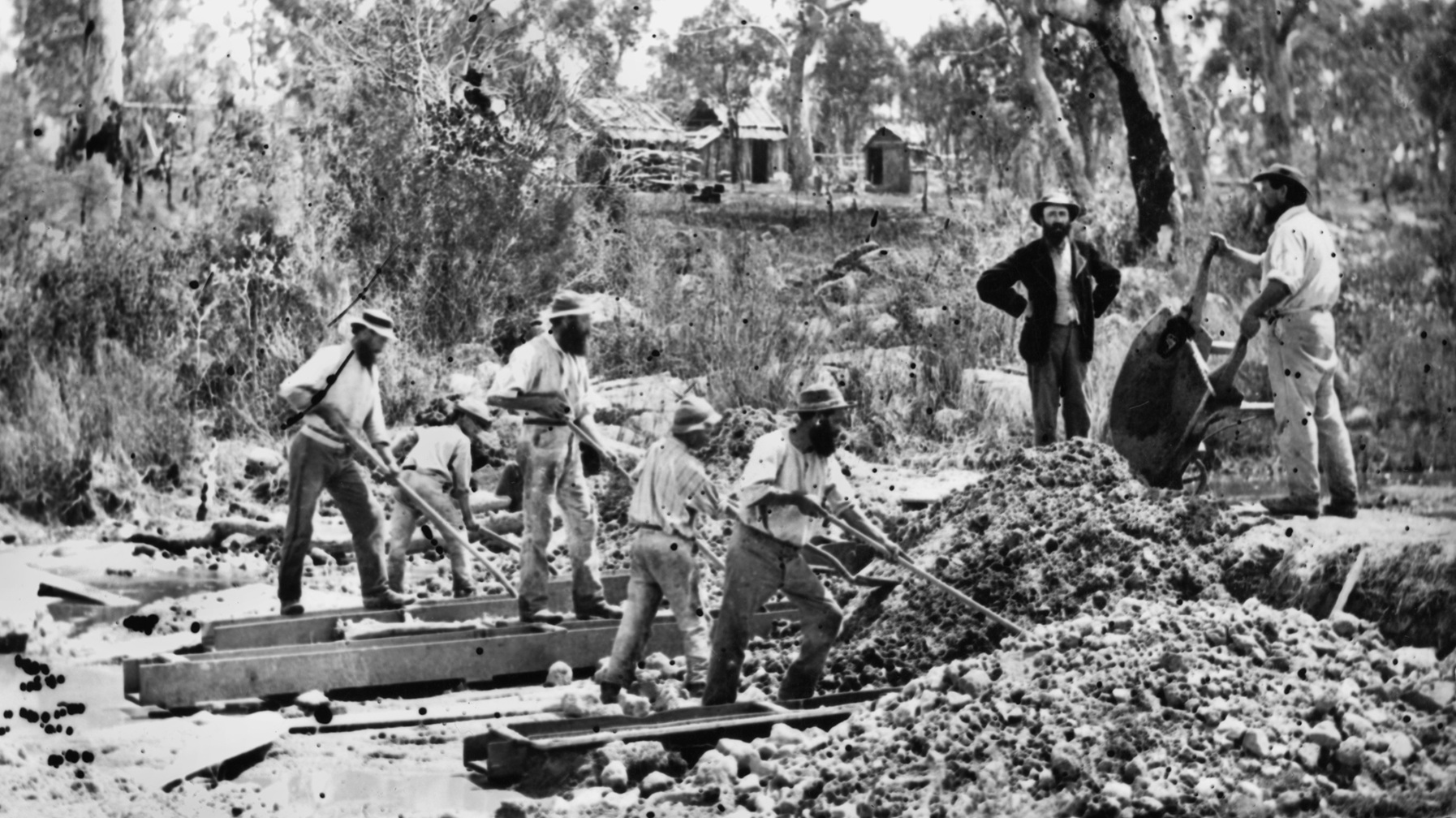
Tin mining in Stanthorpe is what unearthed the diamonds, and once the stones began to appear, every man and his dog was carefully watching their sluicing boxes.
Ruxton came to Stanthorpe hoping to buy the gems at bargain prices. For two weeks, men lined up to show him stones that were carefully wrapped, most of them were just tin crystals or quartz, some chrysolite, turquoise, opals, and garnets. Eventually a young man turned up with a piece of turquoise and a genuine diamond. Ruxton was keen to buy the diamond, but he was cautious because naming too high a price would stop him getting a bargain, so he began talking down the value of all the diamonds he saw.
Two diamonds came into the possession of Mr William Groom. Groom was the inaugural mayor of Toowoomba, member of Queensland parliament, and was the only transported convict to ever sit as a member of the Federal parliament. Groom forwarded the stones to Mr. Edmund McDonnell.

McDonnell had been in charge of the procession welcoming His Royal Highness Prince Alfred to government house and was now the manager of the jewellers Flavelle Brothers and Roberts. That was the same jewellers that employed the Dalby insolvent Mr. Thomas Given as head of their watchmaking division, but that’s another story.
The stones had been found within five miles of Stanthorpe. They were so good that Mr McDonnell took them to Mr Augustus Gregory the explorer and first surveyor-general of Queensland. The diamonds were confirmed as genuine. The largest weighed 3½ carats and was the biggest and finest diamond ever found in Queensland.
It was rumoured that the uncut valuation of the Stanthorpe Diamond was a colossal $128,000.
Meanwhile, Ruxton examined the Stanthorpe Diamond which he said was the biggest and most beautiful he’d seen, but again talked it down saying it should be split into two 1½ carat diamonds valued at only $30,000 each.
Ruxton was still bullish, however, convinced that even where the tin had run out, more diamonds, rubies, and sapphires would be found. Diamonds continued to be found, but many were kept secret.
In January 1873, Ruxton had seen more than 100 diamonds in the four months of the rush, varying in size and colour, and in value from $200 to over $30,000 although he was almost certainly still understating the value.
Eventually the diamond fever died down, and nothing more was heard of the Stanthorpe Diamond. We know that in 1872 it went from Stanthorpe to Toowoomba and then Brisbane. It passed through the hands of the transported convict William Groom, jewellery manager Edmund McDonnell, and surveyor-general Augustus Gregory. But did the Irish jeweller John Ruxton then get hold of it and cut into smaller diamonds in his Fortitude Valley workshop?
No one knows what happened to the 3 ½ carat Stanthorpe Diamond, and so Queensland’s biggest diamond remains a mystery.
In he meantime, if anyone in Stanthorpe is interested in searching for diamonds, then I suggest start looking under Mount Marlay, the look-out at Stanthorpe, because 150 years ago that was the favoured spot for those valuable little sparklers.
Now read The Groom-Ruxton Diamond Connection.
CLICK HERE TO LISTEN TO A VERSION OF THIS STORY TOLD ON RADIO 4AK.
Photo credits:
Representation of The Stanthorpe Diamond Mystery story – Copilot image.
Tin miners working in the Stanthorpe District 1872 – State Library of Queensland.
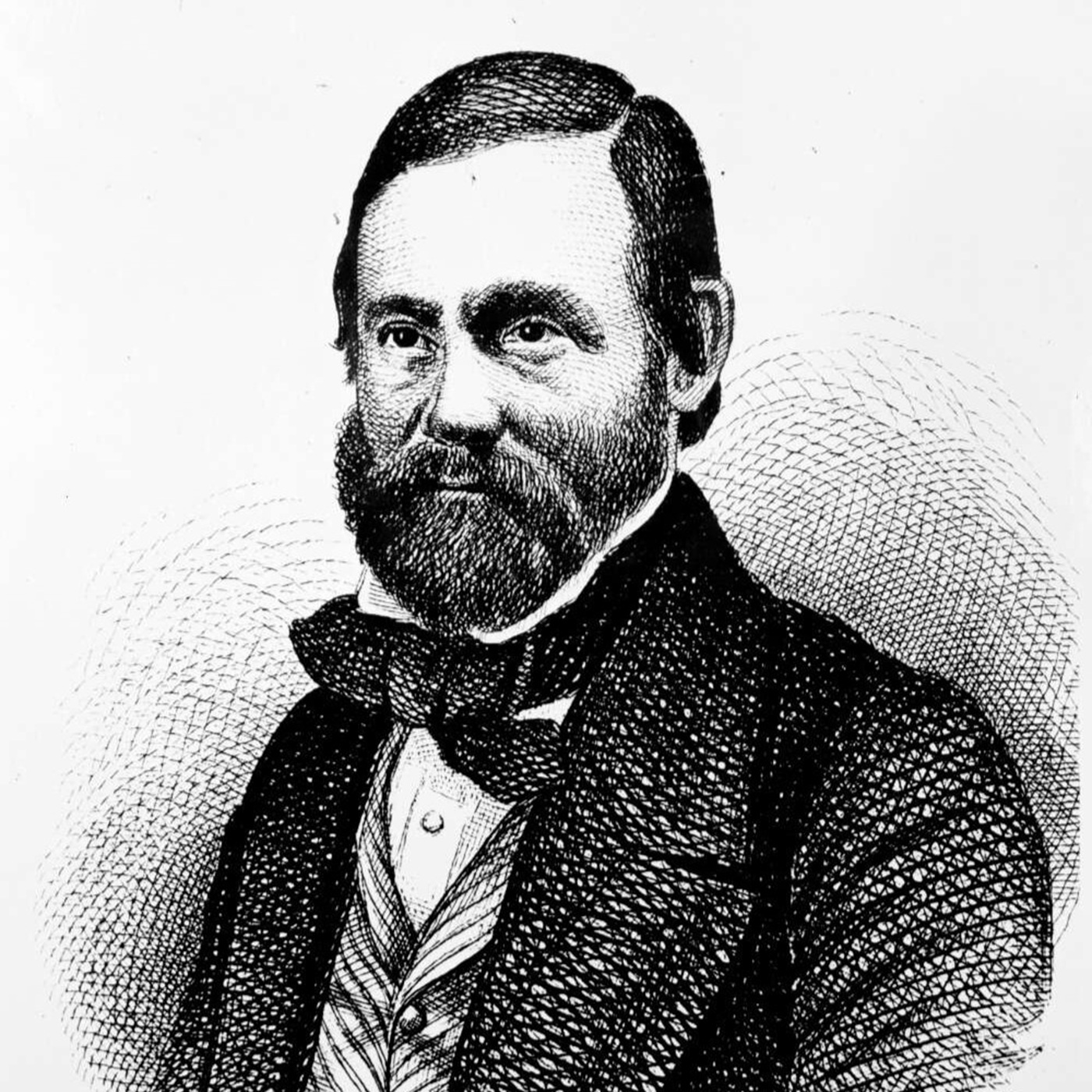
William Hery Groom – State Library of Queensland.
Sir Augustus Charles Gregory. – National Library of Australia
 History Out There
[…] biggest diamond was mined in Stanthorpe in 1872 but there’s next-to-no record of what happened to it after that. I’ve researched and it appears Ipswich plays a very big part in the mystery. I told a version of […]
LikeLike