
It’s time to right a wrong for a Darling Downs man who’s been forgotten despite just 11 years after the Wright Brothers, he was creating aviation history of his own. I travelled to Kalgoorlie in the West Australian goldfields to tell this story live on Darling Downs radio 4AK.
The Wright Brothers famously made the world’s first powered flight at Kitty Hawk in North Carolina in 1903. Seven years later in 1910 the great escapologist Harry Houdini made the first flight in Australia at Diggers Rest in Victoria, and incidentally my grandfather was there to see it. In 1912, the visiting American Arthur “Wizard” Stone completed the first flight in Queensland when he flew, and crashed, in Brisbane.
But then history began to be created from the Darling Downs. Arthur W. Jones was born at Coalbrookdale, Shropshire, England, and came to Warwick as a nineteen-year-old in 1909. He went to work for the Warwick Motor Car Company and while Houdini was captivating crowds with his flying machine, Jones became engrossed in becoming an aviator too.
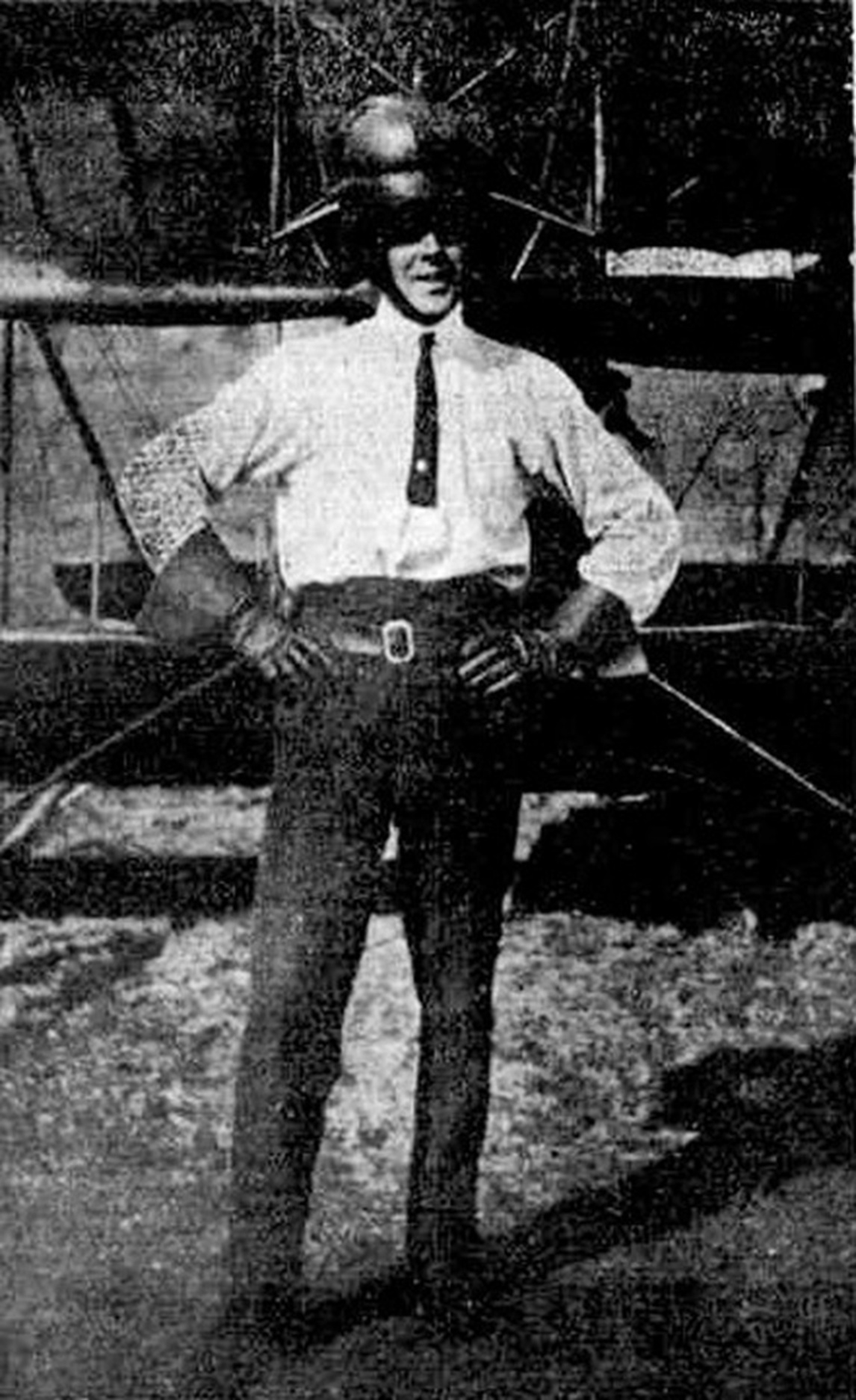
With the help of his friend the Warwick ambulance driver Walter Brest, Jones built a monoplane. He then went to England to buy an engine but came back with an entire plane instead.
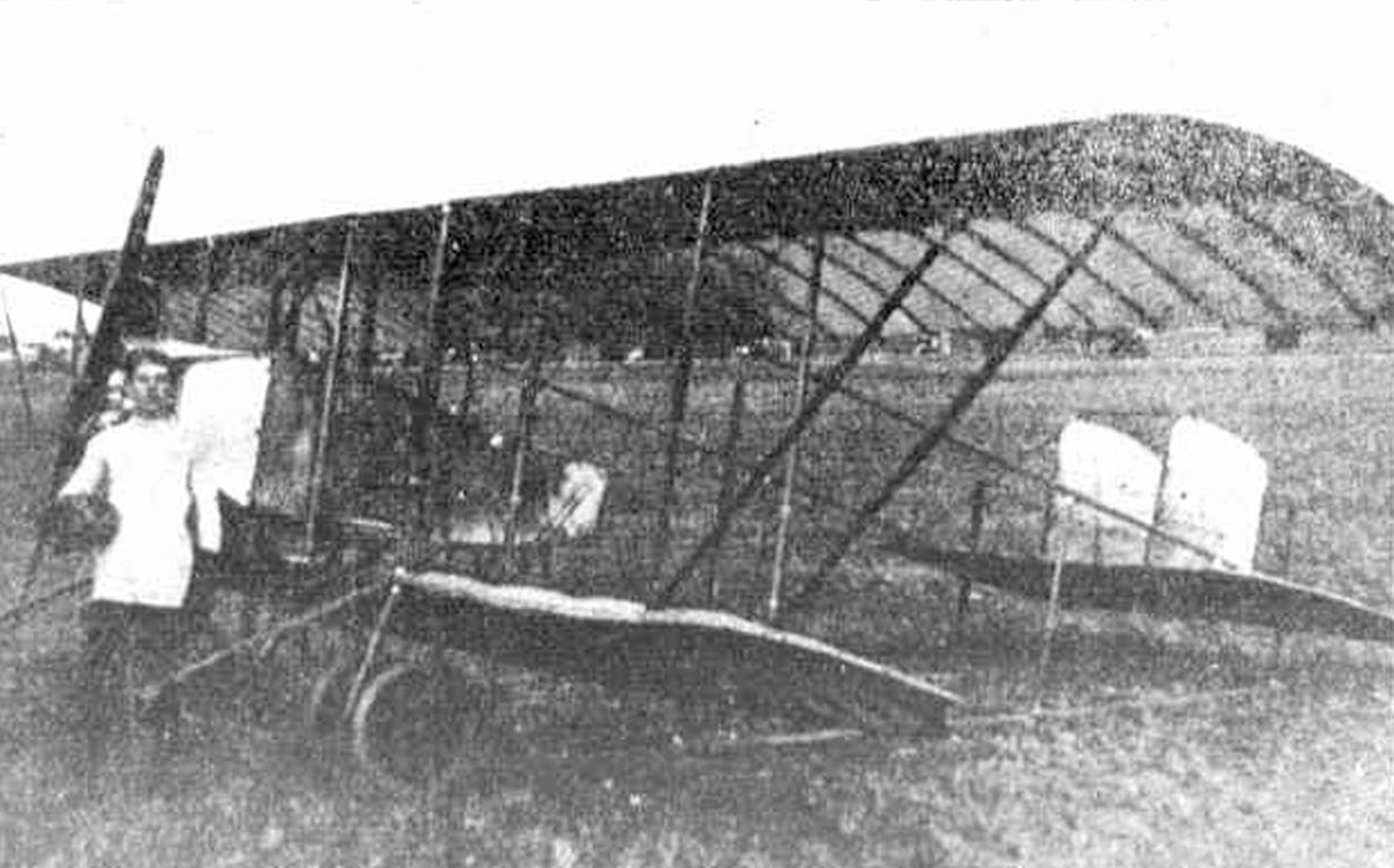
It was a French Caudron biplane with a single forty horsepower Anzani engine which cost him £700. It was damaged on the way over, so Jones and Brest rebuilt it at Jones’s home in Warwick. Jones then set off creating history.
On Friday the 30th of May 1913, nearly 600 people, including the Warwick mayor Jack Allman and the Queensland education minister and future attorney general James Blair, assembled on the Warwick racecourse. They were there to witness the first ever flight over the town.
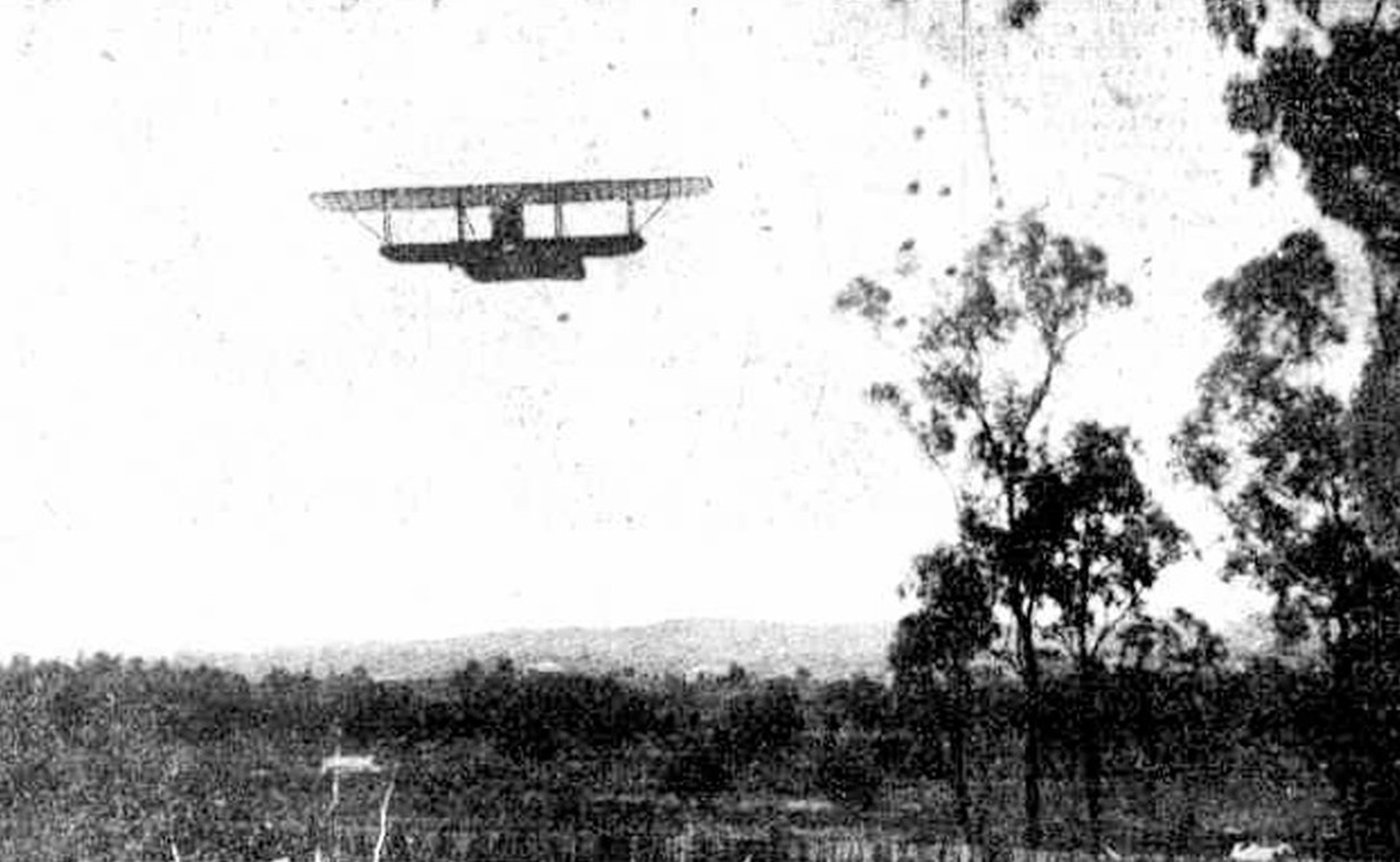
Jones performed three flights that day. First he flew the three miles from his home to the racecourse, which took him two and half minutes. He then made two exhibition flights for the crowd, circling the course and landing in front of the grandstand where he was enthusiastically cheered.
Two weeks later, Jones flew in front of at least 2,000 spectators at Clifford Park racecourse in Toowoomba. A week later, he flew his machine for 2,000 spectators at the Rockhampton racecourse, and just as many perched elsewhere all over town.
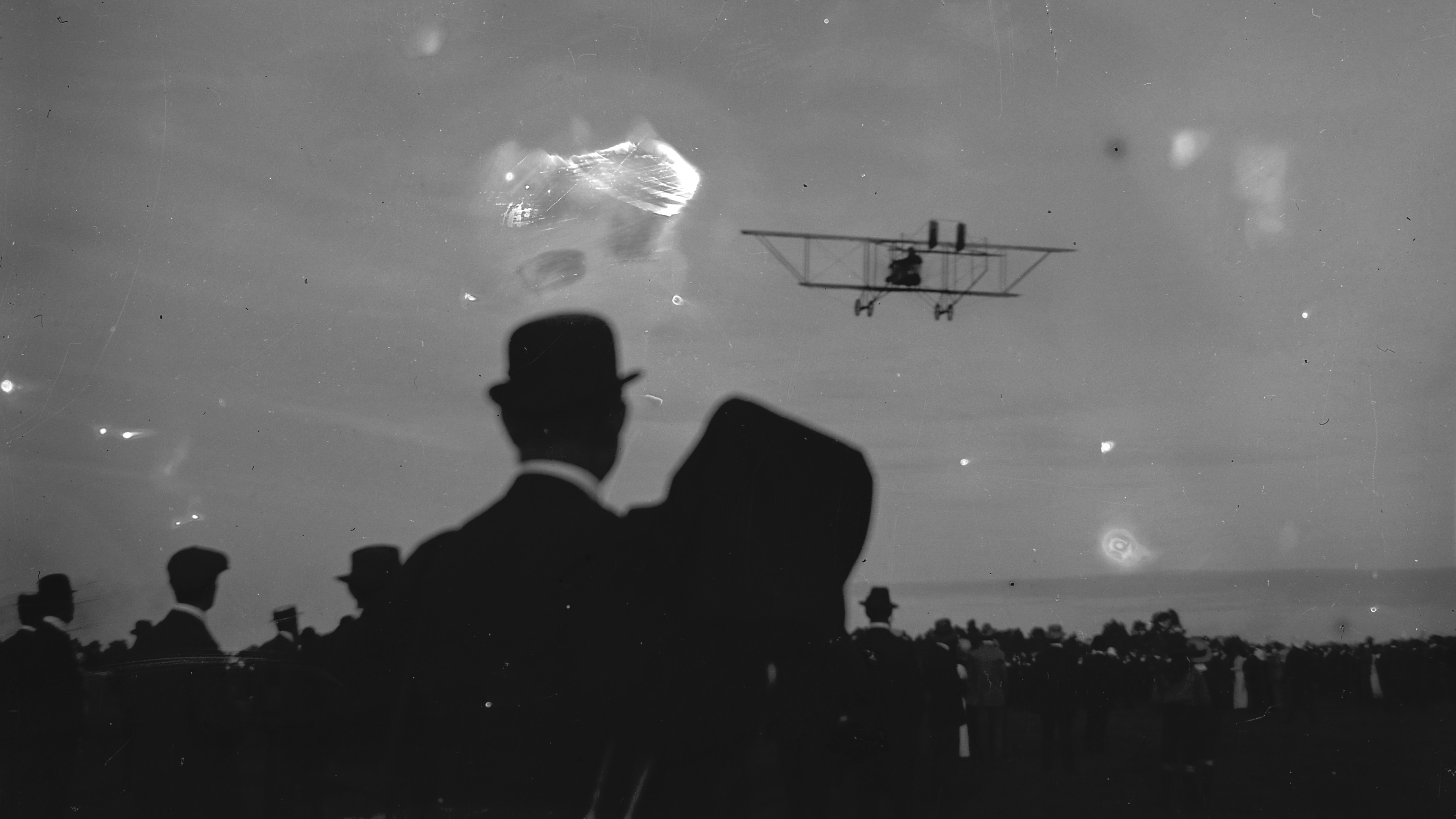
Jones took his flying exhibition to Brisbane’s Eagle Farm racecourse. That’s where on Saturday the 28th of June 1913 in front of thousands of more spectators, he entered the history books by becoming the first resident of Queensland to fly over its capital. The onlookers crowded the racecourse unaware of the dangers. One middle aged woman was saved from being hit by the plane by the heroics of an elderly gentleman, while a youth saved the life of a blind man who didn’t know what the fuss was all about.
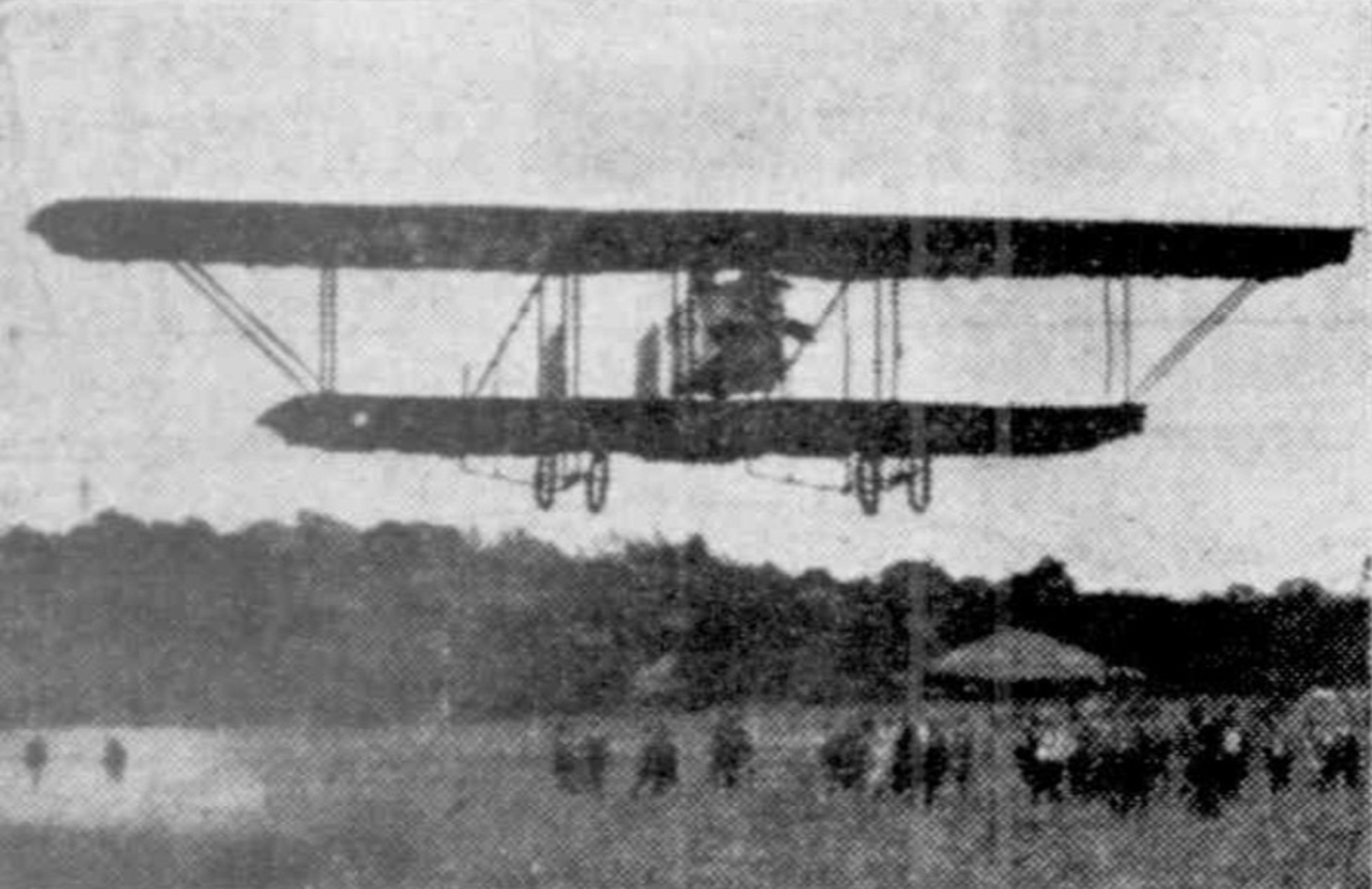
Jones continued his historic tour, making hundreds of ascents. He even made two flights in Townsville in 1913 as part of the city’s 50th birthday Jubilee celebrations. He then went west where he was reported to be the first man to fly over places like Adelaide, Broken Hill, Moonta, Port Pirie, Perth and Kalgoorlie, and probably many more. At the event in Adelaide was a fellow historic luminary Sir William Goodman who was responsible for the first electric trams in both New Zealand and Adelaide.
I travelled to Kalgoorlie myself because it was the scene of Jones’s greatest triumph. On Friday the 17th of July 1914, the by-now twenty-four year old Jones drew the biggest crowd of his career. Up to 15,000 people gathered at the Kalgoorlie racecourse to witness his historic flight that lasted seven minutes.
This was 1914 and of course the First World War soon intervened to create history of another sort. Jones went to serve in France with both the Australian Flying Corps and the Royal Flying Corps. His Caudron biplane was used in Brisbane for instructing a voluntary air training corps.
Jones disappeared from public view, and years later in 1948 he was the service manager for York Motors in Sydney. That’s when he returned to Adelaide and briefly the pubic spotlight for the first time since his pioneering flights. He was there to attend a Chrysler-Dodge distributors conference.
Bert Hinkler is the aviation pioneer who first comes to mind for most Queenslanders. But Arthur W. Jones from Warwick was claiming records, including as the first Queensland resident to fly here, a full decade before Hinker and others became household names while Jones vanished into time.
CLICK HERE TO LISTEN TO A VERSION OF THIS STORY TOLD ON RADIO 4AK.
Photo credits:
Arthur W. Jones’ Caudron in the air at Eagle Farm Racecourse, June 1913 – University of Queensland.
Mr Arthur Jones’ the Warwick Aviator – Telegraph, Brisbane, 7th June 1913, page 16.
Mr Arthur Jones’s biplane travelling at a speed of 60 miles an hour at Warwick – Telegraph, Brisbane, 7th June 1913, page 16.
Arthur W. Jones’ Machine ascending at Brisbane – Mail, Adelaide, 20th December 1913, page 1.
Mr Arthur Jones’s Biplane – In this machine the aviator has made several successful flights in Warwick – Telegraph, Brisbane, 7th June 1913, page 16.

