
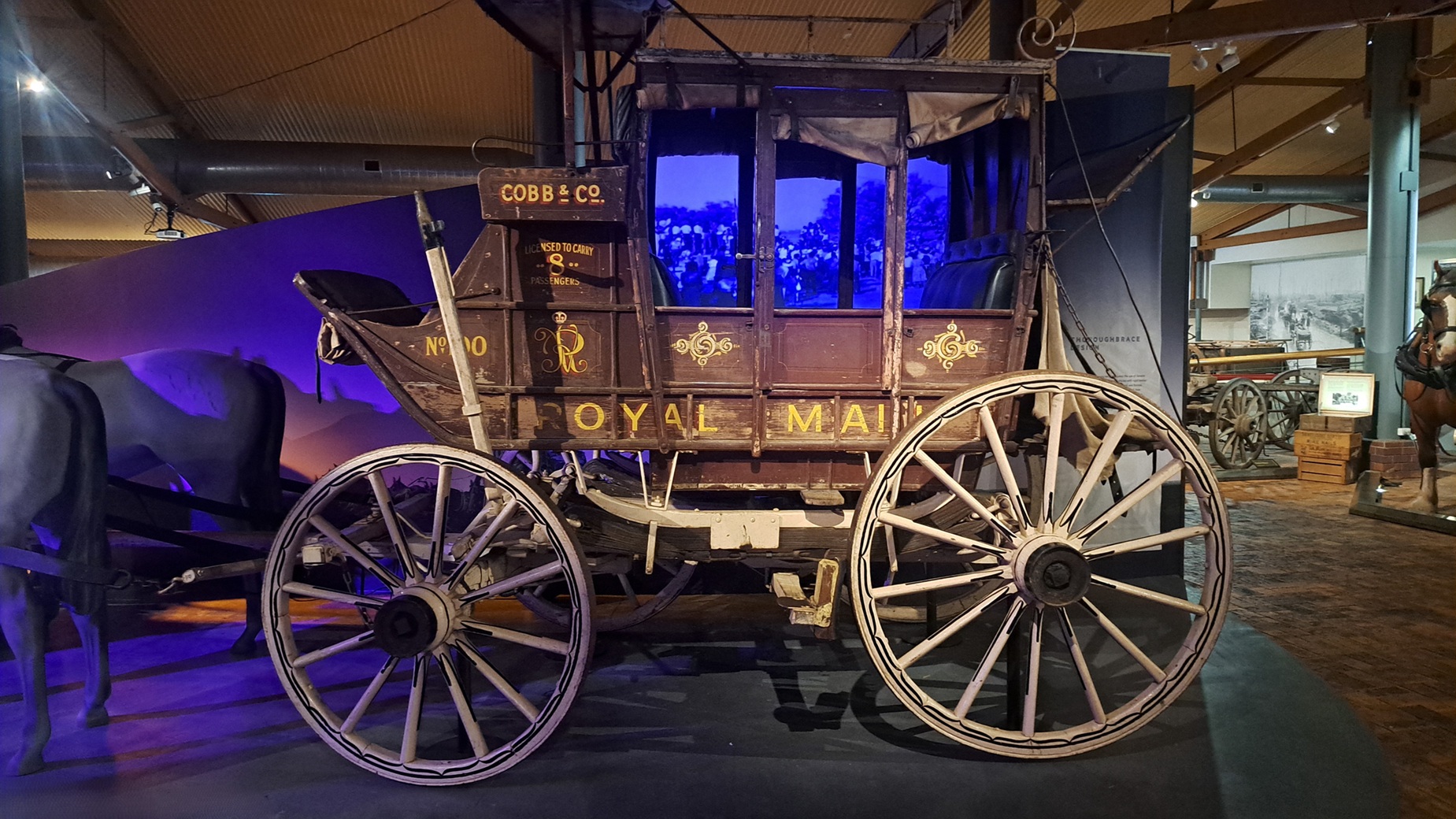
I went to the Carnival of Flowers and popped across the road to the Cobb & Co Museum and discovered a legend of the Australian Outback. I told a version of this story live on Darlings Downs radio 4AK.
Go into Toowoomba’s Cobb & Co Museum in Queensland and pretty much straight away you’ll see the star of the carriage collection. It’s a Thorough Brace Coach, Cobb & Co coach No.100 (pictured above).
The coach was built around 1900 in Charleville in colonial Outback Queensland. It’s 126 years old and older than Australian Federation itself.
For more than twenty years it trundled along outback roads for Cobb & Co carrying the Royal Mail. It was sold in the 1920s and reborn as a drover’s wagon. For the next twenty years it travelled across the outback until a broken wheel meant it was abandoned near Windorah around 1940.
The wagon was recovered and rebuilt in Toowoomba in the 1950s by Bill Bolton, whose father had revived the brand of Cobb & Co after it had gone into liquidation. Then in 1963, the Cobb & Co coach no. 100 made the historic journey from Port Douglas to Melbourne over an inland route of almost 5,000 kilometres to set the record for the longest coach trip in the world.
Now that all sounds remarkable, but the Cobb & Co coach is not the outback legend that I’m talking about. But rather it’s the drover who took the wagon across outback tracks all those years ago.
His name is William “Bill” Hart who with his son Reg led an all-Aboriginal droving team working cattle across vast distances over Queensland, New South Wales and the Northern Territory. Bill was born in 1878 on the Gowrie Cattle Station in the Charleville district of Queensland, just like the Cobb & Co coach that he would acquire.
Bill was well-known as a top bushman and horseman, a first-class horse breaker, and a champion buck-jump rider of the south-west.
Bill’s epic journeys with the wagon were not easy. One time he brought in 3,000 bullocks from Wave Hill in the Northern Territory to Walgett in New South Wales, that’s a one-way journey of over 3,000km. In 1938, he passed through Aramac in Queensland with 1,500 cows from the Territory, and owing to the bad state of the stock route he had 300 calves die along the way.
In 1939, Bill brought another 1,500 bullocks from the Territory to Queensland via Windorah to South Galway on Cooper’s Creek. This time the stock route was in good condition and as soon as he arrived, Bill turned around and took two mobs from South Galway to the Bourke meatworks in New South Wales. The work never stopped.
Well, hardly ever. In 1940 Bill was held up by floods that made Cooper’s Creek impossible to cross for 10 weeks. But Bill eventually did cross to deliver his stock to the Bourke meatworks, and straight away he collected some fat cows and took them to Quilpie back in Queensland.
It was on one of these trips in around 1940 that the Cobb & Co wagon that Bill was driving, broke a wheel. The mob had to be delivered and so the wagon was left behind.
With his wagon gone, Bill hung up the boots, sold his plant and retired from droving. The wagon was recovered, rebuilt here in Toowoomba and made that epic world record journey.
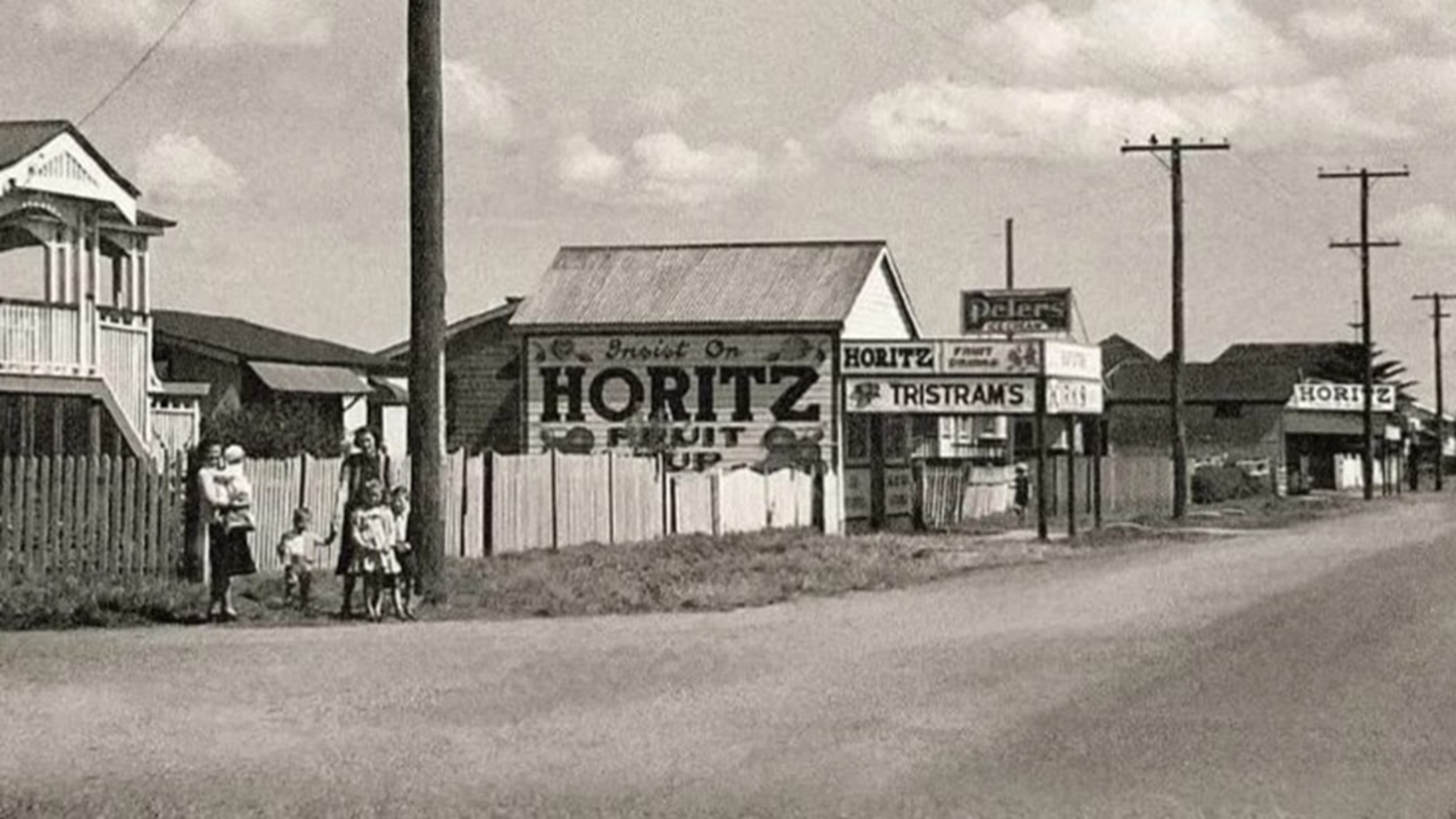
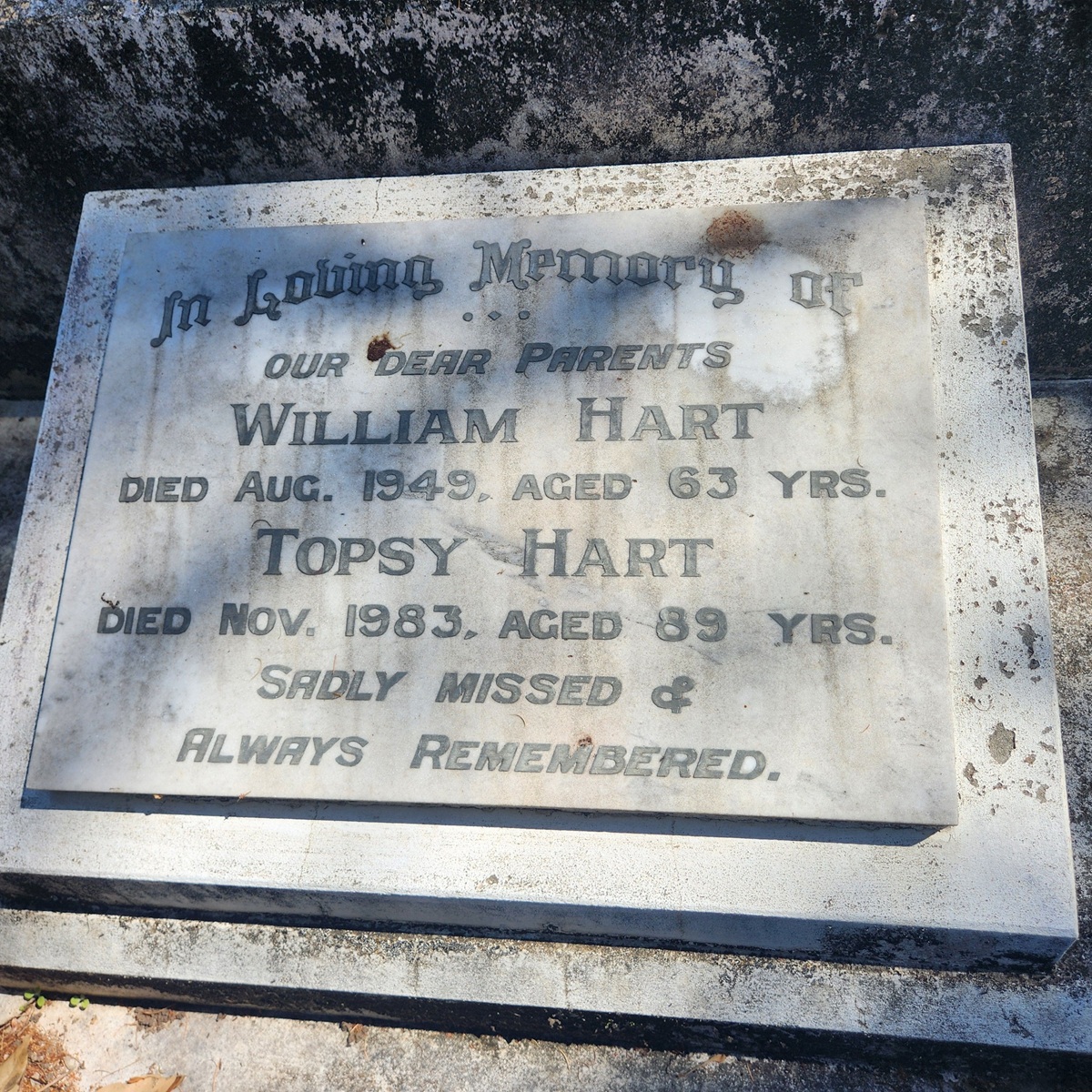
But Bill Hart himself, he retired to Cribb Island on Queensland’s Moreton Bay where he passed away eight years later. He was spoken of in glowing terms as the clean and upright pioneer that he was. In the 1960s the Bee Gees lived on Cribb Island which doesn’t exist anymore because it’s now underneath the Brisbane Airport.
Bill’s son Reg also retired from droving. He studied accounting and business before moving to Brisbane where he too was considered a thorough gentleman.
I donated to the Queensland Museum to help preserve the Queensland Treasure which is the Cobb & Co coach No.100. But the more I researched, the more it became apparent that the real treasure isn’t coach itself, but the memory that it holds of the drover Bill Hart.
You should go to the Cobb & Co Museum to see it. And then when you go to the Brisbane Airport, also remember Bill Hart because the Bee Gees aren’t the only famous former residents of the place.
CLICK HERE TO LISTEN TO A VERSION OF THIS STORY TOLD ON 4AK.
Photo credits:
Cobb & Co carriage number 100, Cobb and Co Museum, Toowoomba, 2026 – Harold Peacock 20260922_131403.
Cribb Island remembered – Brisbane Airport remembered website.
William Hart 1878-1948, Nundah Cemetery – History123 2026 via Find a Grave website.
Reg Hart – Truth, Brisbane, 3rd December 1950, page 18..

