
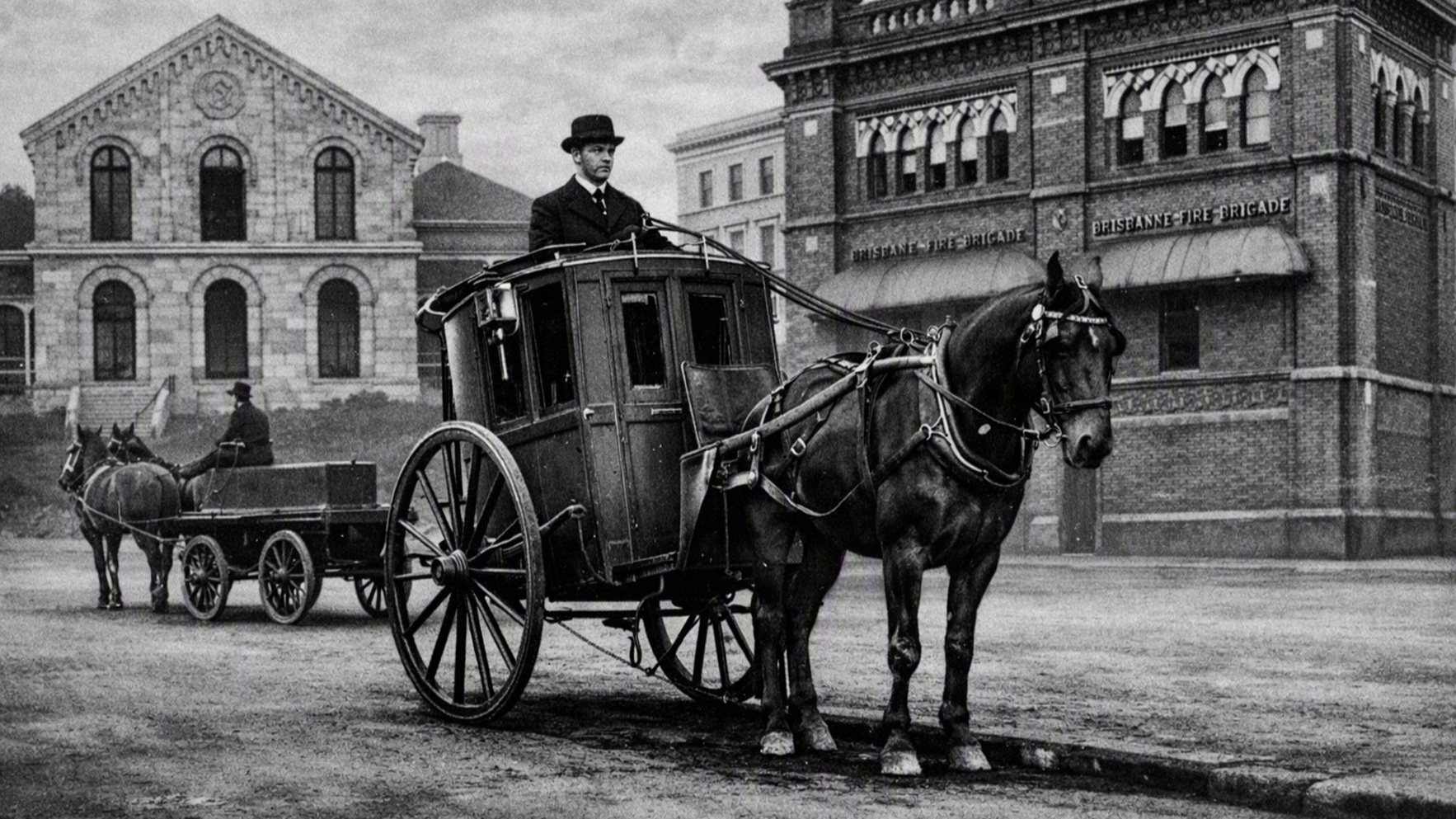
The great Cab Proprietors Strike of 1865 is often overlooked in favour of the 1891 Shearers Strike in terms of historic importance. But the cabbies strike foreshadowed laws that were only disrupted with the coming of Uber and generated a legacy that continues to this day. I told a version of this story live on Ipswich’s West Bremer Radio.
In 1861, Charles Johnson was a Brisbane cab driver who got a mother and her eleven-year-old daughter arrested on a charge of stealing a £1 note and a half-sovereign from his house. Johnson came home to George Street to find his wife arguing with the woman. He sided his wife, exchanged violent language with the mother, he got the worst of it including a blow to his face. Johnson then had both the mother and child arrested. The child was locked up to avenge himself on the mother, who proved to be an incorrigible drunk.

Johnson’s cab driving, which was with a horse and buggy back then, often brought him to Ipswich. That was the case in 1864 when he was arrested in Ipswich on the suspicion of stealing horses off a Brisbane nightman. A nightman was responsible for removing human waste from cesspits and backyard privies. They worked after dark by horse‑drawn wagon. Johnson appeared in the Ipswich magistrate’s court before Ipswich’s first magistrate Colonel Gray and the Ipswich mayor John North. They remanded him to Brisbane where the charges were found to be frivolous and were dismissed.

With his Ipswich arrest and cesspits still fresh in his mind, Johnson then became embroiled in the Great Cab Strike of 1865. The cabbies walked off the job in dispute with the Town council over new by-laws. The laws required cabs to be licensed; they set standard fares; loitering for passengers was banned because vehicles had to be driven through the city at a trot; no drunken or noisy people could be carried in the cabs; no coffins or dead bodies were allowed in licensed cabs either. The cabbies felt the by-laws went too far and so went out on strike.
The town council won the day, and the cab proprietors returned to work. Just twelve months later, Charles Johnson fell afoul of the new laws.
In 1866 Johnson was charged in the Brisbane Police Court with driving a dead body in his cab. The fine for taking a dead body in a licensed cab, unless it was to the police station or by order of the police, was £5. That’s around $8,000 today.
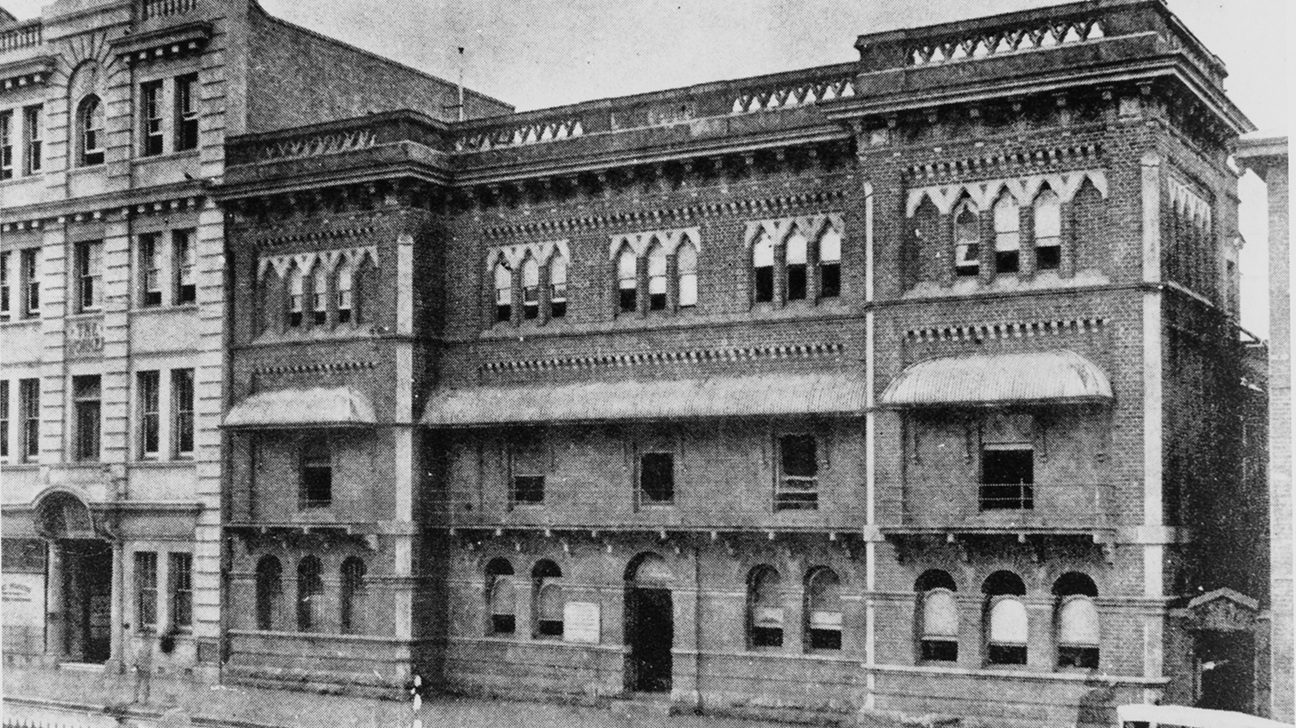
Johnson continued in his chosen career, and later while driving his cab knocked over a woman by the name of Alice Todd. She had previously been sentenced to one month’s imprisonment with hard labour for stealing an umbrella, she was the so-called “Umbrella Offender”.
In 1897, the now aging Johnson was waiting with his cab at Central Station when he got into a scuffle with a fellow cab driver and was killed. The offender was a young man called Thomas Hayes who was charged with manslaughter but got off to continue Johnson’s legacy of death and destruction.
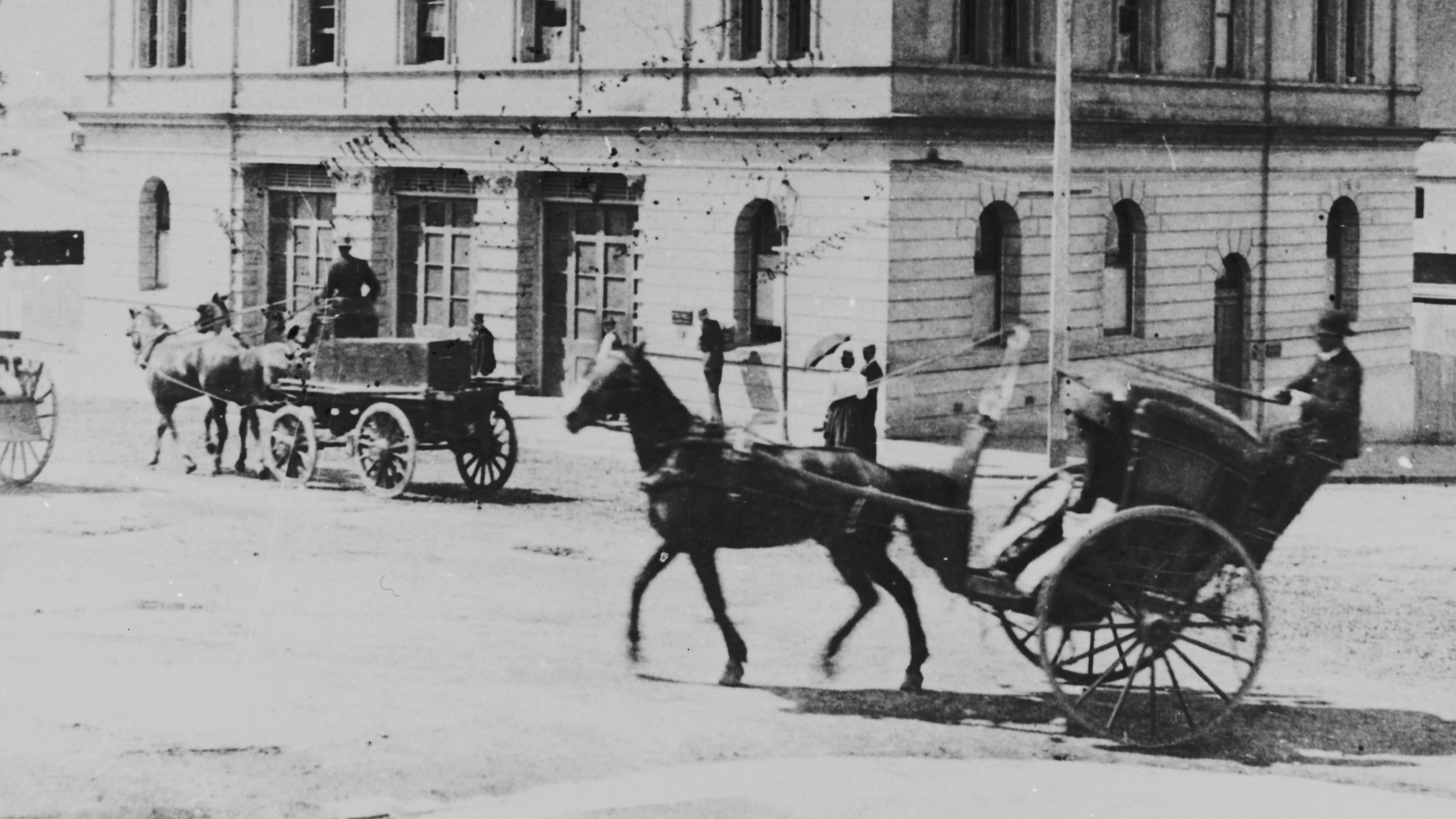
For example, in 1909 Hayes was the driver when a woman died after stepping out of his cab and hitting her head on a fencepost. In 1920, Hayes’s horse and cab collided with a motor car, his horse was killed, the car and passengers were badly smashed about. And so it continued.
Charles Johnson who had an eleven-year-old girl locked up, was arrested in Ipswich on horse stealing and cesspit-related charges, and for driving dead bodies through the streets, had passed on his legacy to his own killer.
And that continued a direct connection to the Great Cab Strike of 1865 which was over laws which were only disrupted with the arrival of Uber 150 years later. And dare I say, some of the Uber drivers I’ve experienced are continuing Johnson’s legacy of death and destruction to this very day.
CLICK HERE TO LISTEN TO A VERSION OF THIS STORY ON WEST BREMER RADIO.
Photo credits:
The Great Cab Strike of 1865 – Harold Peacock with Copilot.
Ipswich Courthouse c1860 – State Library of Queensland.
Colonel Charles George Gray – Jubilee History of Ipswich, 1910, page 58.
Police Court Elizabeth Street, Brisbane, 1920, opened for business 1876 – State Library of Queensland.
Brisbane Fire Brigade Station, north east corner of Ann and Edward Street, c1899 – State Library of Queensland.

