
My charity expedition to Queensland’s far north has unearthed a 101-year-old aviation mystery that occurred 2,200 kilometres to the south and remains unsolved to this day. I told a version of this story on West Bremer Radio.
After landing in the Torres Strait, we covered over six hundred kilometres by foot, boat, and random vehicle. At one time we borrowed the local vending machine HiAce in order to uncover World War Two relics of a bombing raid by Japanese Zeros. One of our team was Peter Tracey from Brassall in Ipswich.
Our trek discussions meandered across various historical events. I don’t know if he’s related to Peter or not because I’m still researching, but a century ago the first pilot to land an aeroplane at a number of Queensland towns was Captain Jack Tracey (various spellings).

Captain Tracey flew for three years in the First World War. Back in Australia he became the ‘Flying Picture Show Man’, delivering and promoting new motion pictures to towns across Queensland and New South Wales.
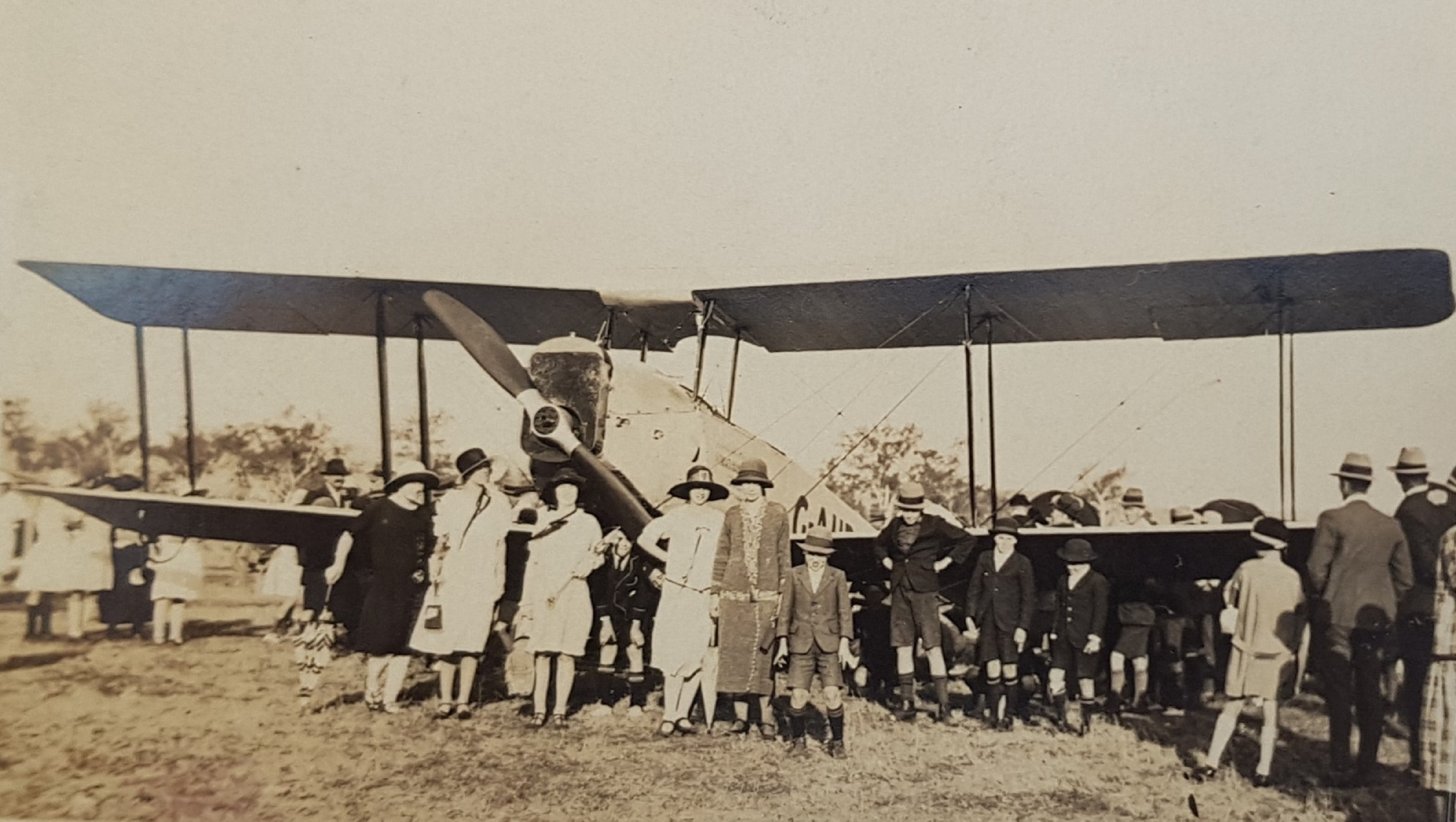
In 1922, he became the first person to land an aeroplane at Brisbane Airport then known as Eagle Farm. That same year he was also the first to land at many other places including Maleny, Nambour, Maroochydore and Caloundra. During research, I found never-before-published original photographs of Captain Tracey‘s plane landing at Laidley.

In 1923, Captain Tracey caused a huge amount of excitement in Ipswich at around one o’clock on a Thursday afternoon when he buzzed his aeroplane over the top of the central business district before landing in Cribb’s paddock nearby at Newtown.
He set speed records from Coolum Beach to Brisbane, and Sydney to Brisbane. While he was living in Brisbane at Norman Park, he built in his garage at least three aircraft with which he proposed to fly to England. He also bought Bert Hinkler’s famous Avro Baby aeroplane – the same one with which Hinkler set a new record flying from Sydney and taxiing down a Bundaberg street to have lunch with his mum.
But Captain Tracey’s career wasn’t all entertainment, because a man had his arm severed off when he walked into the propeller of his plane in Rockhampton, and the captain had to survive a crash landing on Coolum Beach.
Captain Tracey was a big part of aviation history who you’ve probably never heard of. The residents of Peter Tracey’s Ipswich may also not know that the first aeroplane to land there was on the 19th of July 1920, and that it had a celebrity on board.
It was an Avro aeroplane flown by a Captain Roberts, and the celebrity passenger was a gentleman by the name of Herbert Booth. He was the son of William Booth the founder of the Salvation Army. Historicl aviation events like this were huge civic occasions right across the country. More than one thousand people crowded Ipswich’s Bundamba racecourse to witness the landing. Due to the unavailability of the then mayor of Ipswich John Lobb, the former mayor Edward Easton had the honour of welcoming the first aeroplane to the town.
The first fatal passenger plane crash in Queensland occurred in the same town of Ipswich just seven years after the first landing. It was on the 9th of February 1927 when the passenger Alexander Macpherson was killed, and the pilot Mr. Welby seriously injured when his Avro plane crashed in a paddock at Ripley, a suburb of Ipswich.
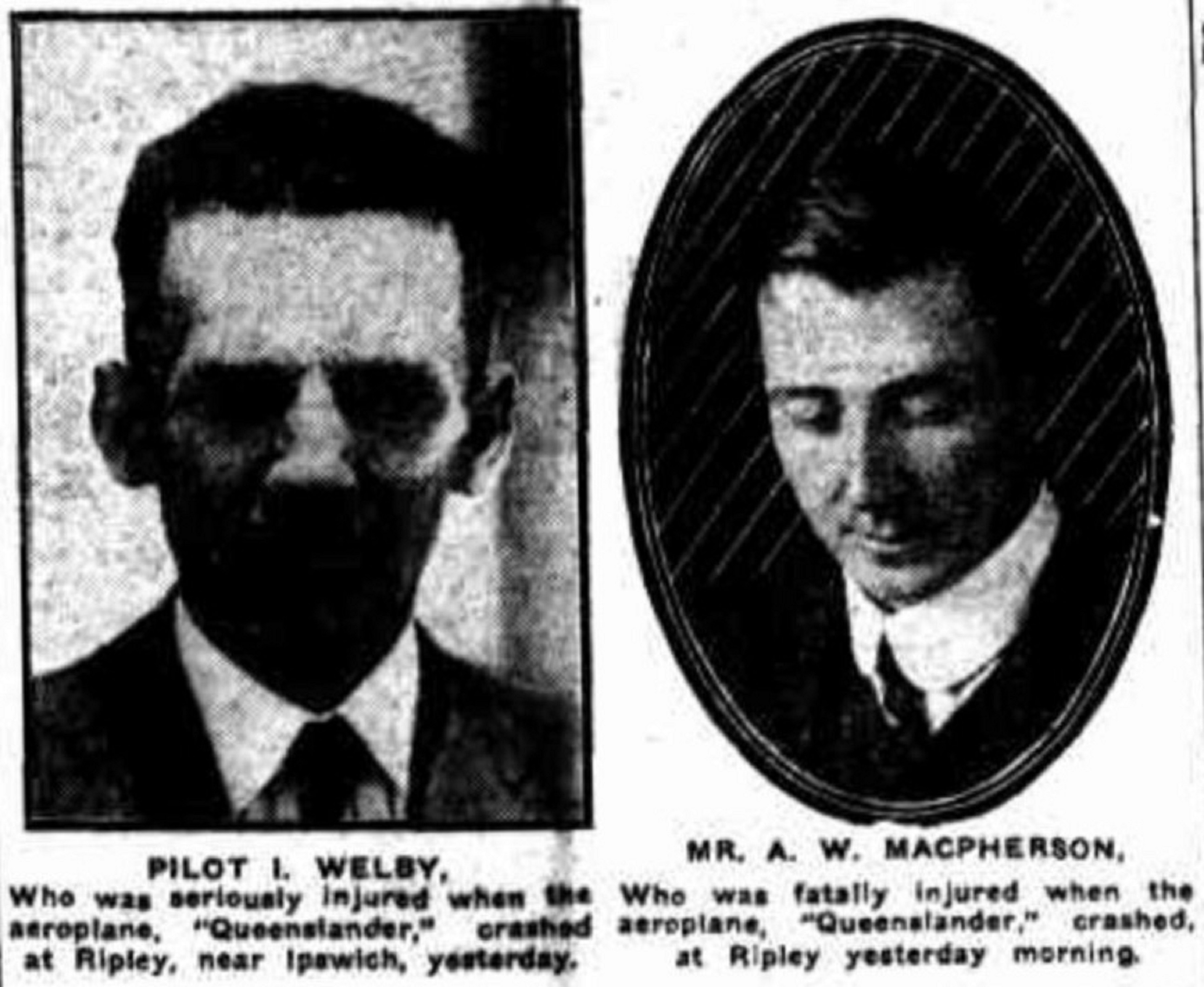
Macpherson was a senior manager of the Waugh & Josephson engineering company and was returning home from Toowoomba to Brisbane. (Waugh & Josephson was in business for over a century until 1987 when taken over by Robert Holmes à Court and shortly after that by Alan Bond.) Welby was an English pilot. It was possibly his sister who twelve months later became the first woman pilot to be killed in an air crash in Britain.
Jack McGuire was a dairy farmer at Ripley and he had just finished milking his cows when he noticed the plane spiralling overhead. The engine had stalled, and the pilot Welby was desperately trying to land. But the plane struck a dead blue gum and nose-dived into the ground. McGuire arrived on the scene about thirty seconds later to find that the Welby was thrown out of the plane, but the Macpherson was trapped and unconscious. They got him out but sadly he died under a tree at the scene forty-five minutes later.
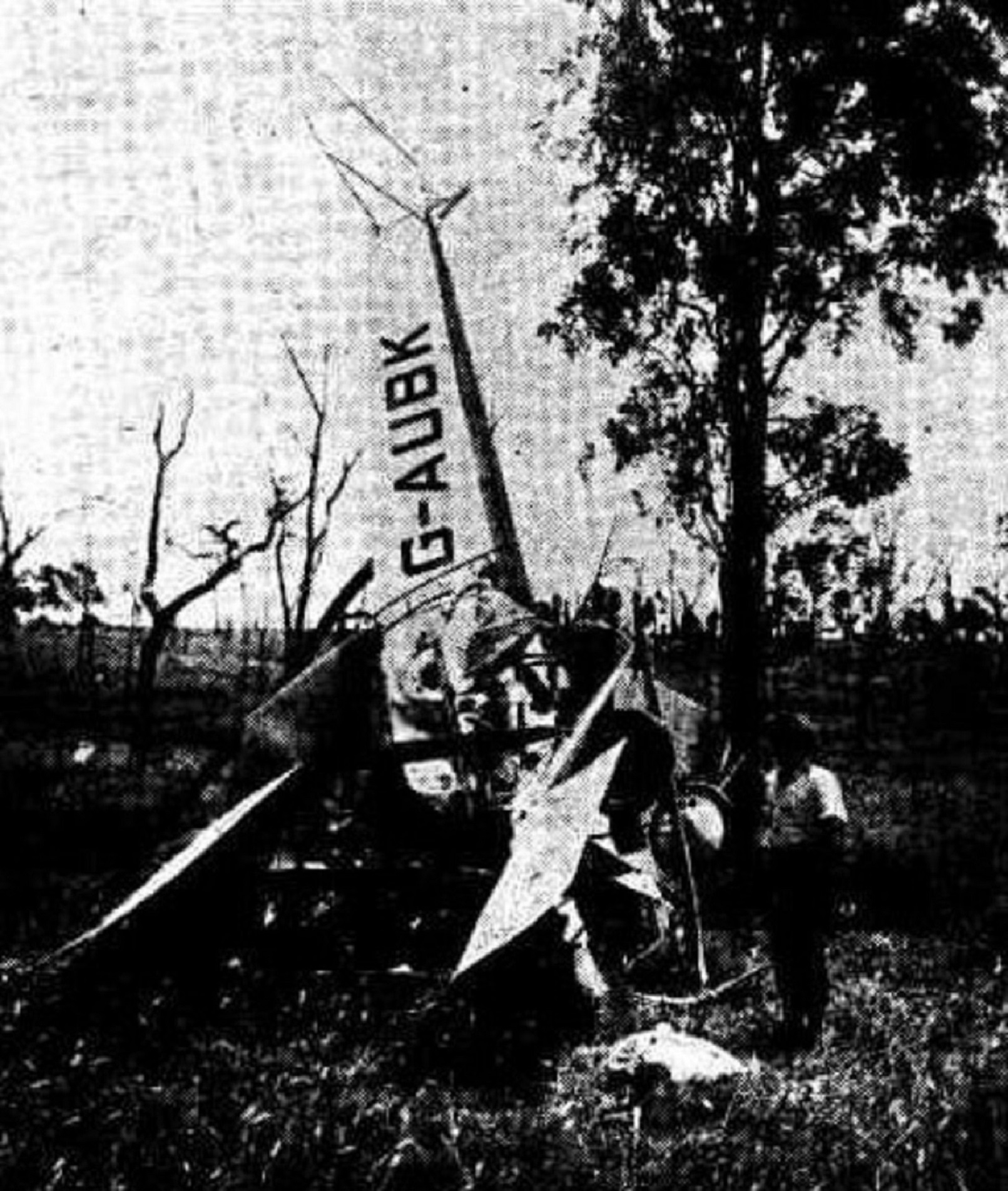
For weeks afterwards police made inquiries regarding instruments and accessories that had been taken from the aeroplane after the crash. They recovered some of them, but most remain missing to this day.
History is whispering two things. Firstly, that a plaque be placed in the field at Ripley to mark Queensland’s first fatal passenger plane crash. It’s an historic and tragic event that deserves to be remembered.
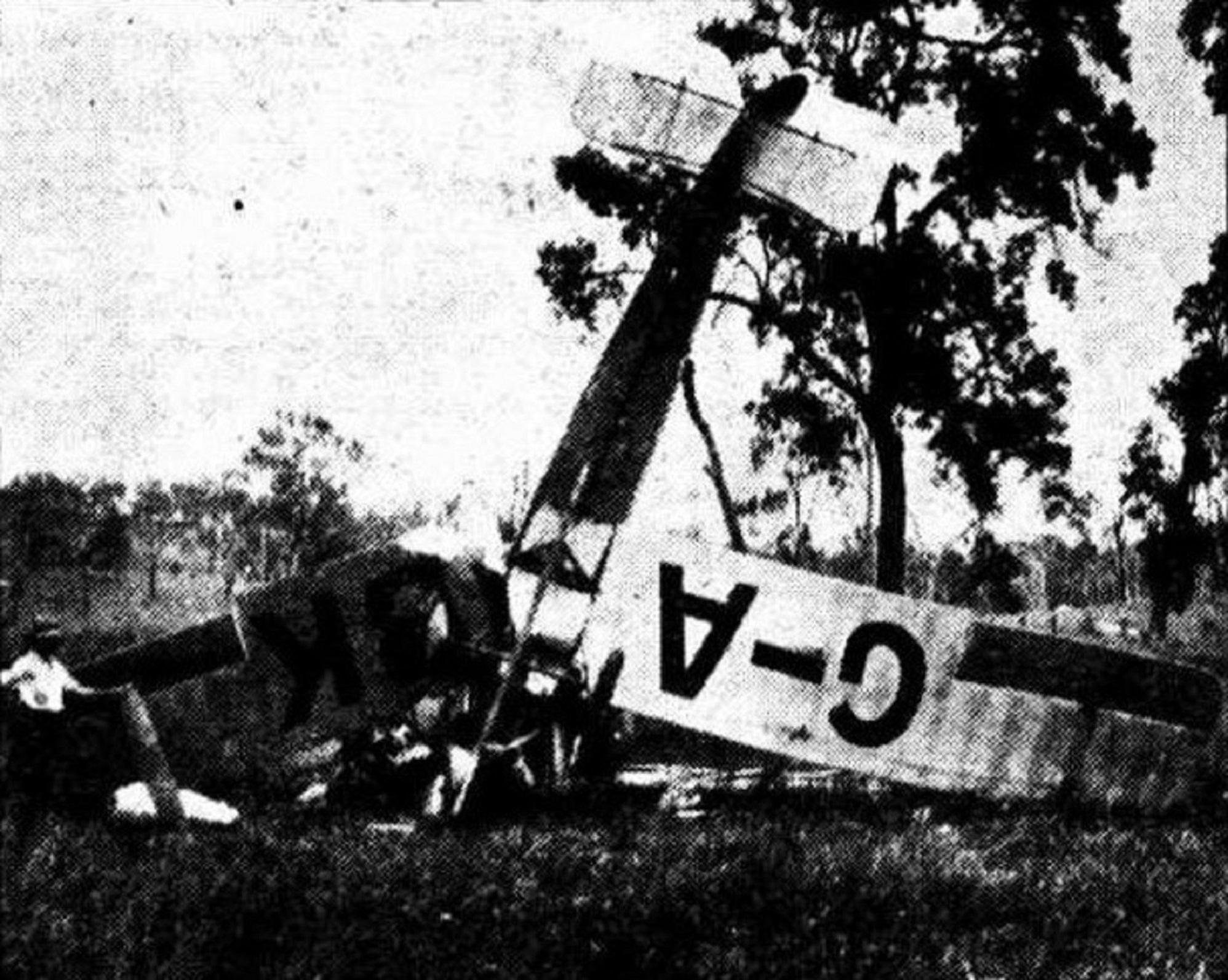
Secondly, where are the missing plane parts that were souvenired? They must be in someone’s garage or loungeroom at Ripley and elsewhere in Ipswich today. Forgotten and unrecognised in a box of grandad’s stuff.
Wouldn’t it be exciting to see those important pieces of aviation history come alive after all this time. They’ll remind us of the otherwise forgotten but significant lives of the English pilot Mr. Welby, the Brisbane engineer Alexander Macpherson, and the Ripley dairy farmer Jack McGuire.
Thanks to Peter Tracey whose discussions led me to this forgotten history, and Richard Bourne whose family album houses photographs of aviation history of the highest order.
CLICK HERE TO LISTEN TO A VERSION OF THIS STORY TOLD LIVE ON RADIO.
Photo credits:
Captain Jack Tracey business in Laidley B – Richard Bourne family collection, Laidley.
Captain Jack Treacy in an AFC uniform, Air Mail Brisbane to Townsville, 1931, 50th Anniversary – National Archives of Australia.
Captain Jack Tracey business in Laidley A – Richard Bourne family collection, Laidley.
Air smash victims – Daily Standard, Brisbane, 10th February 1927, page 1.
Scene after the crash A – Telegraph, Brisbane, 10th February 1927, page 9.
Scene after the crash B – Telegraph, Brisbane, 10th February 1927, page 9.


You certainly know how to sniff out some interesting historical snippets, Harold. I hope some one comes up with the goods.
LikeLike