
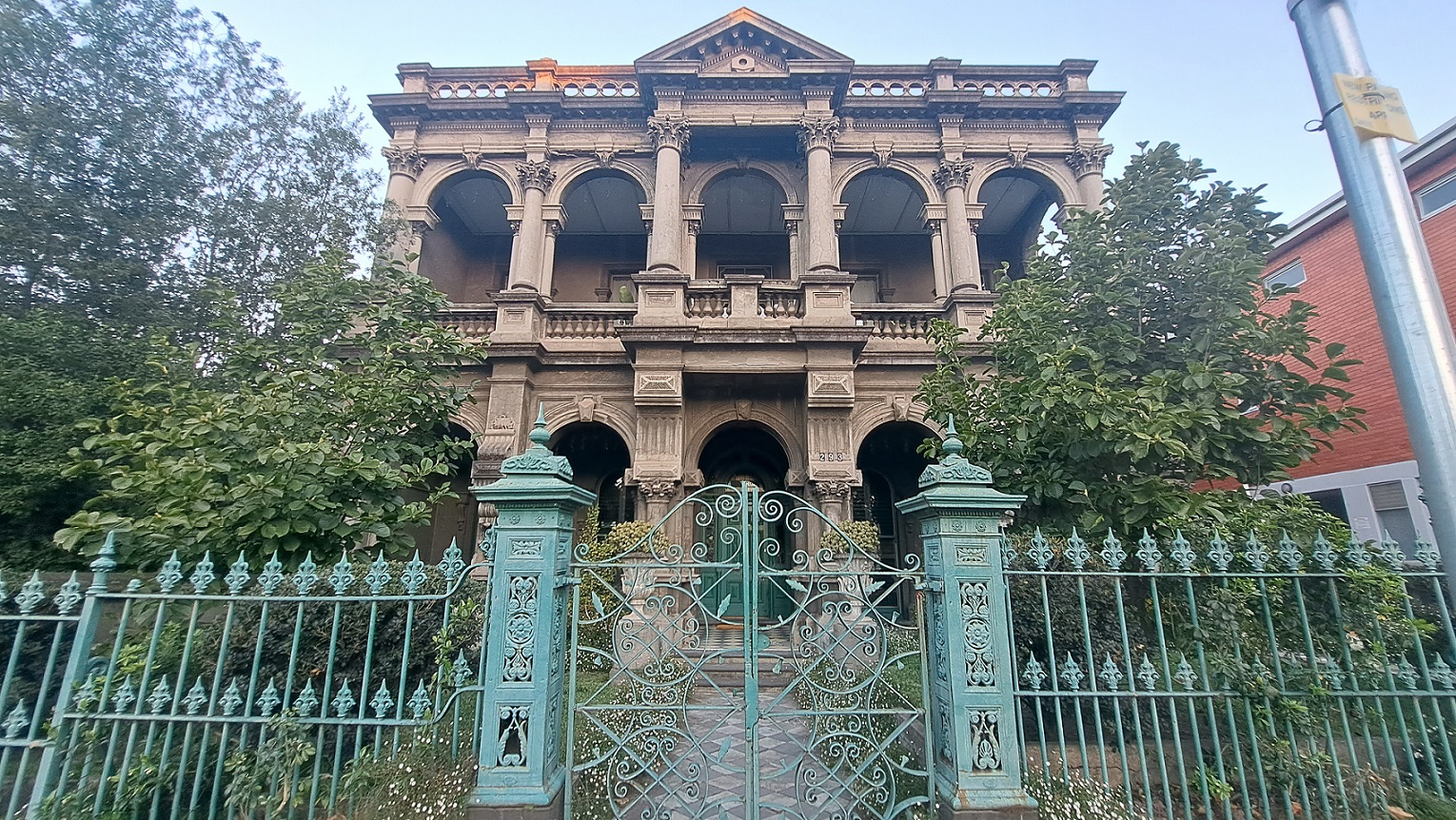
The house is haunted, but whose ghost is it – the grandfather, or his grandson who travelled north and then to war where he was lost forever? I told a version of this story on West Bremer Radio.
Melbourne in Victoria and Queensland’s Ipswich are very much alike in that both places have beautiful old architecture and history. This week I was walking the streets of Melbourne and saw history in sport, history in churches, and at St Ignatius church founded in 1867 in Richmond, it combined both.
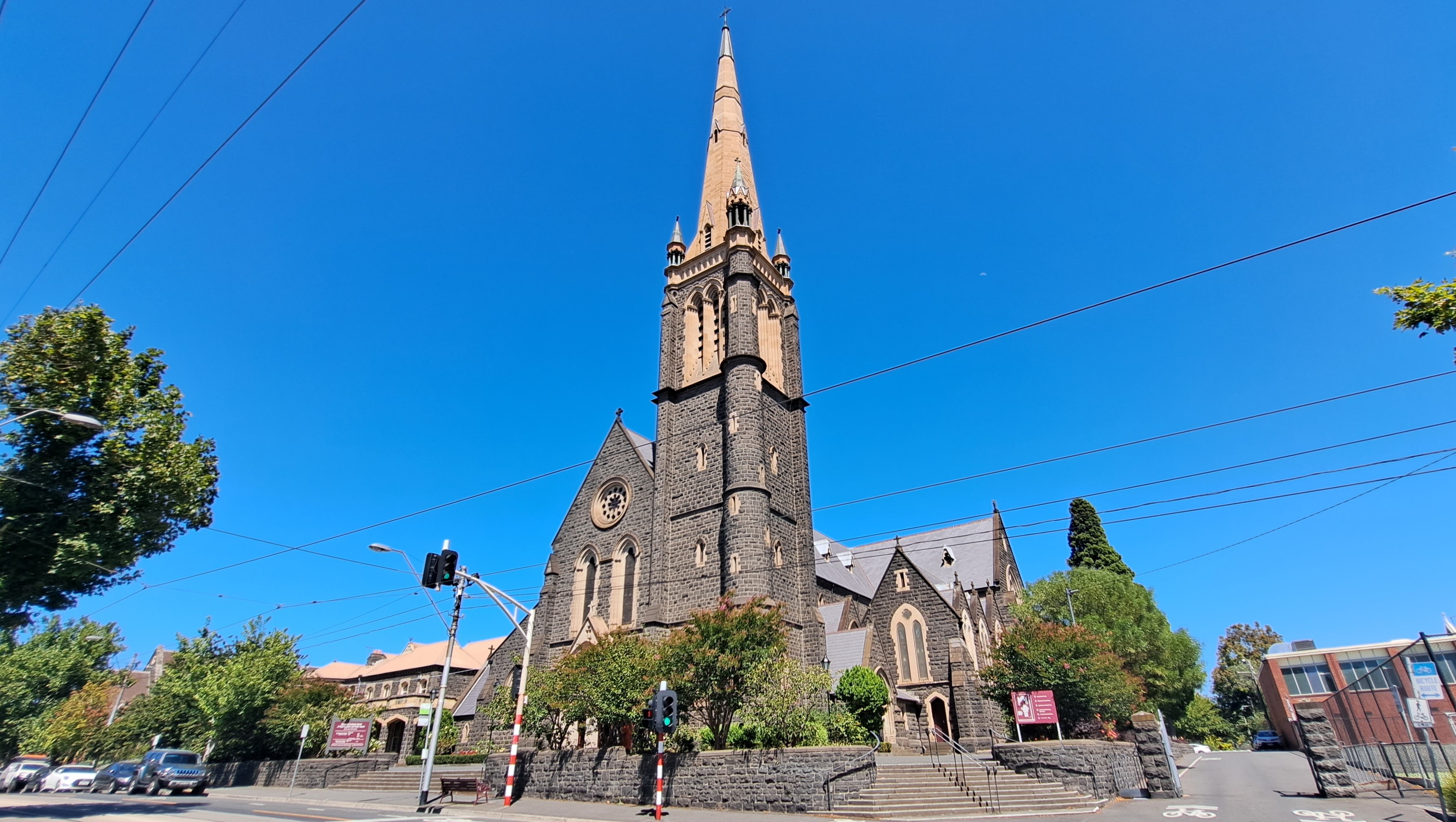
In the 1970s Father Flynn of St Ignatius’ church each week led prayers there for the Richmond Tigers now of the Australian Football League, and its star fullback Francis Bourke. And it worked because Bourke won five premierships and was named in the AFL’s Team of the Century. Bourke was even canonized there.
Just across the road from the church is a sleepy, creepy mansion built in 1888, and this is where a ghostly tug of war between Melbourne and Ipswich arises.
Today the home is called ‘Lalor House’ (top picture) because its original owner was Dr Joseph Lalor. Back then the family named it ‘Ours’. Doctor Lalor’s son Joseph Peter Lalor grew-up there and after travelling the world eventually found himself in Ipswich.

Joseph Junior chose a military path and served in the British Navy, French Foreign Legion, and the Australian Army in Ipswich. The then-Captain Lalor was an officer in the 1st Queenslanders (or Moreton) Regiment which was founded right here in Ipswich. He was the infantry’s chief instructor at Enoggera.
In 1914 he was guest of honour at Ipswich’s St Patrick’s Day parade, judge of the cadet competition, and was given a resounding ovation at the official luncheon.
From here he went to Western Australia on his way to the First World War. But the career of Captain Lalor ended abruptly when he was killed in action on the 25th of April 1915, the first day of the Gallipoli Landing.
Captain Lalor’s fighting spirit was manifested in his forebears, but not his doctor father. His grandfather was Peter Lalor who was the famous leader of the miners at the Eureka Stockade in 1854. The rebellion left at least twenty-seven dead. Lalor lost an arm, had £100 reward placed on his head, and in one of those quirks of history, became a member of the Victorian parliament and Speaker of the House.

The Lalor name was renowned across the country. A novel published in 1901 called “Roll up: a tale of the Eureka riots” was written by The Reverend James Middleton Macdonald who at one time was deputy headmaster of Ipswich Grammar School. During the First World War, the reverend had the distinction of having his children become the only brother-sister combination in the world who were killed by German submarines in separate attacks.
Anyway, Peter Lalor lived with his son Doctor Lalor and his grandson Joseph Junior in Lalor House in Richmond, the house I visited.
When I was there, I got the distinct sense that the building remembers everything that’s ever happened there. An etched glass surgery sign is still above the doctor’s entrance. As was the habit in the 19th century, there’s even still a red light above the doorway indicating that the doctor is in. I can’t explain this, because even though the rest of the house was in darkness, and a doctor hasn’t been there for over a century, the doctors light glowed red as the sun went down.
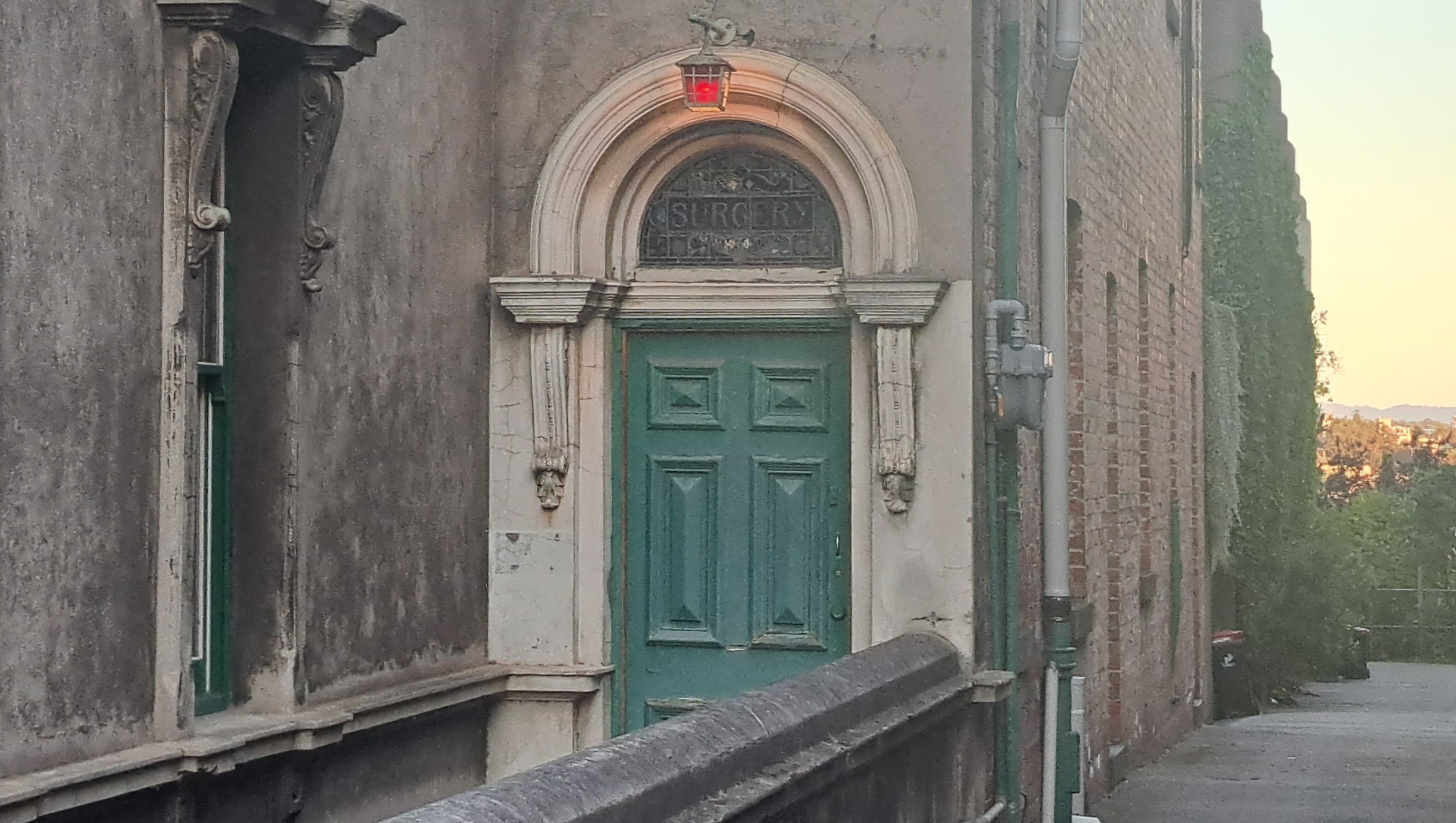
It could have been the ghost of Peter Lalor. You see the Eureka leader died in the house in 1889, and it’s well documented that his ghost still resides there today. And perhaps he’s there with his Ipswich grandson whose body was never definitely recovered from Gallipoli.
CLICK HERE TO LISTEN TO A VERSION OF THIS STORY TOLD LIVE ON RADIO.
Photo credits:
Lalor House, Richmond, 2024 – Harold Peacock 20240204_200953.
St Ignatius, Richmond, 2024 – Harold Peacock 20240204_115414.
Joseph Peter Lalor – Virtual War Memorial Australia, courtesy of Faithe Jones.
Peter Lalor, by Ludwig Becker – National Museum of Australia MA25139817.
Doctors Surgery, Lalor House, Richmond, 2024 – Harold Peacock 20240204_200853.
 History Out There
As usual, another fascinating story with many twists and turns. As long as Ipswich has its connections world wide, you will never run out of tales to tell.
LikeLike