

This week I’m going Outback looking for a lost grave, but on the way I’m stopping at Muckadilla on the recommendation of an old Ipswich resident of over 100 years ago. Click here to listen to a version of this story told live on Ipswich’s West Bremer Radio.
John McEwan Hunter was born 1863 in Moreton Bay aboard the ship Wanata. His parents had just arrived from Scotland and they went straight to Ipswich.

That’s where Hunter grew up, he grew up in Ipswich, being educated first at the Redbank State School. From Ipswich he hit the ground running, going to Spring Creek, Clifton, and Roma where he was elected mayor in 1900, before being elected to Queensland parliament in 1907, becoming minister for public lands, and then Queensland’s agent-general in London. Not bad for a kid from the Ipswich suburb of Redbank.
It was his time in Roma that’s grabbed my attention. Just west of Roma is the little town of Muckadilla which Hunter helped put on the map. He promoted the then-famous Muckadilla bore and the apparent magical medical benefits of its water. He even wanted a sanitorium to be built there to help people with rheumatism, arthritis, uritus in your urinary tract, digestion, nerves, in fact almost ailment.
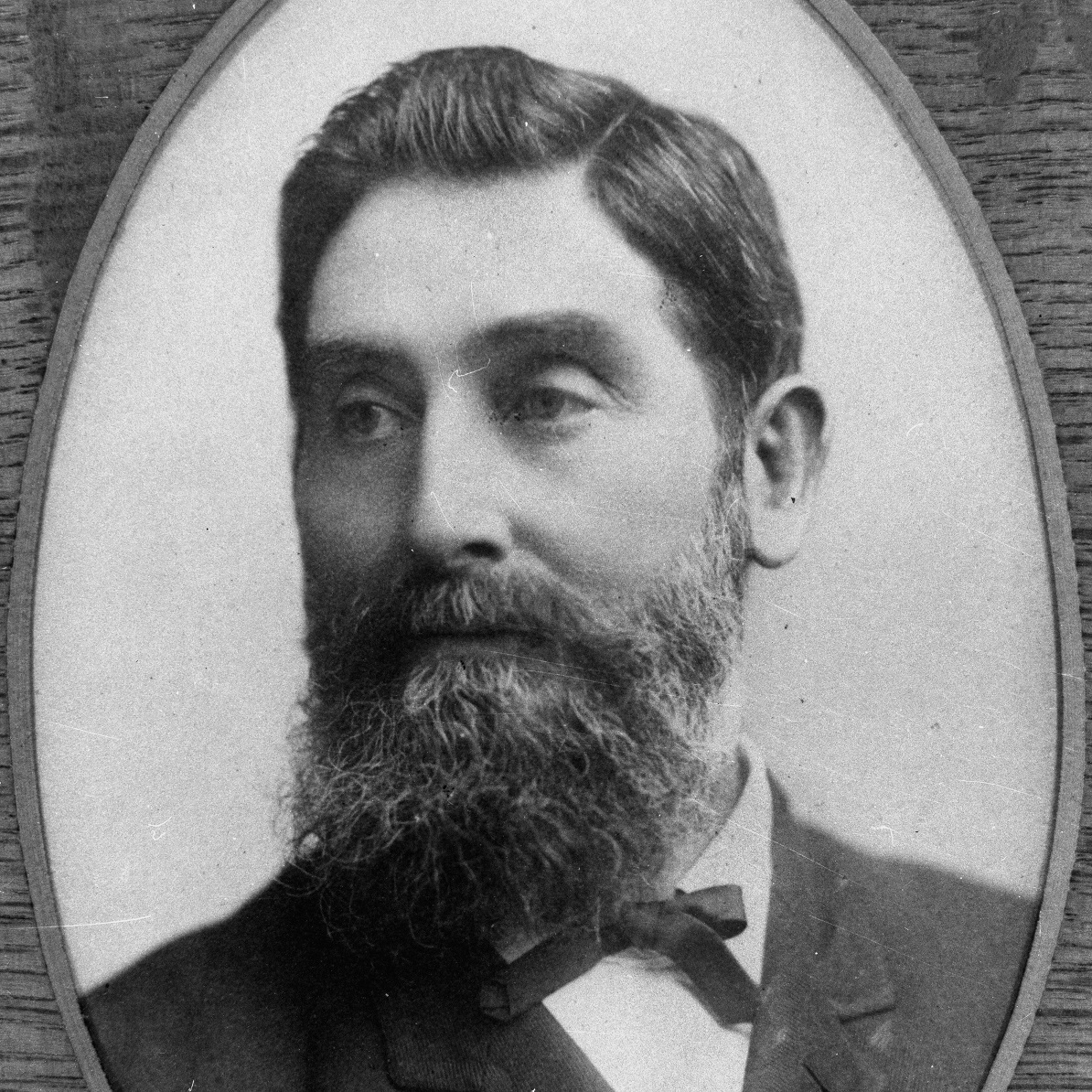
The Muckadilla bore was drilled in 1889 by “Hydraulic” Henderson. He was the Queensland government’s first hydraulic engineer and was responsible for the world’s first concrete stepped spillway at Brookfield in Brisbane. He made the outback town of Thargomindah just the third place in the world to have hydroelectric street lighting. He even designed the water tower in Barcaldine that saved the place from fire, and he used an Ipswich firm of engineers to build it.
Along with Ipswich’s Hunter, another promotor of the magical bore was the Brisbane’s Dr. Ernest Kerr Scott. He presented at no lesser place than before the Queensland branch of the British Medical Association. He reported one patient who was bed-ridden from rheumatism for ten years, they went to Muckadilla on crutches and sixteen days later went home quite cured.

As recently as 1913, a woman confined to the Ipswich hospital with severe rheumatism was completely cured in Muckadilla in just two months. People flocked from all over the country to be healed.
This week I’ll be staying at Muckadilla to sample the amazing bore water there. But something concerns me.
You see the government’s analytical chemist went to Muckadilla to analyse the treatment being used. The water was coming out of the ground at a temperature of 124 degrees Fahrenheit which is more than 51 degrees Celsius. After letting the water cool to about 43 degrees, the patients got in the bath and stayed in for anywhere from ten to twenty minutes. They quickly started to sweat profusely and kept sweating for about an hour after getting out. The chemist made the recommendation that two baths a day are all that anyone should take, particularly as the immediate effects included signs of depression.
There are two things that particularly concern me. One is that the water contained sodium sulphate which is a laxative, which could be handy under the right circumstances. But get this, the second thing is that the chemist said the water was in fact radioactive!
That’s right – the Muckadilla bore water was a radioactive laxative!
So this week I’ll be visiting Muckadilla, but I’m not sure I’ll be following every recommendation of Ipswich’s John Hunter who obviously didn’t study science at the Redbank State School way back then.
CLICK HERE TO LISTEN TO A VERSION OF THIS STORY TOLD ON WEST BREMER RADIO.
Photo credits:
The Outback Bore that Sweated a Nation – Harold Peacock with Copilot.
Sailing Ship Wanata, Captain Chas L Munsell, 1860-1875 – American Folk Art Museum.
John Baillie Henderson – State Library of Queensland.
Dr Kerr Scott – Brisbane Courier, 16th May 1929, page 20 repaired with Copilot.


[…] I discovered stories about the Muckadilla bore and Barcaldine Bull Thornton, but the actual reason for me going to the Maranoa and Central West […]
LikeLike
[…] arriving in Barcaldine, I found related stories about the Muckadilla Bore and Barcaldine Bull Thornton. When I got out there, I caught up with Roko Hunt who is the star […]
LikeLike